
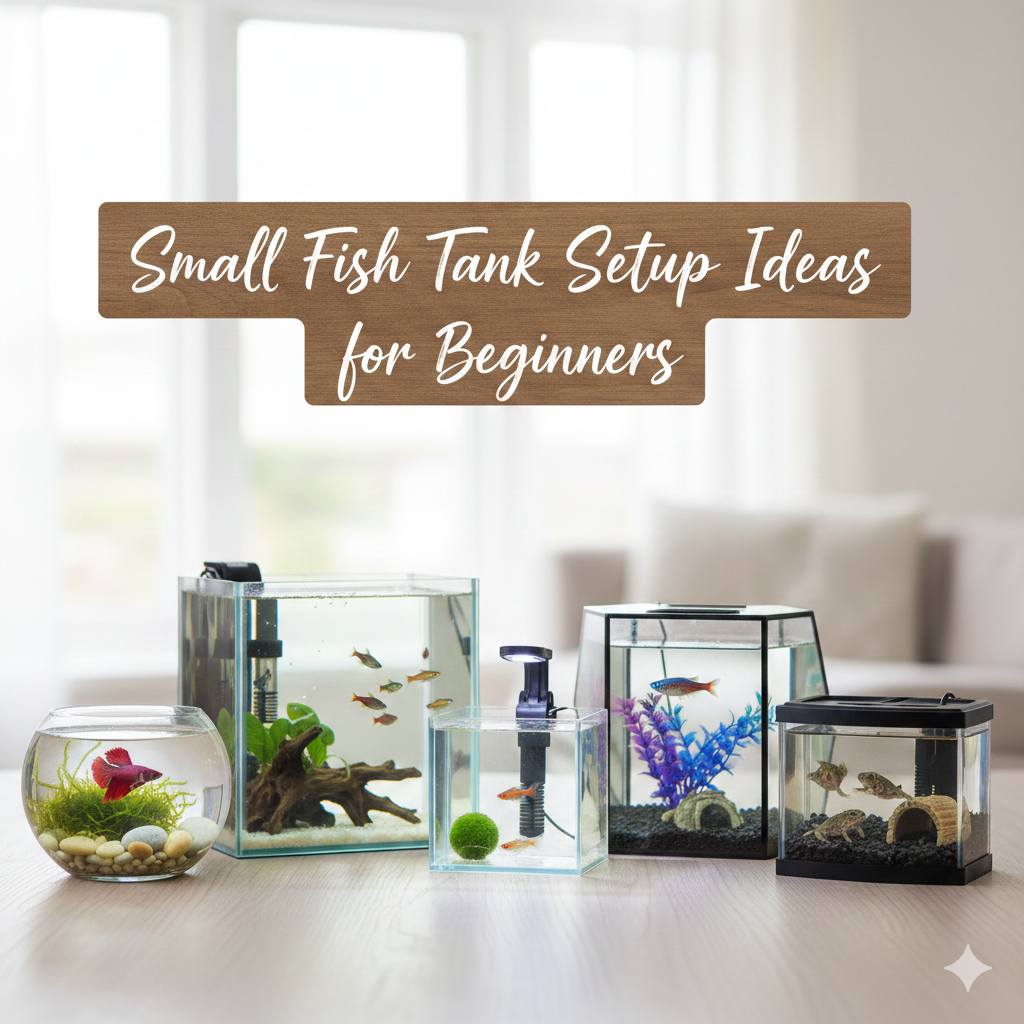
Small fish tanks attract beginners for a simple reason. They look easy. Less space, less water, less work. In reality, small tanks need a little more thought than large ones, but when set up correctly, they can be beautiful, stable, and very rewarding.
The key is not copying random setups from social media. The key is choosing ideas that actually work long-term for beginners.
This guide shares practical small fish tank setup ideas that are beginner-friendly, realistic, and stress-free. These are not show tanks. These are tanks you can maintain easily at home.
First, Understand Small Fish Tanks
A small fish tank usually means anything under 10 gallons. This includes nano tanks, desktop aquariums, and compact home setups.
Small tanks:
• Change temperature faster
• Accumulate waste faster
• React quickly to mistakes
That sounds scary, but it also means they stabilize beautifully when kept simple.
The biggest mistake beginners make with small tanks is trying to do too much in too little space.
Idea 1 Simple Planted Nano Tank
This is one of the best setups for beginners.
A simple planted nano tank uses:
• A small tank
• Basic substrate
• Easy plants
• Gentle filtration
Good beginner plants include anubias, java fern, cryptocoryne, and floating plants.
This setup works well with a small group of peaceful fish or even just shrimp.
Idea 2 Betta Fish Setup (Minimal and Calm)
A single betta fish setup is perfect for small tanks when done correctly.
The idea here is simplicity.
Use:
• A heated tank
• Gentle filter
• Open swimming space
• A few plants or decorations
Avoid mirrors, bright lights, and strong water flow. Bettas prefer calm environments.
This setup is low-maintenance and great for beginners who want one fish with personality.
Idea 3 Shrimp-Only Tank
Shrimp tanks are ideal for small setups.
Red cherry shrimp or similar species thrive in planted nano tanks. They produce very little waste and spend all day grazing.
A shrimp tank works best with:
• Sponge filter
• Lots of plants or moss
• Stable water
• Light feeding
No fish means less stress and easier maintenance.
This setup is quiet, fascinating, and perfect for desks or bedrooms.
Idea 4 Small Community Tank (Carefully Chosen)
Yes, small tanks can hold multiple fish, but only if species are chosen carefully.
A good small community tank focuses on:
• Small-bodied fish
• Peaceful behavior
• Low bioload
Examples include a few small tetras or danios, combined with bottom-dwelling fish like small corydoras (only if tank size allows).
Overcrowding ruins small tanks faster than anything else.
Idea 5 Low-Light Natural Setup
This setup focuses on calm lighting and natural materials.
Use:
• Driftwood
• A few rocks
• Low-light plants
• Warm light tone
Low-light tanks grow algae slower and stress fish less. They also require less maintenance.
This idea works especially well in living rooms and bedrooms where harsh lighting is not desired.
Idea 6 Desk Aquarium Setup
Desk tanks need extra care, but they can work beautifully.
Keep desk tanks:
• Away from direct sunlight
• Away from computer heat
• Lightly stocked
Shrimp or a single fish works best here. Avoid busy community tanks.
Desk aquariums should be calming, not distracting.
Idea 7 Bare Bottom Beginner Tank
This idea surprises many people.
A bare bottom tank has no substrate. It looks simple, but it is very easy to clean and monitor.
This setup is good for beginners who:
• Want easy cleaning
• Are learning water changes
• Want to observe fish behavior
Add a few plants attached to wood or rocks to avoid a sterile look.
Idea 8 Blackwater Style Nano Tank
A blackwater nano tank uses:
• Driftwood
• Leaf litter
• Soft lighting
This setup mimics natural habitats and is very calming.
It works well with small fish or shrimp that prefer gentle conditions.
Maintenance is simple once the tank stabilizes.
What All Good Small Tank Setups Have in Common
No matter the style, successful small tanks share a few things.
They:
• Are lightly stocked
• Have stable temperature
• Use gentle filtration
• Avoid constant changes
Small tanks succeed with restraint, not control.
Mistakes to Avoid With Small Fish Tanks
Beginners often make these mistakes:
• Overstocking
• Skipping heaters
• Overfeeding
• Doing large water changes
• Chasing perfect numbers
Small tanks need consistency more than anything else.
Choosing the Right Equipment for Small Tanks
Small tanks do not need powerful equipment.
Choose:
• Adjustable heater
• Gentle filter
• Simple light
Strong flow and bright lights create stress and algae problems.
How to Maintain a Small Fish Tank Easily
Maintenance should be simple.
A good routine:
• Small weekly water change
• Light glass cleaning
• Gentle filter rinsing when needed
Do not deep clean every week. Let the tank mature.
How Long Until a Small Tank Stabilizes
Small tanks take time to settle.
Expect:
• First month to be unstable
• Second month to calm down
• Third month to feel easy
Most beginners quit too early. Stability comes with time.
Are Small Fish Tanks Good for Beginners
Yes, if done correctly.
Small tanks are not forgiving, but they are manageable. When beginners keep things simple, small tanks become relaxing and enjoyable.
Complex designs cause stress. Simple ideas succeed.
Final Thoughts
Small fish tank setups for beginners do not need to be complicated. The best setups are calm, lightly stocked, and built around stability rather than decoration.
If you choose a simple idea, use beginner-friendly species, and resist the urge to overdo things, a small tank can become one of the most enjoyable parts of your home.
Small tanks reward patience more than effort.