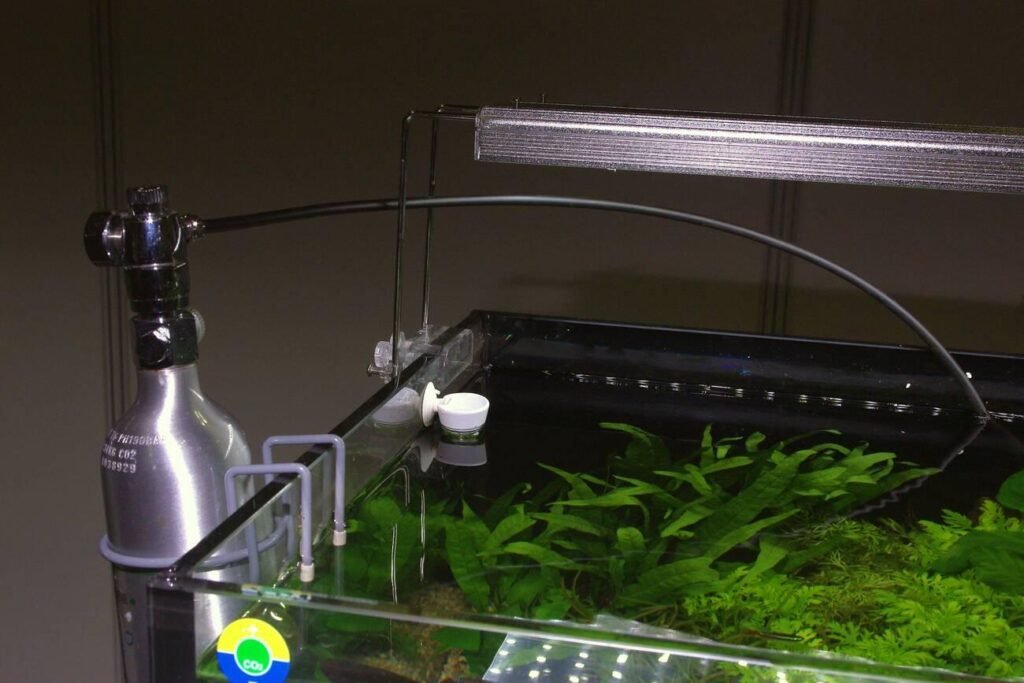
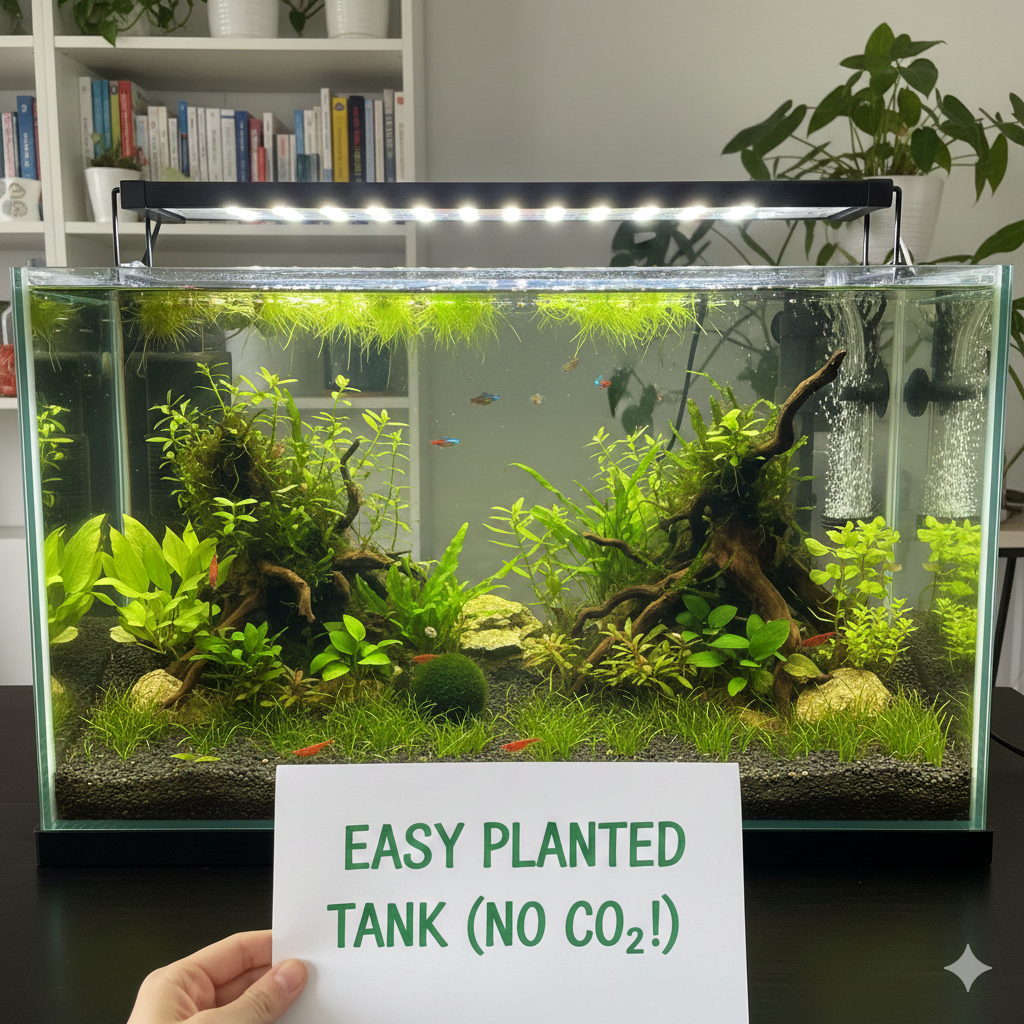
When people hear the words planted aquarium, they often imagine complicated setups. Pressurized CO2 cylinders, bubble counters, expensive lights, and constant tuning. This image alone scares many beginners away before they even start.
Here is the truth. You can grow healthy aquarium plants without CO2 injection. In fact, many long-lasting, stable planted tanks run perfectly fine without it.
A non-CO2 planted tank is slower, calmer, and far more forgiving. This guide will show you how to start a planted tank without CO2 injection the right way, without stress and without chasing unrealistic expectations.
What It Really Means to Run a Tank Without CO2
Plants need three basic things to grow. Light, nutrients, and carbon. In nature, carbon comes from dissolved CO2 in water and from fish waste.
When you skip CO2 injection, plants still grow. They just grow slower.
Slow growth is not a problem. Slow growth actually makes the tank more stable and easier to maintain. Algae struggles to take over when everything moves at a calm pace.
This is why non-CO2 planted tanks are ideal for beginners.
Why Beginners Should Avoid CO2 Injection at First
CO2 systems are powerful, but they demand experience.
With CO2 injection:
• Small mistakes cause algae
• Timing matters
• Equipment adds complexity
• Maintenance increases
Without CO2:
• Growth is steady
• Mistakes are forgiving
• Balance is easier
• Maintenance stays low
Most beginners quit planted tanks because they start too fast, not too slow.
Choosing the Right Tank Size
Tank size plays a big role in non-CO2 setups.
Very small tanks change quickly and are harder to balance. Larger tanks buffer mistakes better.
For beginners:
• 10 to 20 gallons works best
• Rectangular tanks are easiest
• Avoid tall or fancy shapes
More water means more stability. Stability is everything in a non-CO2 tank.
Lighting Without CO2 (This Is Critical)
Lighting is the most important part of a planted tank without CO2.
Too much light causes algae faster than anything else.
For non-CO2 tanks:
• Use moderate lighting
• Avoid high-output lights
• Keep light duration short
A safe starting point is 6 hours of light per day. You can slowly increase later if plants look healthy.
Use a timer. Consistent lighting matters more than brightness.
Choosing the Right Substrate
You do not need expensive aquasoil to grow plants without CO2.
Beginner-friendly substrate options:
• Normal aquarium gravel
• Sand
• Gravel with root tabs added later
Plants adapt to basic substrates. Growth is slower, but roots still develop well.
Expensive substrates help growth, but they are not required to succeed.
Best Plants for a Non-CO2 Planted Tank
Plant choice decides success more than equipment.
Choose slow-growing, hardy plants.
Good options include:
• Anubias
• Java fern
• Cryptocoryne
• Vallisneria
• Amazon sword
• Mosses
• Floating plants
These plants grow using nutrients from water and fish waste. They do not need injected CO2.
Avoid demanding carpet plants early on.
Planting the Tank Properly
Take your time when planting.
Attach rhizome plants like anubias and java fern to rocks or driftwood. Do not bury their roots.
Plant root feeders gently into the substrate. Do not press too deep.
Leave space between plants. They will fill in slowly.
Messy planting causes stress and plant melt later.
Filtration for Non-CO2 Planted Tanks
Filtration should be gentle.
Plants prefer calm water. Strong flow uproots plants and causes stress.
Good filter choices:
• Sponge filters
• Gentle internal filters
• Hang-on-back filters with reduced flow
The filter’s main job is biological stability, not aggressive cleaning.
Water Choice and Preparation
Normal tap water works fine for most non-CO2 planted tanks.
Always:
• Use water conditioner
• Match temperature roughly
• Avoid sudden large changes
Do not chase perfect pH or hardness. Plants adapt better than people think.
Stable water beats perfect numbers.
Cycling a Planted Tank Without CO2
Cycling is still necessary.
Plants help absorb ammonia, but they do not replace beneficial bacteria.
Cycle the tank:
• With plants already inside
• Without fish initially
• For at least 3 to 4 weeks
During cycling, plants may melt slightly. This is normal and temporary.
Understanding Plant Melt
Plant melt scares beginners.
Leaves turning yellow or transparent does not always mean failure. Many plants are grown emersed and need time to adapt underwater.
As long as:
• Roots are healthy
• New growth appears
The plant is fine.
Do not pull plants out too early.
Adding Fish to a Non-CO2 Planted Tank
Add fish slowly after cycling completes.
Good fish choices include:
• Guppies
• Tetras
• Danios
• Corydoras
• Shrimp
Fish provide natural nutrients for plants.
Light stocking keeps algae under control.
Do You Need Fertilizers Without CO2
Sometimes yes, sometimes no.
Many non-CO2 tanks run well using:
• Fish waste
• Tap water nutrients
If plants show signs of deficiency:
• Pale leaves
• Slow growth
• Yellowing
Start with very small fertilizer doses.
Overfertilizing causes algae faster than underfertilizing.
Algae in Non-CO2 Planted Tanks
Some algae is normal.
Algae usually appears when:
• Light is too strong
• Light duration is too long
• Feeding is excessive
Reduce light hours first. Do not rush for chemicals.
Most algae problems solve themselves as the tank matures.
Maintenance Routine for Non-CO2 Tanks
Maintenance should feel simple.
Weekly:
• 10 to 20 percent water change
• Remove dead leaves
• Light glass cleaning
Monthly:
• Gentle filter rinse in tank water
Do not disturb substrate deeply. Roots need stability.
mattis, pulvinar dapibus leo.
Why Non-CO2 Planted Tanks Stay Stable
Non-CO2 tanks succeed because:
• Growth is slow
• Nutrient demand is low
• Mistakes are forgiving
• Balance develops naturally
Many experienced aquarists prefer this method after years of high-tech setups.
Common Mistakes to Avoid
Avoid these beginner mistakes:
• Too much light
• Too many plants at once
• Constant rearranging
• Overfertilizing
• Chasing fast growth
Patience grows plants better than equipment.
How Long Until the Tank Looks Good
Planted tanks take time.
Expect:
• First month looks rough
• Second month improves
• Third month starts looking natural
Good planted tanks are built slowly.
Is a Non-CO2 Planted Tank Worth It
Absolutely.
Non-CO2 planted tanks:
• Cost less
• Need less maintenance
• Are calmer
• Last longer
They are perfect for beginners and busy hobbyists.
Final Thoughts
Starting a planted tank without CO2 injection is not a compromise. It is a smart choice. You trade fast growth for stability and peace of mind.
If you choose the right plants, control lighting, and allow time for balance, your planted tank will thrive naturally.
Slow growth creates long-term success.