
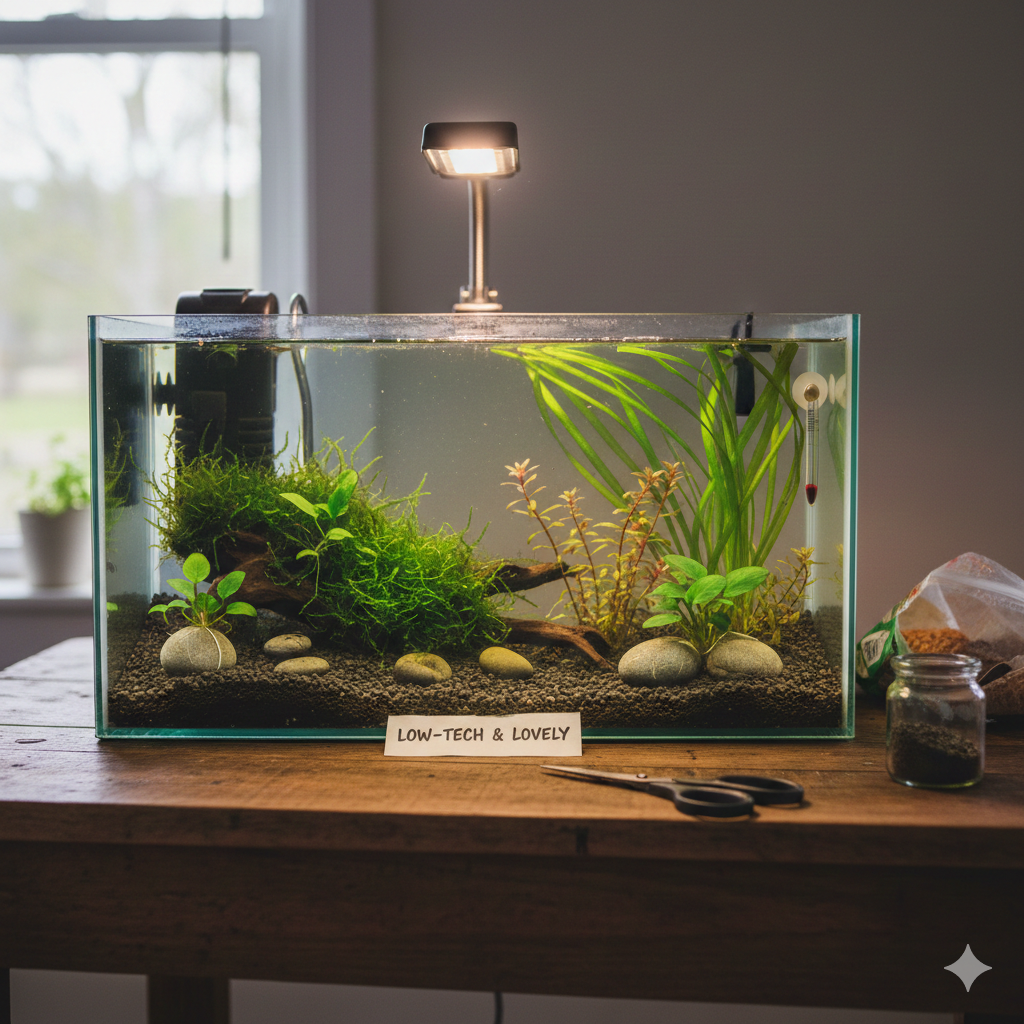
Planted aquariums often look expensive. Bright lights, CO2 cylinders, designer substrates, and perfectly trimmed carpets make it feel like you need a big budget just to get started. That idea stops many beginners before they even try.
But here’s the reality. A planted tank does not need to be expensive to be successful. In fact, many long-lasting, stable planted tanks are low tech and built on a budget. They grow slowly, stay balanced, and cost far less to maintain.
This guide is for anyone who wants a planted aquarium without spending unnecessary money. No shortcuts that harm plants. No fancy equipment that creates problems later. Just a simple, low tech planted tank setup that actually works.
What Low Tech Really Means (And Why It Saves Money)
Low tech does not mean low quality.
A low tech planted tank means:
• No CO2 injection
• Moderate lighting
• Easy plants
• Slow, natural growth
By avoiding CO2 and high-powered lighting, you remove the two biggest expenses and the two biggest sources of instability. Plants grow slower, but they grow consistently.
Slower growth is not a disadvantage. It is what keeps maintenance and costs low.
Why Budget Planted Tanks Often Succeed Better
When money is limited, people naturally keep things simple. That simplicity is exactly what planted tanks need.
Budget setups:
• Avoid excessive light
• Avoid overfertilizing
• Avoid constant adjustments
Many expensive planted tanks fail because they are pushed too hard. Budget tanks grow calmly.
Choosing the Right Tank Without Overspending
Tank choice matters, but brand does not.
For a budget planted tank:
• Use a standard glass aquarium
• Rectangular shape works best
• Avoid very small tanks
A tank around 10 to 20 gallons is ideal. Very small tanks cost less initially but are harder to stabilize and often lead to plant loss.
Local glass tanks work just as well as branded ones.
Lighting on a Budget (This Is Critical)
Lighting is where most beginners waste money.
You do not need high-end planted tank lights. You need consistent, moderate light.
Budget-friendly lighting tips:
• Use a basic LED aquarium light
• Avoid extremely bright lights
• Run lights for 6 to 8 hours daily
• Use a timer
Too much light causes algae and plant stress. Moderate light grows plants slowly but safely.
A simple timer is one of the best investments you can make.
Substrate Choices That Don’t Break the Bank
This is where many beginners think they must spend big. They don’t.
You can grow plants without expensive aquasoil.
Budget substrate options:
• Aquarium gravel
• Washed river sand
• Gravel with root tabs added later
Plants grow slower, but they grow.
If you want slightly better growth without spending too much, use gravel and add root tabs only for root-feeding plants.
Choosing Plants That Match a Budget Setup
Plant choice decides success more than equipment.
Do not buy plants just because they look good. Buy plants that forgive mistakes.
Best low tech, budget-friendly plants:
• Anubias
• Java fern
• Cryptocoryne
• Vallisneria
• Amazon sword
• Java moss
• Floating plants
These plants survive low light, no CO2, and minimal fertilizer.
Avoid demanding carpet plants early.
Hardscape Without Spending Extra
Hardscape does not need to be fancy.
Budget ideas:
• Locally sourced driftwood (properly cleaned)
• Simple rocks
• Minimal layout
Do not overcrowd the tank. Plants will fill empty spaces over time.
Natural-looking tanks often use fewer decorations, not more.
Filtration That Is Cheap and Effective
Filters do not need to be powerful.
Good budget filter options:
• Sponge filters
• Simple internal filters
• Gentle hang-on-back filters
Plants prefer calm water. Strong flow uproots plants and creates stress.
Sponge filters are cheap, reliable, and perfect for low tech tanks.
Water Choice (No RO Needed)
Use normal tap water unless it is extremely hard or contaminated.
Always:
• Use water conditioner
• Match temperature roughly
• Avoid sudden large changes
Plants adapt well to normal tap water. Chasing perfect water chemistry wastes money and creates instability.
Cycling the Tank Without Spending Anything
Cycling does not require bottled bacteria.
The cheapest method:
• Fishless cycling with patience
Let the tank run with plants but without fish for 3 to 4 weeks.
Yes, it takes time.
No, it costs nothing.
Cycling properly saves money by preventing plant and fish loss later.
Adding Fish Slowly Saves Money
Fish waste feeds plants, but too many fish create problems.
For a budget planted tank:
• Stock lightly
• Add fish slowly
• Avoid messy eaters
Fewer fish mean:
• Less waste
• Less algae
• Fewer water changes
Fish losses are expensive. Slow stocking prevents them.
Do Budget Planted Tanks Need Fertilizer
Not always.
Many low tech budget tanks run fine on:
• Fish waste
• Tap water nutrients
• Natural mulm
If plants show deficiency signs, add fertilizer carefully.
Start with:
• Half dose once a week
• Observe for two weeks
Overfertilizing creates algae and extra maintenance.
CO2 Is Not Required (Despite What You See Online)
Most budget planted tanks fail when people try to copy high-tech setups.
CO2 without proper lighting and fertilization causes imbalance. CO2 with cheap equipment often leaks or fluctuates.
For beginners and budget setups:
Skipping CO2 is the smarter choice.
Plants grow slower, but tanks stay stable.
Algae Control Without Chemicals
Algae is common in new planted tanks.
Do not panic.
Simple fixes:
• Reduce light hours
• Feed less
• Remove algae manually
• Wait for tank maturity
Most algae issues disappear as plants settle.
Chemicals cost money and create future problems.
Maintenance That Costs Almost Nothing
Good maintenance does not require products.
Weekly:
• 10 to 20 percent water change
• Remove dead leaves
• Light glass cleaning
Monthly:
• Rinse filter media gently in tank water
Avoid deep gravel vacuuming around roots.
Stable tanks need less work.
Common Budget Mistakes to Avoid
These mistakes increase costs:
• Buying expensive lights too early
• Overstocking fish
• Overfertilizing
• Constant rescapes
• Expecting fast growth
Patience is cheaper than replacing plants.
How Long Until a Budget Planted Tank Looks Good
Be realistic.
First month looks messy.
Second month improves.
Third month starts looking natural.
Low tech tanks reward patience, not speed.
Why Budget Low Tech Tanks Last Longer
These tanks succeed because:
• Growth is slow
• Balance develops naturally
• Maintenance stays simple
• Costs remain low
Many experienced hobbyists return to low tech after years of expensive setups.
Final Thoughts
A low tech planted tank under budget is not a compromise. It is a smart approach. By avoiding unnecessary equipment and focusing on balance, you build a tank that survives mistakes and stays enjoyable.
Plants do not care how much money you spend. They care about stability, light consistency, and time.
Slow growth is not failure.
It is a sign that the system is working.