
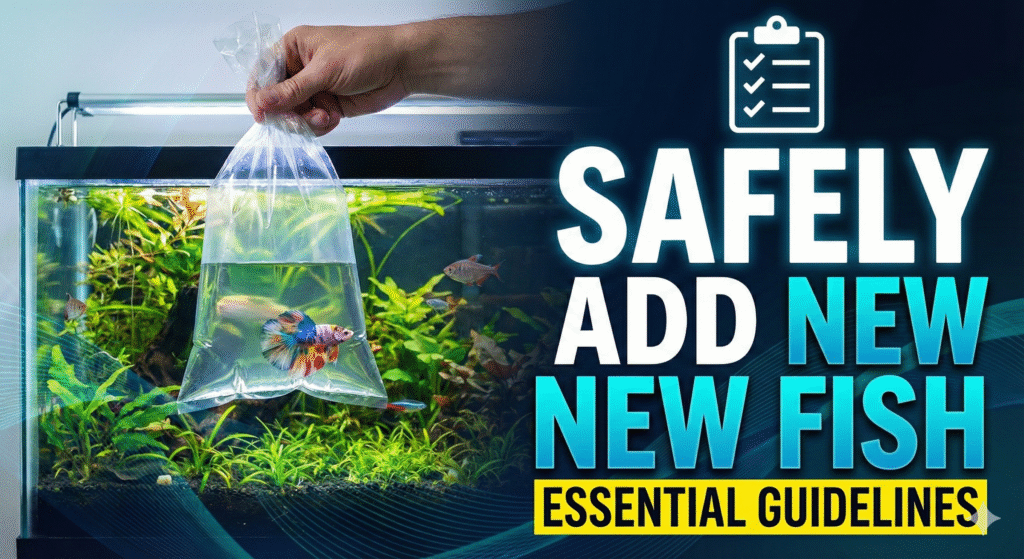
Adding new fish to your aquarium looks easy, but actually, it is one of the most sensitive steps in fishkeeping. Most fish deaths in new tanks happen during the first 24–48 hours because they are not introduced correctly. Fish may look strong, but sudden changes in temperature, pH, and water chemistry may cause shock to their body.
This guide will show you how to add new fish to your aquarium safely so that they stay healthy from day one.
1. Prepare the Tank First and Then Stock It with Fish
Before bringing home any fish, check the following points:
The tank is fully cycled
The water is clear and stable.
Filter is working correctly
Temperature is constant
Ammonia and nitrite are 0
Nitrate is less than 20–30 ppm
You have enough space for the new fish.
A stable tank assures the fish a safer start and minimizes stress.
2. Shut off the Aquarium Lights
Bright lights can stress new fish. When you bring the fish home:
→ Switch off the tank lights for at least 2–3 hours.
This helps the fish relax while they acclimate to their new surroundings.
3. Float the Bag First - Temperature Matching
Do not immediately open the bag of fish.
Place the closed bag in your tank and let it float.
→ Float for 15–20 minutes.
This will acclimate the water inside the bag to your tank’s temperature, preventing the fish from getting temperature shock.
4. Open the Bag Slowly
Open the bag carefully after the temperature has equalized.
Fold the edges of the bag to face outwards, so it floats on the surface without sinking.
This makes the next step easier.
5. Slowly Add the Tank Water to the Bag
Now, the most important part begins: mixing your tank water with the bag water.
→ Add a small cup of tank water every 5 minutes.
Do this for 15–30 minutes.
This helps fish acclimate to your tank’s:
pH
Hardness
Minerals
Water chemistry
Slow changes prevent stress and shock.
6. Use Drip Acclimation for Sensitive Fish
Some fish require a more gradual, gentle process:
Shrimp
Tetras
Otocinclus
Betta
Fancy guppies
Mollies
Drip Method Steps:
Place the fish and bag water in a clean bowl.
Use an airline tube from the tank to the bowl.
Make a slow drip by tightening a knot.
Let the water drip until bowl water doubles.
This is the safest way for sensitive species.
7. Do NOT Pour Store Water Into Your Tank
This is a common beginner mistake.
Water stored may contain
Ammonia
Parasites
Bacteria
Waste
Chemicals
→ Never pour the bag water into your tank.
Instead:
Scoop up the fish with a net.
Place the fish into your aquarium.
Discard the water in the bag.
This keeps your aquarium healthier and cleaner.
8. Let the Fish Rest After Adding Them
Once in the tank, these fish may retreat and/or move very slowly. That’s normal.
What you should do:
Keep lights off
Avoid tapping on glass.
Don’t feed immediately
Give them peace for 2–3 hours.
Fish need quiet time to settle in.
9. Feed After a Few Hours or Next Morning
New fish might refuse food due to stress.
Feeding too early can create waste and dirty the water.
→ Wait 3–4 hours or feed the next day.
Let the fish settle first.
10. Watch for Danger Signs
After you have added the fish, you must begin observing quietly:
Normal behavior:
Hiding
Slow swimming
Exploring corners
Warning signs:
Gasping at surface
Fast breathing
Unusual swimming
Color fading
Lying at the bottom
If you notice these signs, have your water tested immediately.
11. Add Fish in Small Batches
Adding too many fish at once can cause ammonia spikes.
→ Add 2–3 fish at a time.
Wait 1–2 weeks before adding more.
This gives your beneficial bacteria time to adjust.
Final Thoughts
Adding new fish safely is not complicated, but it must be done patiently. Good acclimation reduces stress, prevents shock, and helps fish live longer. Floating the bag, mixing water slowly, avoiding store water, and giving fish quiet time are small steps that make a big difference. Whether you are a beginner or experienced keeper, following these simple steps will help your fish adjust easily and stay healthy in their new home.