
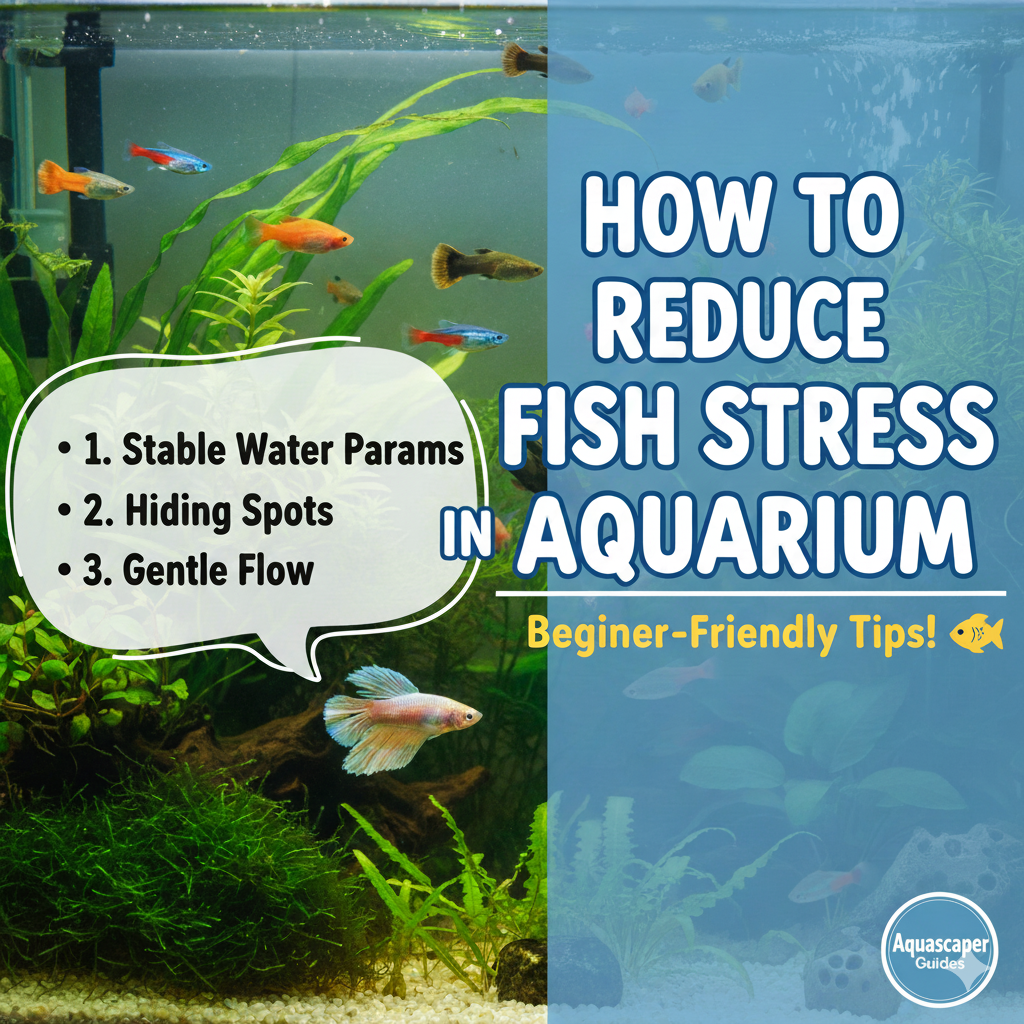
Keeping fish may look simple, but many beginners don’t realize that stress is one of the biggest reasons fish get sick or die early. Fish are sensitive animals. Even small changes in water, food, or tank conditions can make them feel scared or uncomfortable.
The good news is that reducing stress is easy once you understand what causes it. In this beginner-friendly guide, you’ll learn the clear signs of stress in fish and the simple steps you can take to calm them and make your aquarium a safe home.
1. How to Know Your Fish Is Stressed
Before fixing the problem, you need to know the signs. A stressed fish often shows these behaviors:
Hiding all the time
Not eating
Swimming fast or shaking
Staying at the surface or bottom
Losing color
Rubbing against objects
Breathing fast
Clamped fins (fins held close to body)
If you see these signs, it means the fish is uncomfortable and needs help quickly.
2. Maintain Clean Water
Dirty or unsafe water is the number one cause of stress in aquariums.
👉 What you should do:
Change 20–30% water every week
Remove uneaten food
Siphon waste from the bottom
Do not overfeed
Test water sometimes (optional but helpful)
Clear water doesn’t always mean safe water. Regular water changes keep harmful chemicals low, which helps fish relax and breathe comfortably.
3. Keep the Water Temperature Stable
Fish get stressed when temperature keeps changing. Sudden cold or heat shocks their body.
👉 Tips:
Keep the temperature stable using a heater (if needed)
Avoid placing the tank near windows or sunlight
Do not pour hot or cold water directly
Match new water temperature with tank water
Stable temperature = stable fish.
4. Avoid Overcrowding
Too many fish in a small aquarium creates stress, fights, and poor water quality.
Signs of overcrowding:
Fish bumping into each other
Waste building up fast
Ammonia rising
Fights between fish
👉 Tips:
Follow simple rule: 1 inch of fish per 1 gallon (not perfect but good for beginners)
Upgrade tank if needed
Choose peaceful combinations
A comfortable fish is a healthy fish.
5. Reduce Loud Noise and Vibrations
Fish can feel vibrations through the water. Loud music, tapping on glass, or constant movement near the tank can stress them.
👉 Avoid:
Tapping the aquarium
Placing tank near speakers
Keeping tank near heavy traffic areas
Keep the environment calm.
6. Provide Hiding Spots
Fish feel safe when they have places to hide. Without hiding spots, they feel exposed and stressed.
👉 Good hiding options:
Live plants
Driftwood
Caves
Rocks
Decorations
Shy fish especially need hiding places to feel secure.
7. Do Not Add New Fish Too Quickly
Adding many fish at once can shock the tank and scare the older fish.
👉 Safe method:
Add fish slowly
Quarantine new fish if possible
Choose peaceful tankmates
Introducing fish gradually keeps stress low.
8. Avoid Overfeeding
Giving too much food causes:
Dirty water
Fat fish
Bloating
Bad smell
Stress
👉 Rule:
Feed only what they can eat in 1–2 minutes.
Small meals = healthy, active fish.
9. Use a Proper Filter
A weak or broken filter makes water dirty and low on oxygen. This creates stress instantly.
👉Make sure your filter:
Runs 24/7
Matches your tank size
Has good water flow
Is cleaned every 2 weeks (with tank water)
A strong filter keeps water safe and fresh.
10. Keep the Lights Balanced
Too much light stresses fish. Too little can affect their natural routine.
👉 Lighting tips:
Keep lights ON for 8–10 hours daily
Avoid strong lights for shy fish
Turn off lights at night (fish need rest)
A natural day-night cycle keeps fish calm.
11. Don’t Change Everything at Once
Beginners sometimes:
Clean the whole tank
Wash all media with tap water
Change 100% water
Move fish often
This removes good bacteria and shocks the fish.
👉 Safe way:
Clean only part of the tank
Use old tank water to clean sponge
Change only 20–30% water
Keep fish in the tank during cleaning
Gentle changes prevent stress.
12. Ensure Compatibility of Tankmates
Some fish are peaceful, some are aggressive. Mixing the wrong types causes nonstop chasing and stress.
👉 Tips:
Research before buying new fish
Avoid housing slow fish together with fin-nippers.
Separate aggressive fish if necessary
Happy tankmates = no stress.
⭐ Final Thoughts
Reducing stress in fish is all about creating a stable, calm, and clean environment. When the water is safe, temperature is stable, tankmates are peaceful, and the aquarium is well-maintained, your fish stay active, colorful, and healthy. Remember: A stress-free fish lives longer and exhibits its behaviors naturally. If you want tags for this article or a new topic, just let me know!