
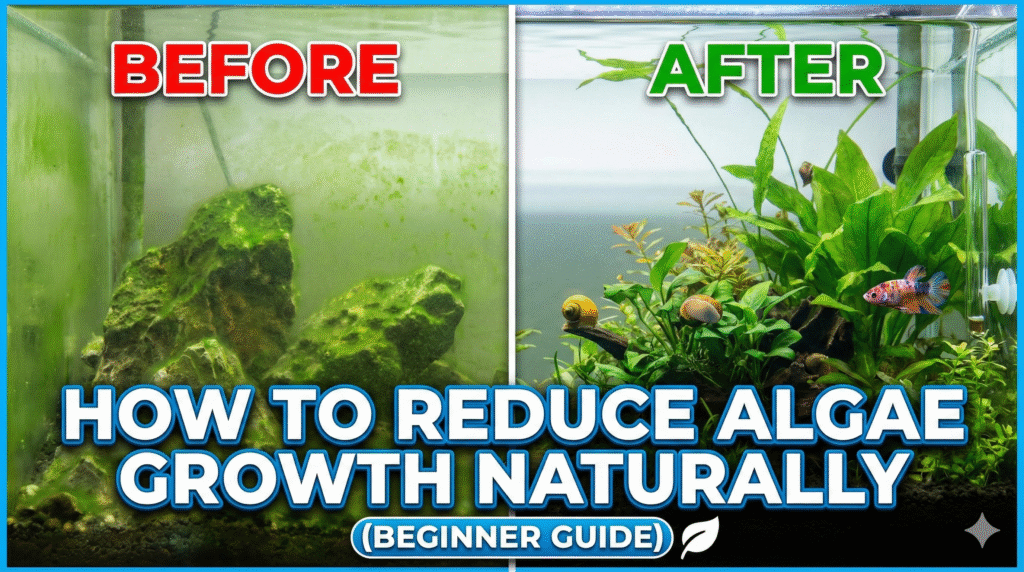
Algae are one of the most prevalent problems every aquarium keeper faces. It grows slowly at first, then you suddenly notice green patches on the glass, brown dust on the sand, or long hair-like strands on the plants. While it is normal for every aquarium to have algae, too much of it makes the tank look messy and will stress your fish. Fortunately, there is some good news in that you can control algae naturally without chemicals. This guide explains why algae grows and how beginners can reduce it the natural way.
1. Why Algae Grows in Aquariums
Algae is a plant-like organism that thrives on three things: light, nutrients, and still water. Any imbalance of these three and you have algae growing fast.
Common reasons include:
Too much light
Overfeeding
Weak or dirty filter
Not changing water routinely
Sunlight hitting the tank
Extra nutrients from fish waste
Once you understand the cause, fixing algae becomes much easier.
2. Control Your Lighting
Beginners tend to keep their aquarium light on too long. While all fish require some light, they do not want it bright all day but algae does.
Tips
Keep lights on for 6–8 hours per day
Avoid placing the tank near a window.
Turn off the light at night.
Use a timer so you don’t forget
One of the quickest ways to naturally control algae is by reducing light.
3. Stop Overfeeding
Extra food breaks down and becomes nutrients that algae uses to grow. Most beginners feed their fish way more than is required.
How to feed properly
Give only what a fish can finish in 20–30 seconds.
Skip feeding one day a week
Remove leftover food with a net
Less food = less waste = less algae.
4. Increase Water Changes
The most massive boosters of algae are dirty waters. Nutrients come out from fish wastes, uneaten foods, and plant decay which feed algae.
Fix
Change 30–40% of water every week
Clean the substrate by gently vacuuming
Always use dechlorinated water
Clean water prevents algae from spreading too quickly.
5. Enhance Filtration
A weak or clogged filter cannot pull out the waste. If waste remains in the water too long, algae grow at a tremendous rate.
What to do
Rinse filter sponge in old tank water-never tap water
Replace mechanical filter pads when they turn brown
Make sure that water is flowing strongly from the filter.
A strong filter keeps the tank cleaner and reduces algae naturally.
6. Add Fast-Growing Live Plants
Live plants use nutrients just like algae does. The more you have, the less nourishment the algae will get.
Good beginner plants
Hornwort
Water wisteria
Anacharis
Duckweed (floating plant)
Amazon frogbit
These plants grow quickly and absorb extra nutrients before algae are able to use them.
7. Reduce Direct Sunlight
Because sunlight is much more powerful than aquarium lights, direct sunlight on the tank can lead to rapid algae blooms.
Fix
Move the tank away from windows
Close curtains during the bright part of the day.
Keep tank in a shaded room
Removing just sunlight can reduce algae drastically in a week.
8. Use an Algae Scraper Weekly
Cleaning the glass regularly prevents the buildup of algae.
Tips
Use a magnetic algae cleaner
Use a sponge for soft algae
For tough green spots, use a plastic scraper
Cleaning a little each week is easier than cleaning months of algae later.
9. Add natural algae-eating fish or snails
Some species naturally eat algae, helping you to keep your tank clean.
Best algae eaters for beginners
Nerite snails
Amano shrimp
Otocinclus catfish
Bristlenose pleco (for larger tanks)
They won’t remove all the algae, but they do help control small amounts naturally.
10. Avoid Overcrowding the Tank
Too many fish create too much waste; it’s algae food.
Correct
Then, just follow the rule: 1 small fish = 1 gallon of water
Avoid adding fish too quickly.
Make sure that your filter can handle your fish load
Balanced stocking = balanced tank.
11. Keep the Surface Water Moving
Still water traps CO₂ and reduces oxygen, which encourages algae growth.
Fix
Adjust your filter outlet to create gentle movement
Add a small air stone if desired
Moving water prevents spores of algae from settling and growing.
12. Establish a Routine
Consistency is the best natural method. Clean, feed, and maintain on a regular basis, and algae will have little opportunity to take over.
Routine on a weekly basis
Water change
Glass cleaning
Filter check
Remove dead plant leaves
This simple routine keeps algae away long-term.
Final Thoughts
Algae is normal in every aquarium-so don’t panic. You don’t need chemicals or harsh treatments. With proper lighting, clean water, healthy plants, and good feeding habits, algae becomes easy to control. Once your tank reaches balance, algae becomes just a light dust that you can easily clean each week. A natural approach is much safer, inexpensive, and will be better for your fish over the long term.