
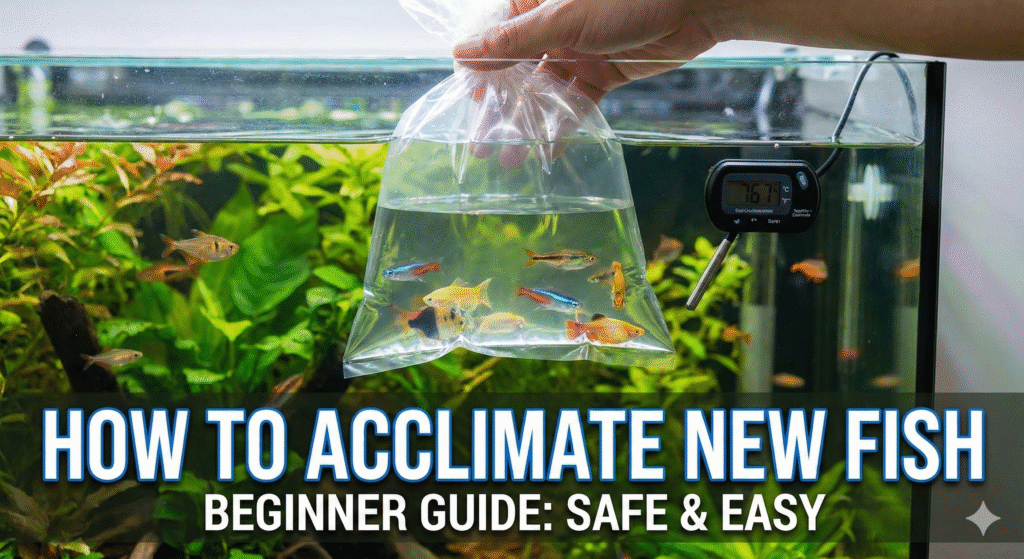
Bringing home new fish is an exciting moment, but this can also be the moment where most beginners make mistakes. More often than not, new fish die within the first 24–48 hours because they are not acclimated properly. Fish are sensitive creatures, and any sudden changes in temperature, pH, or water hardness will shock their system. Acclimation helps your new fish slowly adjust to your aquarium’s water so that they can settle in safely and stay healthy. This guide explains in detail the complete, beginner-friendly process of acclimating fish the right way.
1. Why Acclimation Is Important
Fish, while in the store, live in a controlled environment. Their water may have a different:
Temperature
pH level
Hardness
Ammonia level
Oxygen level
If you simply open the bag and drop the fish into your tank, the sudden change causes stress, shock, gasping, color fading, or even death.
Proper acclimation mixes the two water conditions slowly so that the fish can adjust without stress.
2. Prepare Your Tank Before Bringing Fish Home
Never purchase fish unless your aquarium is completely prepared.
Before adding any new fish:
The tank is fully cycled.
The filter runs smooth.
Temperature is stable
You have no ammonia or nitrite
You have enough room for the new fish.
A stable tank provides new fish with a comfortable environment right from the start.
3. Switch off Aquarium Lights
Fish are easily stressed when they move to another location. Bright lights add to that stress.
When you bring new fish home:
Turn off the aquarium lights.
This keeps them calm while adjusting.
4. Keep the Bag Closed and Floating
Do not open the bag immediately.
Place the closed fish bag in your aquarium and let it float.
This step equilibrates the temperature of the bag water with your tank.
Float the bag for 15–20 minutes
This prevents sudden temperature shock.
5. Open the Bag Slowly
Open the bag carefully when the temperature of the bag has reached the temperature of the tank.
Fold the top edge of the bag over so that it can float on its own, or attach it to the tank side by clips.
This way, the bag stays stable without sinking.
6. Add Small Amounts of Tank Water to the Bag
This is the most important part of acclimation.
You should add small quantities of the tank water to the bag slowly.
Add 1/4 cup (or a small scoop) of tank water every 5 minutes.
Do this for 15–30 minutes.
This allows the fish to acclimate to your tank’s:
pH
Hardness
Temperature
Minerals
Slow mixing prevents shock.
7. The Drip Method for Delicate Fish (Optional)
Some fish are more sensitive, including:
Tetras
Shrimp
Otocinclus
Bettas
Fancy guppies
For them, use the drip acclimation method:
Directions:
Place the fish and bag water in a clean container.
Use an airline tube from your tank to the container.
Tie a loose knot so that water drips slowly.
Allow water to drip until the container water doubles.
This method provides the most gentle and safe acclimation.
8. Avoid Pouring Store Water Into Your Aquarium
This is one of the most common mistakes made by novices.
Store water may contain:
Ammonia
Bacteria
Parasites
Waste
Chemicals
Never pour the bag water into your tank.
Instead:
Use a small net to lift the fish out.
Gently place the fish in your aquarium.
Discard the bag water.
This keeps your tank clean and safe.
9. Let the Fish Rest After Acclimation
Once fish are in the tank, they may hide or appear to be stressed. This is normal.
What to do:
Keep lights off for 2–3 hours
Tap the glass not
Do not feed immediately
Let them explore in silence
New fish take time to acclimate themselves to their new home.
10. Feed After a Few Hours
Do not feed your fish immediately.
Wait 3–4 hours or even until the next day.
Stressed fish do not eat well, and uneaten food pollutes the water.
11. Observe the behavior of fish.
Observe your fish for the first few hours:
Are they swimming normally?
Are they hiding?
Are they breathing too quickly?
Any fin clamping or color fading?
Normal signs:
Slight concealment
Staying near corners
Slow swimming
Danger signs:
Gasping at surface
Twitching
Flashing (rubbing on objects)
Lying still at the bottom,
If you see danger signs, check your water parameters.
12. Do Not Add Too Many Fish at Once
Adding too many fish will build up ammonia quickly and stress the whole tank. For beginners: Add only 2–3 fish at a time. Wait 1–2 weeks before adding more. This keeps the tank stable. Final Thoughts Acclimating fish may be slow, but this is how you should protect your new pets. Fish are very sensitive to even the slightest shock, which can result in death. However, by floating the bag, mixing a little tank water slowly, avoiding store water, and giving the fish quiet time to adjust, you provide them with a safe start. Acclimation, if carried out in a cool and slow manner, will help the fish adjust well and lead healthy, long lives in your aquarium. With practice, this will become an easy routine you follow each time you buy new fish.