
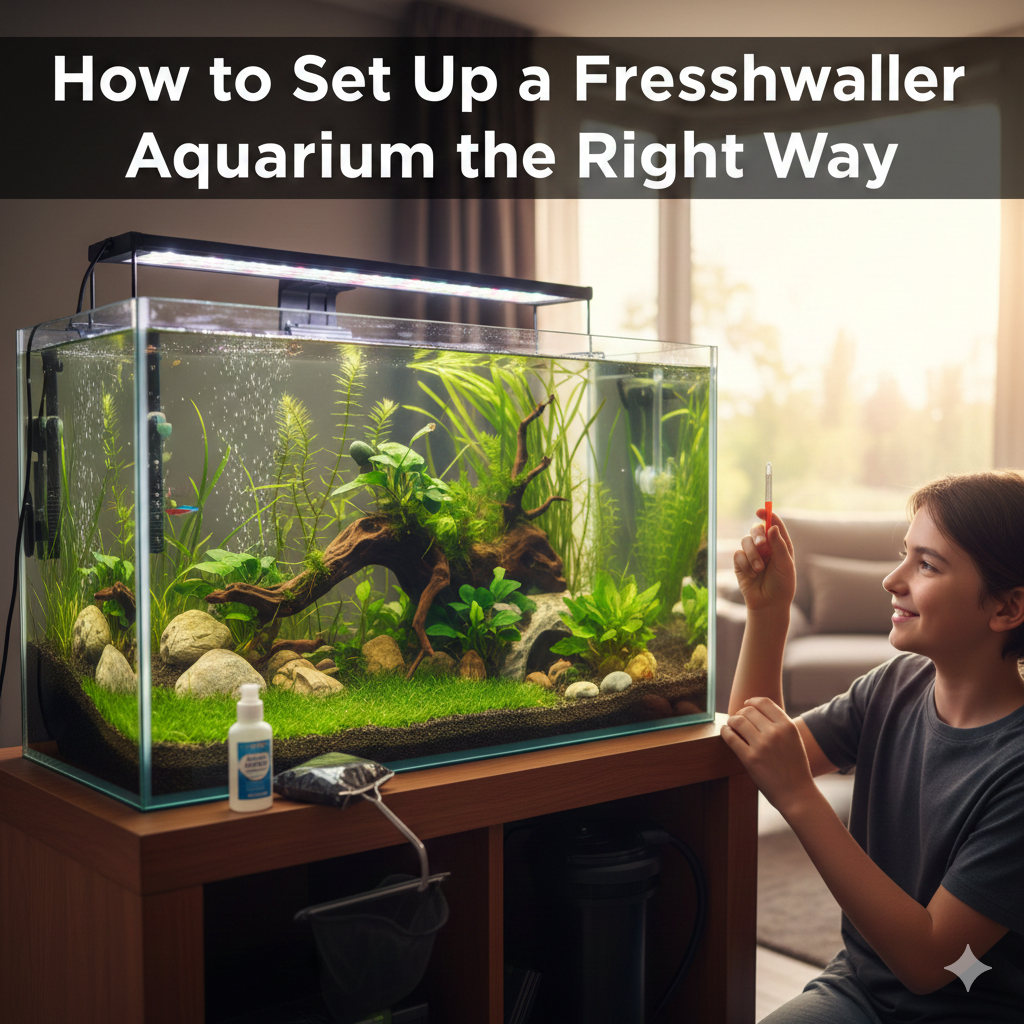
Setting up a freshwater aquarium looks easy on the surface. Buy a tank, add water, put in fish. That simple idea is the reason so many beginner aquariums fail within weeks. Fish die, water turns cloudy, algae takes over, and frustration follows.
The truth is this. A freshwater aquarium only works when it is set up the right way, in the right order, with patience. You are not just filling a glass box with water. You are creating a small, living ecosystem that must balance itself over time.
This guide explains how to set up a freshwater aquarium properly, without shortcuts, confusion, or rushed steps.
Understanding What a Freshwater Aquarium Really Is
A freshwater aquarium is a closed system. Fish eat, breathe, and produce waste. That waste does not disappear. Beneficial bacteria convert it into less harmful substances. Oxygen enters through the surface. Temperature stays stable only if conditions allow it.
When beginners skip this understanding, they try to fix problems later with constant changes. That usually makes things worse.
If you understand the system from day one, most problems never appear.
Step One Choosing the Right Aquarium Size
Many beginners think smaller tanks are easier. In reality, they are harder.
Small tanks change quickly. Temperature shifts faster. Waste builds up faster. Oxygen drops faster.
For beginners, a medium-sized tank is the safest choice.
A good starting range is 10 to 20 gallons. Bigger tanks are more forgiving and give you more time to react if something goes wrong. Fancy shapes may look good, but simple rectangular tanks are easier to maintain.
Step Two Placing the Aquarium Correctly
Where you place the aquarium matters more than people realize.
Choose a spot that:
• Is away from direct sunlight
• Is not near doors or windows
• Has a strong, level surface
• Is close to power outlets
Sunlight causes algae problems. Doors cause temperature swings. Weak furniture can crack under the tank’s weight.
Once the tank is filled, never move it.
Step Three Equipment You Actually Need
You do not need everything sold in aquarium shops.
The essentials are:
• Aquarium tank
• Filter
• Heater for tropical fish
• Thermometer
• Light
• Substrate
• Water conditioner
That’s enough to set up a healthy freshwater aquarium.
Focus on reliability, not features.
Step Four Setting Up Substrate and Decorations
Rinse substrate thoroughly before adding it. Dust is the main cause of cloudy water in new tanks.
Add the substrate evenly, then place decorations. Keep swimming space open. Fish need room to move and reduce stress.
Do not overcrowd the tank with ornaments. Simple layouts work better for beginners and make maintenance easier.
Only use aquarium-safe decorations.
Step Five Filling the Tank Safely
Use tap water, but always treat it.
Tap water contains chlorine or chloramine. These are safe for people but deadly to fish.
Add water conditioner before or immediately after filling the tank.
Pour water slowly to avoid disturbing the substrate. A bowl or plate placed on the bottom helps reduce cloudiness.
Step Six Installing Filter and Heater
Install the filter according to instructions. Do not turn it on until the tank is filled.
Place the heater near water flow so heat spreads evenly. Never turn on a heater outside water.
Once installed, turn everything on and let the tank run.
Step Seven The Aquarium Cycle Explained Simply
This is the most important part of freshwater aquarium setup.
Fish waste turns into ammonia. Ammonia is toxic. Beneficial bacteria convert ammonia into nitrite, then into nitrate.
This process is called the nitrogen cycle.
A new aquarium has no beneficial bacteria. Adding fish too early causes ammonia poisoning, even if the water looks clean.
Clear water does not mean safe water.
Step Eight Cycling the Freshwater Aquarium
The safest method is fishless cycling.
You run the aquarium without fish while beneficial bacteria grow naturally. This process usually takes three to four weeks.
During cycling:
• Water may turn cloudy
• Bacteria establish in the filter
• Water chemistry stabilizes
Do not rush this step. Cycling is what makes the aquarium safe.
Step Nine Knowing When the Tank Is Ready
The aquarium is ready when:
• Ammonia is zero
• Nitrite is zero
• Nitrate is present
• Temperature is stable
Only then should fish be added.
Skipping this step is the number one beginner mistake.
Step Ten Choosing the Right Fish
Not all fish are beginner friendly.
Good starter fish include:
• Guppies
• Platies
• Tetras
• Danios
• Corydoras
Avoid aggressive or sensitive species at first.
Research compatibility before buying fish. Do not rely only on store advice.
Step Eleven Adding Fish the Right Way
Never pour fish directly into the tank.
Float the bag to match temperature. Slowly mix tank water into the bag so fish adjust to new water chemistry.
Stress during introduction kills more fish than most people realize.
Add fish slowly over time. Do not fully stock the tank at once.
Step Twelve First Month Care
The first month is critical.
During this period:
• Feed lightly
• Do small water changes
• Observe fish behavior
• Avoid adding new fish
Do not clean the filter aggressively. Beneficial bacteria live there.
Let the tank stabilize naturally.
Common Freshwater Aquarium Mistakes
Most beginner problems come from:
• Adding fish too early
• Overstocking
• Overfeeding
• Large water changes
• Constant adjustments
Aquariums thrive on consistency, not constant fixing.
How Often to Maintain a Freshwater Aquarium
Once established, maintenance is simple.
A typical routine:
• Small weekly water changes
• Light glass cleaning
• Occasional filter rinsing
Avoid deep cleaning unless necessary. Overcleaning removes beneficial bacteria.
How Long Until a Freshwater Aquarium Becomes Stable
A tank starts feeling stable after about two months. It becomes truly stable after four to six months.
As the tank ages, problems reduce and maintenance becomes easier.
Final Thoughts
Setting up a freshwater aquarium the right way is about patience and understanding, not speed. Most failures happen because steps are skipped or rushed.
If you follow the process, allow time for cycling, and avoid overdoing things, your freshwater aquarium will become a calm, healthy environment that lasts for years.
A successful aquarium is built slowly, not instantly.