
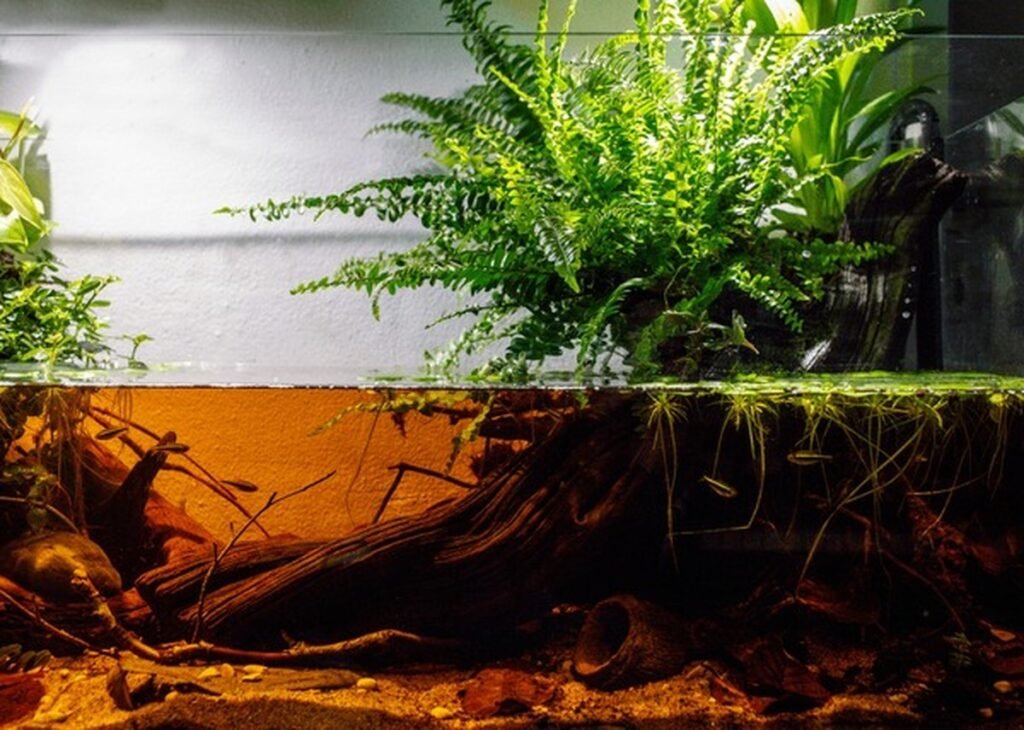
Blackwater aquariums are slowly becoming popular, but they are still surrounded by a lot of confusion. Many beginners avoid them because of things they read online or hear in fish shops. Dark water gets mistaken for dirty water. Leaves get mistaken for neglect. Soft water gets mistaken for unstable water.
The reality is very different.
Most blackwater myths come from misunderstanding how natural fish habitats actually work. Once those myths are cleared, blackwater aquariums start to make a lot more sense. They are not strange, unsafe, or advanced-only setups. In many cases, they are calmer and more forgiving than bright planted tanks.
Let’s go through the most common myths one by one and explain what is actually true.
Myth 1: Blackwater Aquariums Are Dirty
This is the biggest myth of all.
People see brown or tea-colored water and instantly think the tank is dirty or poorly maintained. In reality, blackwater aquariums can be extremely clean. The color comes from tannins released by driftwood and leaves, not from waste or pollution.
You can have crystal-clear water that is toxic and dark water that is perfectly safe. Color has nothing to do with cleanliness.
In fact, many blackwater environments in nature have very low levels of harmful bacteria. Tannins have mild antibacterial properties, which actually help fish stay healthy.
If ammonia and nitrite are zero and fish behave normally, the water is clean, no matter the color.
Myth 2: Blackwater Tanks Are Hard to Maintain
Many beginners assume blackwater aquariums need special skills or daily attention. This is not true.
Blackwater tanks do not require more maintenance. They just require a slightly different mindset. Instead of chasing crystal clarity and fast plant growth, you focus on stability and natural balance.
Once established, blackwater tanks often have:
• Slower algae growth
• Less stress-related disease
• Calmer fish behavior
In practice, many hobbyists find them easier than high-light planted tanks.
Myth 3: You Cannot Keep Plants in Blackwater Aquariums
This myth comes from expecting blackwater tanks to behave like bright aquascapes.
Plants absolutely can grow in blackwater aquariums. They just grow slower. And that is not a bad thing.
Low-light, hardy plants do very well in blackwater conditions. Examples include anubias, java fern, crypts, vallisneria, and floating plants. These plants evolved to handle shaded environments.
If someone expects fast stem growth and bright green carpets, blackwater is not the right choice. But if the goal is a natural, forest-style tank, plants work just fine.
Myth 4: Blackwater Aquariums Need Special Chemicals
Many people think blackwater tanks require bottled extracts, pH adjusters, or special additives. They do not.
Natural blackwater setups rely on simple materials:
• Driftwood
• Leaf litter
• Soft lighting
• Gentle filtration
Bottled blackwater products are optional. They are not necessary and often make things harder for beginners because they work too fast.
Natural tannins are slow, stable, and forgiving.
Myth 5: Fish Cannot Be Seen in Blackwater Tanks
This myth usually comes from seeing an overdone blackwater tank.
A properly balanced blackwater aquarium is not pitch dark. It should look like light tea, not coffee. In this range, fish are clearly visible, and their colors often look richer and deeper.
Bright fish in blackwater often stand out more because the background is darker and softer. Reds, blues, and silvers look more natural instead of overly shiny.
If fish are hard to see, the water is simply too dark, which is easy to fix.
Myth 6: Blackwater Aquariums Are Only for Experts
Blackwater tanks are often labeled as advanced setups, which scares beginners away.
In reality, blackwater aquariums can be very beginner-friendly if stocked correctly. Many beginner fish like tetras, bettas, gouramis, and corydoras come from blackwater environments.
The key is choosing the right fish, not having advanced skills.
A beginner who understands patience and avoids overstocking can succeed with blackwater just as easily as with a regular tank.
Myth 7: Blackwater Tanks Do Not Need Water Changes
This myth is dangerous.
Blackwater aquariums still need water changes. Skipping them completely leads to old tank syndrome, unstable pH, and poor water quality.
The difference is how water changes are done. Smaller, regular water changes work better than large ones. This keeps tannin levels stable and avoids shocking fish.
Blackwater does not mean no maintenance. It means gentle maintenance.
Myth 8: Tannins Are Bad for Fish
Some people believe tannins weaken fish or cause illness. The opposite is usually true.
Tannins help reduce stress, support immune systems, and create conditions fish evolved in. Many fish breed more easily in tannin-rich water.
Tannins only become a problem if they cause rapid pH drops or if the tank is poorly maintained. In a stable system, tannins are beneficial.
Myth 9: Blackwater Aquariums Always Have Low Oxygen
Dark water does not mean low oxygen.
Oxygen levels depend on surface movement, filtration, and temperature, not color. A blackwater tank with good surface agitation can have excellent oxygen levels.
In fact, many blackwater tanks use sponge filters or gentle flow systems that provide stable oxygen exchange.
Low oxygen problems come from poor circulation, not tannins.
Myth 10: All Fish Can Live in Blackwater
This myth causes many failed setups.
Not all fish belong in blackwater. Fish that prefer hard, alkaline water do poorly in soft, acidic conditions. Examples include livebearers, African cichlids, and goldfish.
Blackwater tanks work best when stocked with fish that evolved in similar environments. When the right fish are chosen, problems almost disappear.
Why These Myths Exist
Most aquarium advice online is based on clear-water tanks. Blackwater setups look different, so people assume they work differently in every way.
Also, many blackwater tanks shown online are poorly explained. Beginners see dark water without context and assume neglect.
Once you understand the natural side of fishkeeping, these myths stop making sense.
The Real Truth About Blackwater Aquariums
Blackwater aquariums are not dirty.
They are not unstable.
They are not expert-only.
They are simply natural.
They reward patience, slow changes, and observation. Fish behave more naturally, stress is lower, and the tank often feels calmer and more balanced.
Final Thoughts
Most blackwater aquarium myths come from fear of the unknown. Once those fears are removed, blackwater tanks become one of the most peaceful and enjoyable aquarium styles.
If you respect the natural process, choose the right fish, and avoid overcorrecting, blackwater aquariums are not only manageable, they are deeply rewarding.