
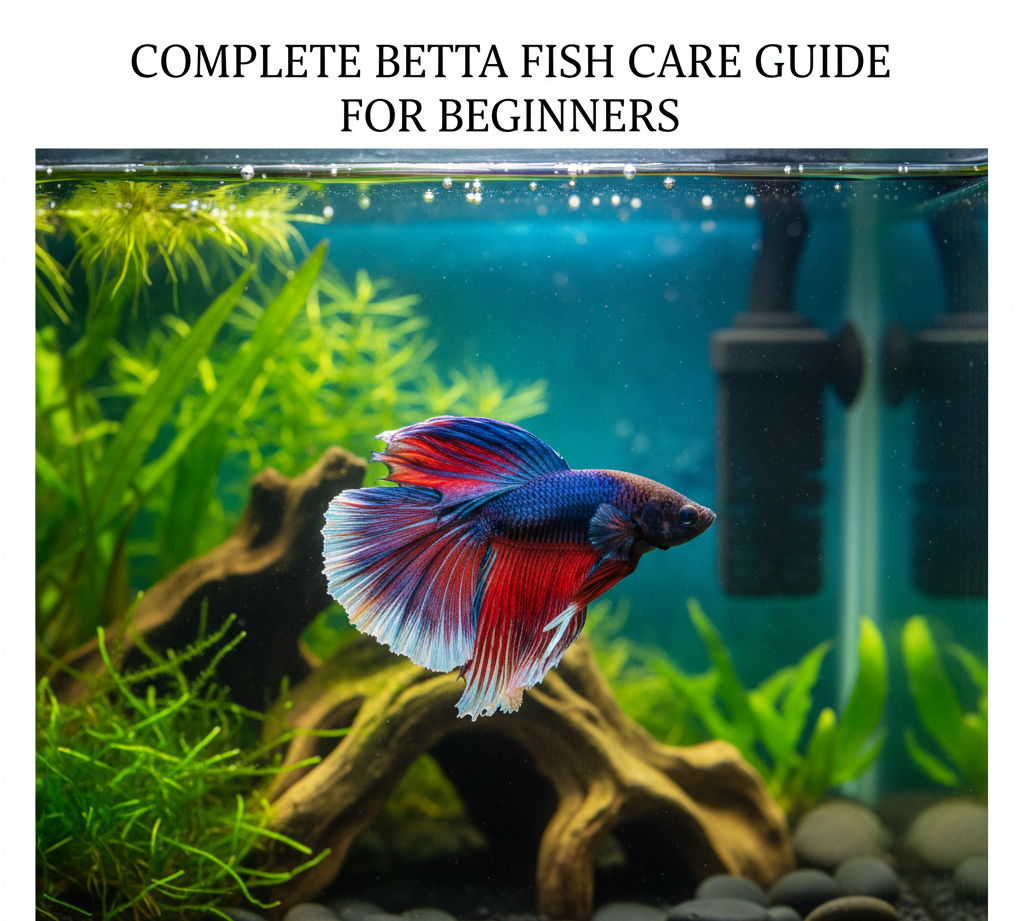
They are small, colorful, and full of personality. Many people think they are easy to take care of because they sell them in small cups, but in reality, Bettas do need proper space, clean water, and good food to be healthy. We’re going to guide you through everything you’ll need to know in simple, easy-to-understand terms if you plan to keep your first Betta. My goal is to make it feel like a real hobbyist is sharing personal experience, not a machine.
1. Understanding Betta Behaviour
The bright fins and bold natures of Betta fish are well-renowned. They are also called Siamese Fighting Fish. Male Bettas cannot stay with other male Bettas because they fight. They are territorial fish that prefer living alone. One lonely Betta in a properly set tank is happier than keeping them in a small bowl. They have inquisitive natures and like to explore plants, hide behind decorations, and at times come up to the surface when they see you.
2. Choosing the Right Tank
Many novices think that a Betta could live in a jar or in a glass. That is incorrect. Bettas need enough room for comfortable swimming. A minimum 10-liter to 15-liter tank (2.5-4 gallons) is good for beginners. If you can go for a 20-liter tank, that is even better. The bigger the tank, the more stable and clean the water will be.
A lid on the tank is required because Bettas jump. Leave some gap at the top, because Bettas breathe from the surface with their special organ called the labyrinth.
3. Water Conditions and Temperature
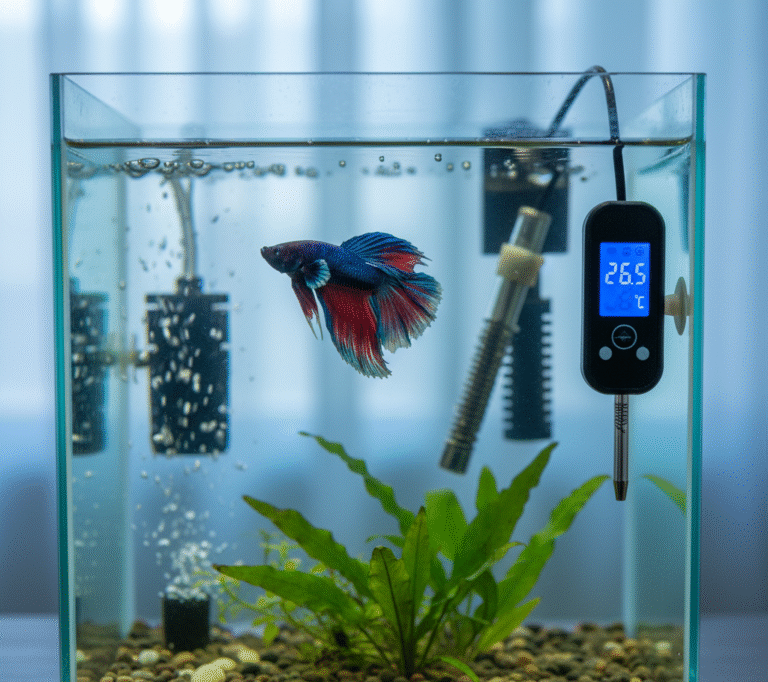
Bettas are tropical fish, and they need warm water. The temperature should not be below 26-28°C. If you live in a cold area or if your room temperature drops down at night, get a small aquarium heater. Cold water makes Bettas lazy, weak, and sick.
Water should be clean and chlorine-free. Always use a water conditioner before adding tap water to the tank. Do not change all the water at once. Do a small water change every week so your Betta does not get stressed.
4. Do You Need a Filter?
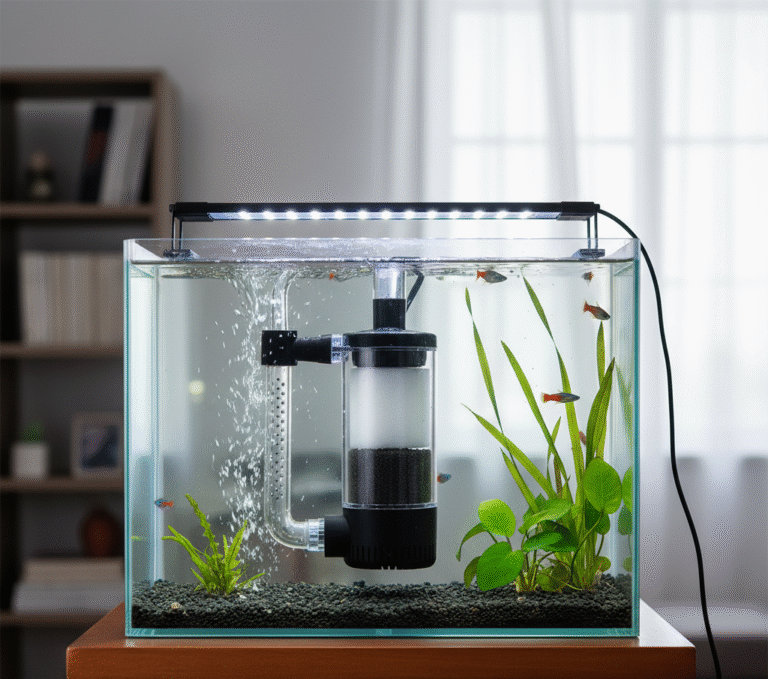
A filter is not required, but highly beneficial. Bettas do not enjoy strong currents, so an extremely gentle filter must be used. One of the better filters that a beginning aquarist could use is called a sponge filter. A filter maintains safe water conditions because it removes waste and keeps beneficial bacteria alive. If you don’t want to have a filter in the tank, you will have to do frequent water changes and clean the tank very frequently.
5. Tank Setup: Plants & Decor
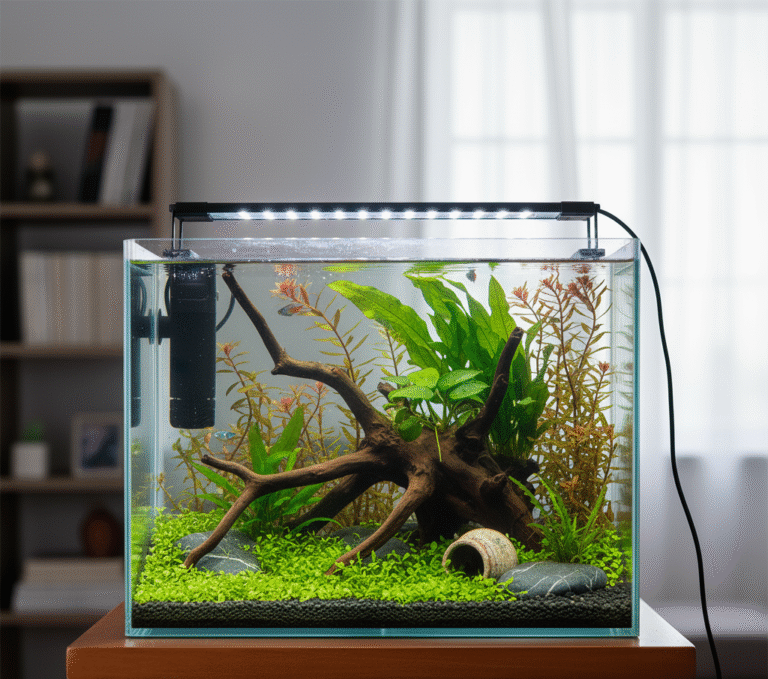
A Betta tank is at its best with plants and decorations inside it. Bettas love places to hide and rest. Live plants such as Anubias, Java Fern, Amazon Sword, or floating plants will make the Bettas feel natural and relaxed. In case of the use of artificial plants, soft ones should be selected so as not to tear a Betta’s fins.
Avoid sharp stones, rough plastic decor, or anything that can scratch their fins. Line the bottom with fine gravel or small stones.
6. What to Feed Your Betta
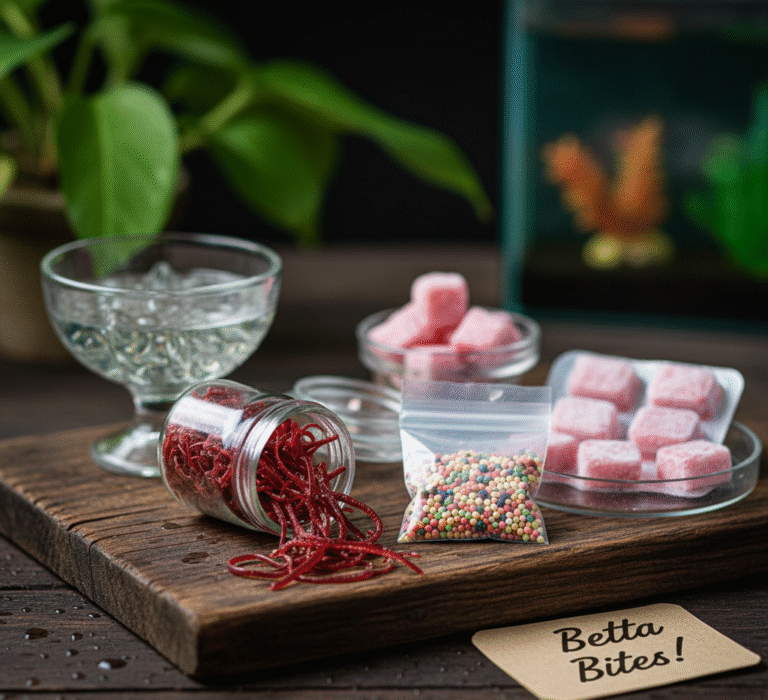
Betta fish are carnivorous. In the wild, they eat insects and larvae. In a home tank, feed them:
Good-quality Betta pellets
Frozen or live food: bloodworms, brine shrimp, daphnia
Occasional treats
Feed twice a day in small portions. Give only that amount of food which they can finish in 1–2 minutes. The most common mistake that beginners do is overfeeding. Extra food pollutes the water and makes Bettas sick.
7. Water Changes & Cleaning Routine
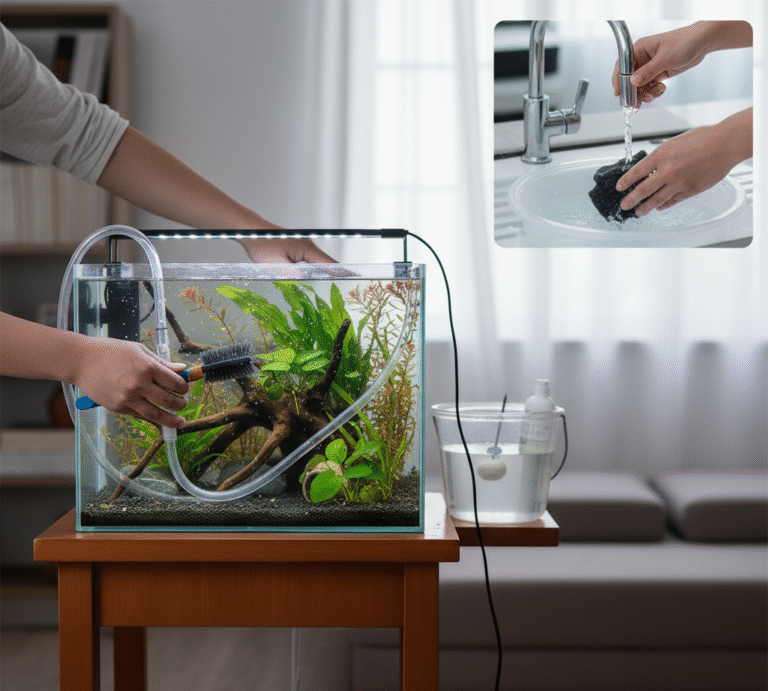
A healthy Betta requires clean water. If your tank is about 10–20 liters, do a water change of about 25–30% every week. Use a small siphon to remove waste from the bottom. Always add the conditioned water back very slowly so the Betta doesn’t feel shocked.
Now, clean the glass with a soft sponge. Do not wash everything with soap because soap is harmful to fish.
8. Common Betta Problems & How to Avoid Them
Fin Rot – caused by dirty water.
Ich (white spots) – a condition brought by either too cold water or a stressed fish.
Constipation – due to overfeeding.
Lethargy: most commonly due to low temperature or poor water quality.
Most problems can be avoided by maintaining warm, clean water and feeding properly.
9. Betta Personality & Interaction
Bettas quickly recognize their owners and often come up to the glass when you walk close. A number of them even flare or dance when they become excited. Place a mirror for 30 seconds once a week on your Betta for them to be able to stretch their fins, but don’t overdo this because it can stress them.
10. Tips for First-Time Betta Keepers
Do not keep two male Bettas together.
Do not place them with fin-nipping fish.
A larger tank is always easier to care for.
Keep the temperature constant.
Offer small but nutritious meals.
Add hiding places to reduce stress.
Observe your Betta daily. If something feels different, take action early