
Aquarium plants look simple from the outside. Put them in water, turn on the light, and they should grow. That’s what most beginners believe. Then reality hits. Plants melt, turn yellow, stop growing, or just sit there doing nothing. Fish are fine, water looks clear, but plants refuse to cooperate.
This is where most people get confused.
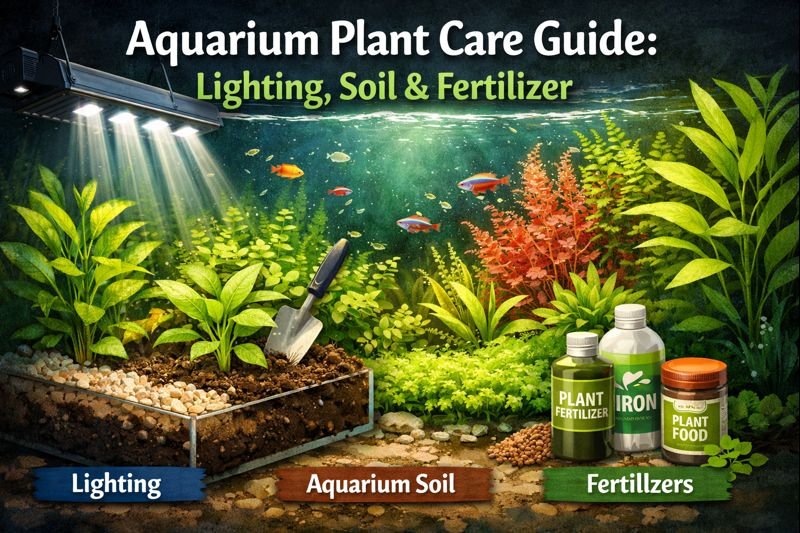
Plant care in aquariums is not about doing more things. It is about doing the right things in balance. Lighting, soil, and fertilizer are the three pillars of plant health. If even one of them is off, growth slows or stops completely.
This guide breaks down aquarium plant care in a practical way, without complicated formulas or high-tech obsession.
First Understand How Aquarium Plants Really Live
Aquarium plants are not houseplants underwater. They live in a completely different environment. Roots, leaves, and stems all behave differently when submerged.
Some plants feed mostly through their roots. Others absorb nutrients directly from water. Some grow slowly and store energy. Others grow fast and demand constant nutrients.
If you treat all plants the same way, problems start.
Good plant care begins with understanding what plants actually need, not what looks good online.
Lighting The Engine Behind Plant Growth
Light is the main driver of growth. Without light, plants cannot photosynthesize. With too much light, plants get stressed and algae takes over.
Most beginner plant problems start with lighting, either too little or too much.
How Much Light Do Aquarium Plants Really Need
This depends on plant type, but beginners often overestimate light requirements.
Low to moderate light is enough for most beginner plants.
A safe starting point:
• 6 to 8 hours of light per day
• Same timing every day
• No direct sunlight
More hours do not mean better growth. They usually mean more algae.
Plants prefer consistency over intensity.
Common Lighting Mistakes
These mistakes slow or stop plant growth:
• Changing light timing daily
• Leaving lights on too long
• Using room sunlight instead of aquarium light
• Buying overly powerful lights
Many tanks fail because light is treated like decoration instead of a growth tool.
Using a timer removes guesswork and prevents mistakes.
Low Light vs High Light Setups
Low light setups grow plants slowly but safely. High light setups grow plants faster but require perfect balance.
For beginners:
Low light is better.
Low light:
• Less algae
• Slower growth
• More forgiving
High light:
• Fast growth
• High algae risk
• Requires CO2 and fertilizer balance
Starting slow builds long-term success.
Soil and Substrate Understanding the Foundation
Substrate is where roots live. But not all plants rely on roots the same way.
This is where many beginners go wrong. They expect plants to grow in any substrate equally.
They don’t.
Types of Substrate Explained Simply
There are three common substrate types.
Inert substrates:
• Gravel
• Sand
These contain no nutrients. Plants survive but may grow slowly unless nutrients are added.
Nutrient-rich substrates:
• Aquasoil
• Planted tank soil
These support faster growth but are not mandatory for success.
Mixed approach:
• Gravel or sand with root tabs
This is often the best option for beginners.
Root Feeders vs Water Column Feeders
Some plants feed mainly from roots.
Examples:
• Amazon sword
• Cryptocoryne
• Vallisneria
These plants struggle without nutrients in the substrate.
Other plants feed mostly from water.
Examples:
• Anubias
• Java fern
• Mosses
They do not care much about substrate quality.
Matching plants to substrate solves many growth issues instantly.
Planting Depth Matters More Than You Think
Improper planting kills plants faster than bad fertilizer.
Common mistakes:
• Burying rhizomes
• Planting too deep
• Compacting substrate too tightly
Rhizome plants should never be buried. Root plants need space to breathe.
Correct planting reduces melt and speeds recovery.
Fertilizer Feeding Plants Without Overdoing It
Fertilizer scares beginners. Some avoid it completely. Others overdose.
Both cause problems.
Aquarium plants need nutrients, but not in large amounts, especially in low tech tanks.
Do All Tanks Need Fertilizer
No.
Many beginner tanks grow plants using:
• Fish waste
• Tap water nutrients
• Natural mulm in substrate
Plants grow slower but stay healthy.
Fertilizer becomes useful when:
• Growth stops completely
• Leaves turn pale
• New leaves look weak
Even then, start small.
Liquid Fertilizer vs Root Tabs
Liquid fertilizer feeds plants through water. Root tabs feed through substrate.
Use liquid fertilizer when:
• Growing water column feeders
• Plants show overall deficiency
Use root tabs when:
• Growing root feeders
• Using inert substrate
You do not need both at full strength.
Overfertilizing Is Worse Than Underfertilizing
Too much fertilizer causes:
• Algae blooms
• Leaf damage
• Water instability
Underfertilized plants grow slowly but survive.
Always increase slowly and observe.
Plants respond in weeks, not days.
CO2 The Optional Part Beginners Obsess Over
CO2 injection is not required for healthy plant growth.
Most beginner plants grow fine without it.
Problems happen when:
• Light is high
• Fertilizer is increased
• CO2 is missing
This imbalance causes algae and stalled growth.
If you are not using CO2:
• Keep light moderate
• Fertilize lightly
• Accept slower growth
Slow growth is healthy growth.
Plant Melt Explained Without Panic
Plant melt is one of the most misunderstood things in aquarium plant care.
Many plants are grown above water. When submerged, old leaves die. New leaves grow adapted to underwater life.
Melt is adaptation, not death.
As long as:
• Roots are firm
• New growth appears
The plant is alive.
Pulling plants during melt kills them.
Water Stability The Hidden Factor
Plants hate constant change.
Frequent large water changes, temperature swings, and parameter chasing slow growth.
Stable water encourages plants to invest energy in growth instead of survival.
Consistency beats perfection every time.
Maintenance Routine for Healthy Plant Growth
Good plant care is boring. That’s a good sign.
Weekly:
• Small water change
• Remove dead leaves
• Light glass cleaning
Monthly:
• Gentle filter rinse in tank water
Avoid deep gravel vacuuming around plant roots.
Let plants settle.
Common Beginner Plant Care Mistakes
These mistakes stop growth:
• Too much light
• Overfertilizing
• Constant rearranging
• Expecting fast results
• Copying high-tech setups
Plants grow on their own schedule.
How Long Until Plants Start Growing Well
After fixing issues:
• 1 to 2 weeks for signs of improvement
• 1 month for steady growth
• 2 to 3 months for visible transformation
Plants are slow teachers.
How to Tell If Plant Care Is Working
Do not look for fast size increase.
Look for:
• New leaves
• Better color
• Stronger stems
• Reduced melt
These signs mean success.
Final Thoughts
Aquarium plant care is not complicated, but it is precise. Lighting, soil, and fertilizer must work together. Too much of one and too little of another causes problems.
Most plant failures come from impatience, not lack of effort.
If you control light, choose the right substrate, and feed plants gently, growth will follow. Slowly, quietly, and reliably.
Plants do not reward force.
They reward balance.