
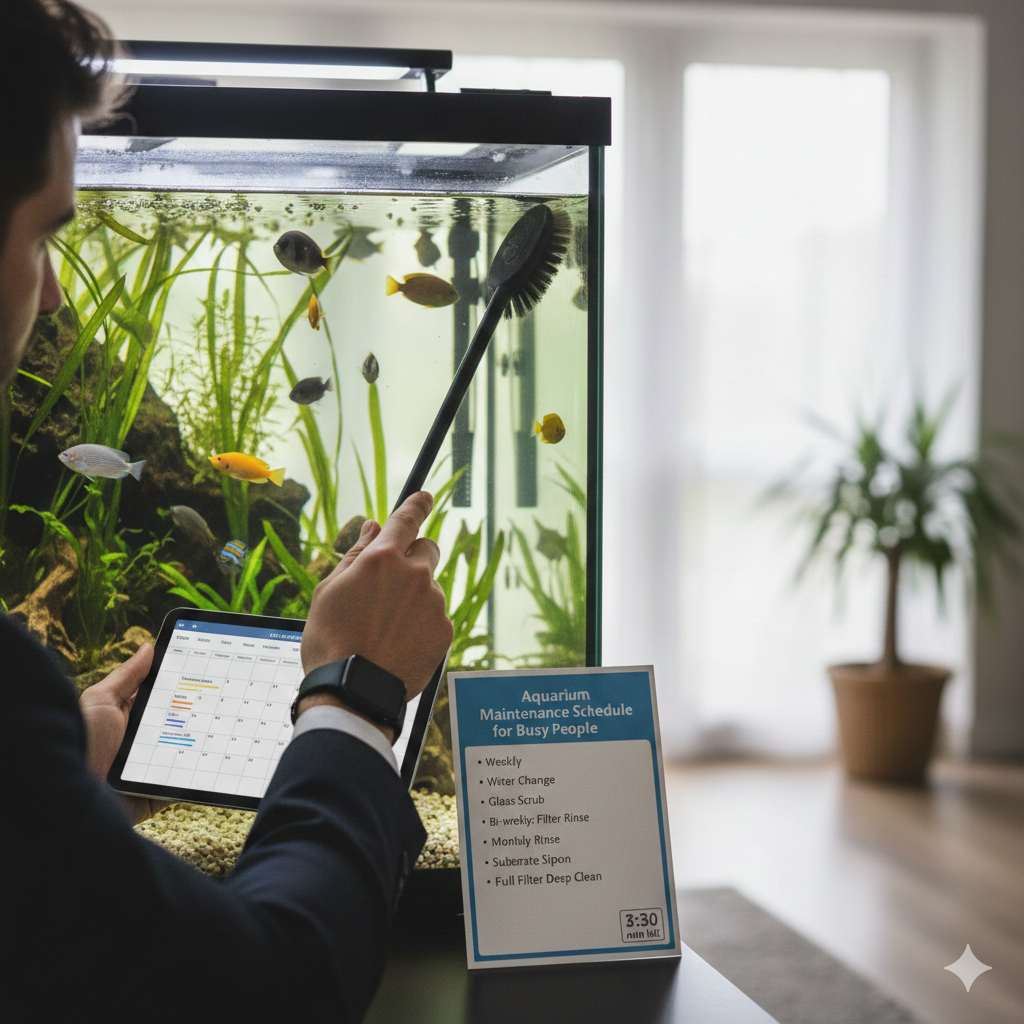
Many people love aquariums but quietly struggle to keep up with them. Work, studies, family, and daily life take priority. After a few weeks, the aquarium starts to feel like another task instead of something relaxing. Missed water changes turn into guilt. Algae grows. Fish look stressed. Eventually, some people give up.
The problem is not lack of interest. The problem is unrealistic maintenance routines.
A healthy aquarium does not need daily attention. It needs a smart schedule that fits into real life. This guide shows how busy people can maintain an aquarium properly with minimum time, minimum stress, and consistent results.
First, Accept This Truth
Aquariums do not fail because people are busy.
They fail because people overdo things when they finally get time.
Busy people often:
• Skip maintenance for weeks
• Then overclean everything in one day
• Change too much water
• Replace filter media
• Panic when fish act strange
This cycle causes instability.
A good aquarium schedule is not about doing more. It is about doing the right things at the right time.
What Makes an Aquarium Low Maintenance
Not all aquariums are equal.
A low-maintenance aquarium usually has:
• Moderate fish stocking
• A stable filter
• Simple decor
• A consistent routine
Fancy setups with demanding fish are hard for busy people. Simpler tanks stay stable even if you miss a day or two.
The goal is predictability.
The Core Rule for Busy People
If you remember only one thing, remember this.
Small actions done regularly are better than big actions done rarely.
This rule alone prevents most aquarium problems.
Daily Aquarium Tasks (2 Minutes Maximum)
Daily maintenance should not feel like work.
You are not cleaning.
You are only observing.
Each day:
• Look at the fish while feeding
• Check if the filter is running
• Notice water clarity
That’s it.
If fish are eating, swimming normally, and the filter is flowing, do nothing.
Busy people often ruin tanks by fixing things that are not broken.
Feeding Routine That Saves Time
Feeding causes more problems than any other task.
For busy people:
• Feed once a day
• Feed small amounts
• Skip one day per week
Fish do not need constant feeding. Slight hunger is healthier than overfeeding.
Overfeeding leads to algae, water quality issues, and extra cleaning later.
Weekly Maintenance Schedule (15–20 Minutes)
Once a week is enough for most home aquariums.
A simple weekly routine:
• Change 10 to 20 percent water
• Light glass wipe if needed
• Remove visible debris
Do not deep clean gravel every week.
Do not touch decorations unless dirty.
Weekly maintenance should feel boring. That means it’s working.
How to Do Fast Water Changes
Water changes scare busy people because they think it takes too long.
Make it simple:
• Keep a bucket ready
• Match water temperature roughly
• Add water conditioner
• Refill slowly
Perfect temperature matching is not needed. Close is good enough.
Consistency matters more than precision.
Biweekly Tasks (Every 2 Weeks)
Some tasks do not need weekly attention.
Every two weeks:
• Check filter flow
• Trim dead plant leaves
• Test water if something feels off
Do not replace filter media. Do not wash everything.
Filters only need attention when flow reduces.
Monthly Maintenance (Once a Month)
Monthly tasks keep the system healthy long-term.
Once a month:
• Gently rinse filter media in tank water
• Clean algae from side glass
• Check heater and thermometer
Never rinse filter media under tap water. That kills beneficial bacteria.
Monthly maintenance prevents emergencies later.
What Busy People Should Never Do
Avoid these time-wasting mistakes:
• Daily water testing
• Frequent chemical use
• Replacing filter media often
• Large emergency cleanings
• Constant rearranging
These actions create more problems than they solve.
Less interference means fewer emergencies.
How to Handle Missed Maintenance
Life happens. You miss a week. Or two.
Do not panic.
If maintenance is missed:
• Do a small water change
• Resume normal schedule
• Do not compensate by overcleaning
Aquariums handle neglect better than overreaction.
Fish Selection Matters for Busy People
Some fish demand attention. Others tolerate neglect well.
Busy people should choose:
• Hardy species
• Peaceful fish
• Fish that tolerate stable neglect
Avoid sensitive species that require frequent feeding or precise conditions.
The right fish reduce maintenance automatically.
Plants Make Maintenance Easier
Live plants help busy people more than they realize.
Plants:
• Absorb waste
• Reduce algae
• Improve stability
You do not need demanding plants. Simple low-light plants reduce cleaning needs and forgive missed routines.
Lighting Schedule to Reduce Work
Too much light causes algae, which creates more cleaning work.
For busy people:
• 6 to 8 hours of light daily
• Use a timer
• Avoid sunlight
Timers remove daily effort and prevent algae problems.
How to Spot Real Problems Quickly
Busy people do not have time to diagnose complex issues.
Focus on behavior:
• Fish eating
• Normal swimming
• No gasping at surface
If behavior is normal, the tank is fine.
Ignore minor algae and cosmetic issues.
Emergency Plan for Busy People
If something suddenly goes wrong:
• Fish gasping
• Strong smell
• Cloudy water
Do only this:
• Small water change
• Increase surface movement
• Stop feeding temporarily
Then observe.
Emergency overreaction kills more fish than the original problem.
Why This Schedule Works Long-Term
This schedule works because it:
• Avoids overcleaning
• Maintains stability
• Fits real life
• Prevents burnout
Many experienced aquarists follow routines like this without realizing it.
Consistency beats effort.
How Much Time Does This Really Take
Let’s be honest.
Daily: 2 minutes
Weekly: 15 minutes
Monthly: 20 minutes
That’s less time than scrolling social media.
Aquariums only feel time-consuming when routines are unclear.
Final Thoughts
An aquarium does not need daily attention to thrive. It needs a calm, predictable routine that fits your life. Busy people often make better aquarists because they interfere less.
If you follow a simple maintenance schedule, avoid panic cleaning, and focus on stability, your aquarium will remain healthy even during busy weeks.
A low-stress aquarium is built with patience, not time.