
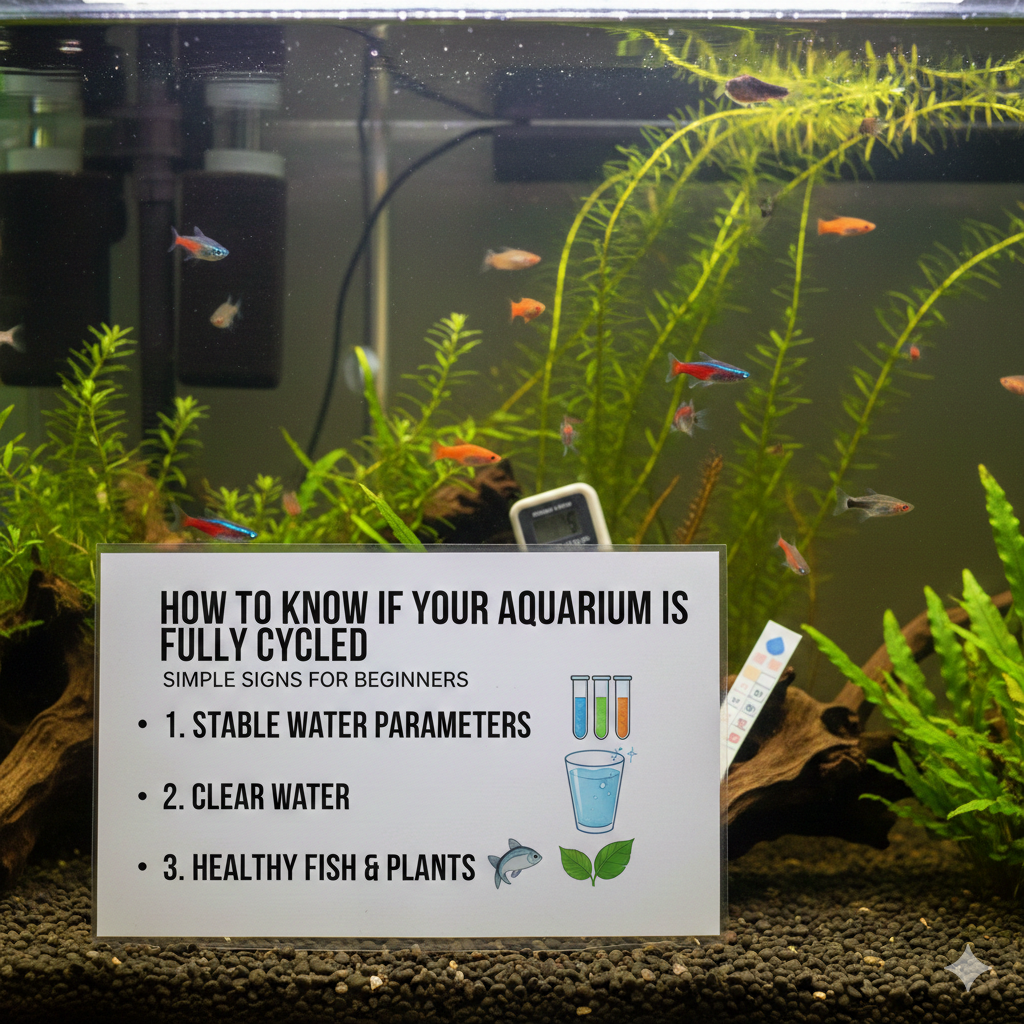
One thing that confuses aquarium beginners the most is the term “cycled.” Most aquarium beginners hear this term without truly understanding what it entails. Because of this, the installation process of aquariums takes longer, and the fish are introduced sooner, which results in the fish getting sick and even dying.
In this tutorial, you will learn what a cycled aquarium is, how to know if your aquarium is cycled, and the importance of waiting until it is cycled.
What Does “Aquarium Cycling” Mean?
One of the most confusing terms for people setting up an aquarium for the first time is the word ‘cycled’. Many people know the word but don’t know what the actual meaning is. Therefore, the fish gets introduced prematurely and as a result, gets sick or even dies.
In this tutorial, you will find out what a cycled aquarium is, how a cycled aquarium can be detected, and why it is so important to allow a tank to cycle before using it.
What Does “Aquarium Cycling” Mean?
Aquarium cycling refers to the process that takes place when good bacteria are formed in the aquarium. These bacteria assist in converting the waste products to non-toxic compounds.
Fish yield waste; leftover food from people also yields waste. Without beneficial bacteria, the waste turns toxic.
* A cycled tank means:
Good bacteria are there
Waste is being naturally processed
Water remains safer for fish
Why Cycling Is Important Before Adding Fish
In a new tank, there are no beneficial bacteria at first.
Without cycling:
Ammonia builds up
Fish get burned gills
Fish become stressed
Sudden fish deaths happen
Cycling protects fish by creating a natural waste-processing system.
The Three Stages of the Aquarium Cycle
To know if your tank is cycled, you should understand the basic stages.
Stage 1: Ammonia
Comes from fish waste and food
Very toxic to fish
Stage 2: Nitrite
Created when bacteria eat ammonia
Still very toxic
Stage 3: Nitrate
Less harmful
Removed by water changes and plants
A fully cycled tank has no ammonia, no nitrite, and some nitrate.
Clear Signs Your Aquarium Is Fully Cycled
1. No Ammonia or Nitrite (Best Sign)
If you test your water and:
Ammonia = 0
Nitrite = 0
Nitrate is present
Your tank is cycled.
Even beginners should use a simple test kit to confirm this.
2. Fish Are Active and Eating Well
In a cycled tank:
Fish swim normally
They eat properly
No gasping at surface
Happy fish are a strong sign of a healthy cycl
3. Water Smells Clean
A cycled aquarium:
Has no strong smell
Smells fresh or slightly earthy
A bad smell usually means waste is not being processed.
4. Algae Appears in Small Amounts
Light algae growth often appears in cycled tanks. This is normal and not a bad sign.
No algae at all sometimes means the tank is still new.
5. Filter Has Brown Slime or Dirt
That brown gunk inside the filter is actually good bacteria.
Never clean it completely. Its presence shows the tank is maturing
6. Water Parameters Stay Stable for 5–7 Days
This is the final confirmation.
For one full week:
Ammonia = 0
Nitrite = 0
Nitrate = present
If these levels remain stable without sudden spikes, your aquarium is fully cycled 🎉
How Long Does Aquarium Cycling Take?
For most beginner tanks:
2–4 weeks is common
Can take up to 6 weeks in some cases
Factors that affect cycling speed:
Tank size
Filter quality
Water temperature
Use of bottled bacteria
⚠️ Rushing this process almost always ends badly for fish.
Do You Need a Water Test Kit?
Yes — absolutely.
A test kit helps you:
Know when your tank is safe
Prevent invisible fish stress
Avoid sudden ammonia spikes
Liquid test kits are more accurate than strips, but strips are better than testing nothing at all.
Common Beginner Mistakes During Cycling
❌ Adding too many fish at once
❌ Overfeeding “to help the cycle”
❌ Cleaning filter media with tap water
❌ Believing cloudy or clear water indicates safety
❌ Doing large water changes too often
These mistakes can restart the cycle or kill beneficial bacteria.