
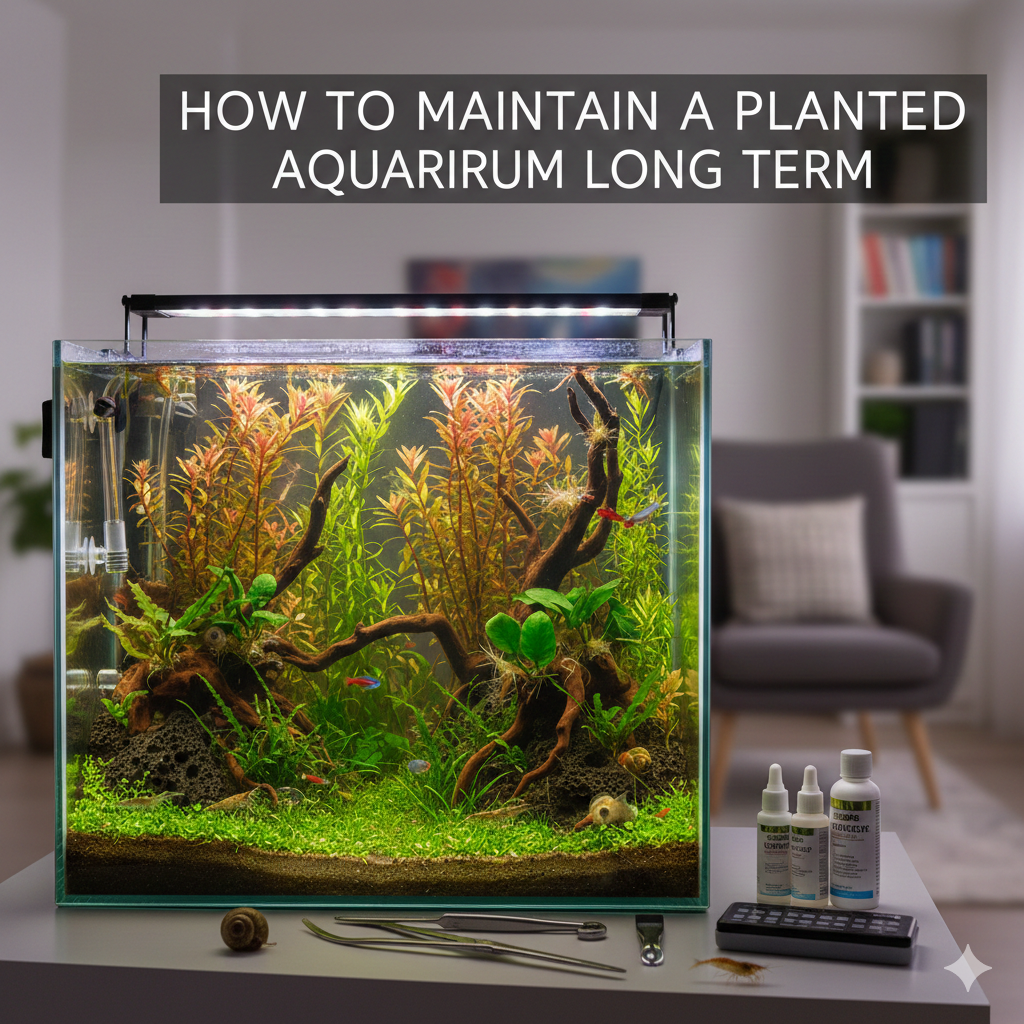
Many planted aquariums look great in the first few months. Fresh plants, clean glass, clear water. Then slowly, things change. Plants stop growing the same way. Algae appears more often. Maintenance feels heavier. Some hobbyists give up at this stage, thinking planted tanks are only beautiful for a short time.
That idea is wrong.
A planted aquarium is not meant to peak quickly. It is meant to mature slowly. Long-term success does not come from constant upgrades or daily adjustments. It comes from stability, restraint, and understanding how a tank changes over time.
This guide focuses on how to maintain a planted aquarium for the long run. Not weeks. Not months. Years.
First Understand How Planted Tanks Change Over Time
A planted aquarium goes through phases.
In the beginning, plants are adapting. Roots are forming. Bacteria are settling. Everything feels fragile.
After a few months, growth improves. The tank feels easier. Plants start to look natural.
After a year or more, the tank becomes mature. Growth slows. Algae behaves differently. Maintenance needs change.
Long-term maintenance means adjusting your mindset as the tank ages.
Why Most Long-Term Planted Tanks Fail
Planted tanks rarely fail suddenly. They fail slowly because of repeated small mistakes.
Common long-term mistakes:
• Increasing light to chase faster growth
• Adding more fertilizer over time
• Rearranging plants too often
• Overcleaning a mature tank
• Ignoring early warning signs
These actions slowly push the tank out of balance.
Long-term success comes from doing less, not more.
Lighting Management Over the Long Term
Lighting that works in month two may not work in year two.
As plants grow larger and denser, they block light naturally. Many people respond by increasing light intensity or duration. This is where algae problems begin.
For long-term planted tanks:
• Keep light duration stable
• Adjust plant density instead of light
• Trim plants instead of increasing brightness
If algae increases, reduce light slightly before touching anything else.
Consistency beats intensity.
Plant Trimming Is a Long-Term Skill
Trimming is not about keeping plants short. It is about guiding growth.
Poor trimming causes:
• Shading of lower plants
• Weak new growth
• Organic buildup
Good trimming:
• Encourages healthy new shoots
• Improves water circulation
• Reduces dead plant matter
Trim slowly. Never remove too much at once. A planted tank needs some mess to stay healthy.
Substrate Care Without Disturbing the System
Substrate becomes more important as the tank ages.
Over time, it collects:
• Mulm
• Root networks
• Beneficial bacteria
Deep cleaning an old substrate resets the system and often causes plant decline.
For long-term maintenance:
• Avoid deep vacuuming planted areas
• Gently clean open spaces only
• Let roots stay undisturbed
A slightly dirty substrate is a healthy substrate.
Fertilizer Use Over the Long Term
Many hobbyists increase fertilizer as the tank matures. This often backfires.
Plants grow larger, but their nutrient demand does not increase endlessly. At some point, adding more fertilizer feeds algae instead of plants.
Long-term fertilizer tips:
• Maintain consistent dosing
• Reduce doses if algae increases
• Watch plant response, not charts
Plants tell you what they need through leaf color and growth pattern.
Do Long-Term Planted Tanks Need CO2
Some do. Many do not.
Long-term success is possible with and without CO2. The key is balance.
CO2 tanks fail long-term when:
• CO2 fluctuates
• Light is too strong
• Fertilizer is overdosed
Non-CO2 tanks fail when:
• Light is increased too much
• Expectations are unrealistic
Choose one method and commit to it. Switching methods repeatedly destabilizes the tank.
Water Changes for Mature Planted Tanks
Water changes change in importance over time.
In young tanks, frequent water changes help stabilize the system. In mature tanks, excessive water changes can cause stress.
For long-term planted tanks:
• Small weekly or biweekly water changes
• Avoid large sudden changes
• Match temperature closely
Consistency matters more than volume.
Filter Maintenance Without Breaking Balance
Filters become biological powerhouses over time.
Overcleaning filters in a mature planted tank removes beneficial bacteria and causes instability.
Long-term filter care:
• Clean only when flow reduces
• Rinse media in tank water
• Never replace all media at once
A slightly dirty filter is often working perfectly.
Algae Control in Mature Planted Tanks
Algae never disappears completely. It changes.
In mature tanks, algae often appears due to:
• Shading from overgrown plants
• Organic buildup
• Light imbalance
Do not treat algae as an enemy.
Instead:
• Improve circulation
• Trim plants
• Reduce light slightly
Chemical solutions create short-term relief and long-term problems.
Fish Stocking and Its Long-Term Impact
Fish influence planted tanks more than people realize.
Over time:
• Fish grow
• Waste increases
• Nutrient balance shifts
Long-term tanks benefit from:
• Moderate stocking
• Avoiding messy eaters
• Observing fish behavior changes
If fish load increases, plant care must adjust gently.
How to Read Your Tank Instead of Reacting
Long-term maintenance is about observation.
Signs the tank is healthy:
• New plant growth, even if slow
• Stable algae patterns
• Fish behaving normally
Signs something is off:
• Sudden plant melt in mature tank
• Algae changing type rapidly
• Fish stress after maintenance
Do not react immediately. Observe for a week before making changes.
Why Stability Is More Important Than Perfection
Perfect tanks exist only in photos.
Real planted aquariums have:
• Some algae
• Uneven growth
• Seasonal changes
Chasing perfection leads to constant intervention. Constant intervention breaks stability.
Long-term tanks survive because they are allowed to be imperfect.
Common Long-Term Mistakes to Avoid
These mistakes slowly kill planted tanks:
• Constant rescaping
• Increasing light over time
• Adding new products regularly
• Ignoring early imbalance signs
• Comparing your tank to others
Your tank has its own rhythm.
How Long-Term Maintenance Gets Easier
Many beginners believe planted tanks get harder with time. The opposite is true.
After one year:
• Maintenance becomes predictable
• Plants stabilize
• Algae becomes manageable
The tank starts working with you instead of against you.
Most people quit just before this stage.
When to Intervene and When to Leave Things Alone
Intervene when:
• Plants stop producing new leaves for months
• Entire sections melt suddenly
• Fish show ongoing stress
Leave things alone when:
• Growth slows naturally
• Algae appears mildly
• Plants look healthy but untidy
Knowing the difference comes with patience.
Why Long-Term Planted Tanks Are Worth It
Long-term planted aquariums develop character.
They look more natural. Fish behave better. Maintenance feels calmer. The tank becomes part of the room instead of a project.
Short-term tanks impress.
Long-term tanks satisfy.
Final Thoughts
Maintaining a planted aquarium long term is not about constant improvement. It is about allowing the system to mature. Plants slow down. Growth stabilizes. The tank becomes predictable.
If you reduce interference, observe patterns, and respect balance, your planted aquarium can stay healthy for years without major changes.
Plants do not reward effort alone.
They reward patience and restraint.