
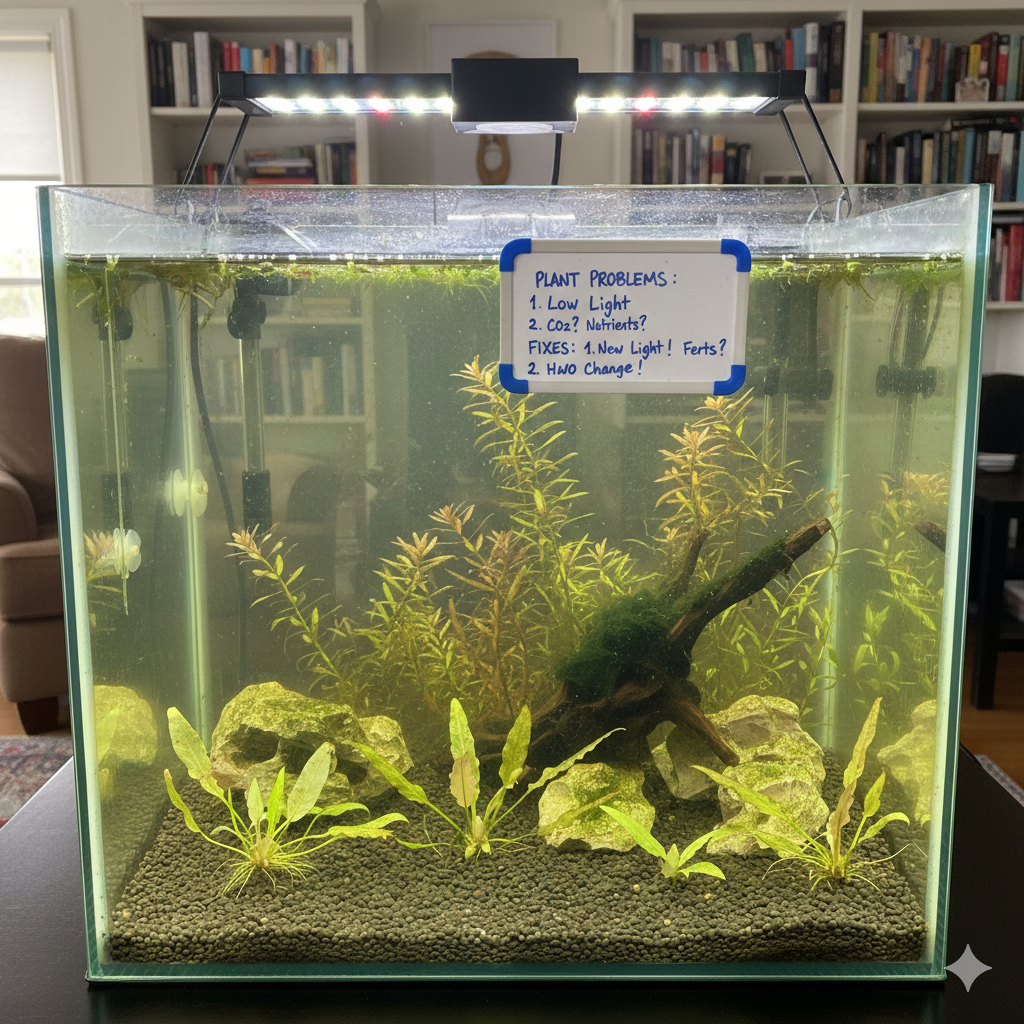
Almost every aquarium plant beginner reaches this stage. The plants are alive, but they are not growing. Leaves stay the same size for weeks. Some turn pale. Some melt slowly. Nothing looks dramatic enough to call it a disaster, but nothing looks healthy either.
This is more frustrating than plants dying outright.
When aquarium plants are not growing, it usually means something small is off. Not one big mistake. Just one or two basic needs not being met consistently. The good news is that slow or stopped growth is fixable once you understand what plants are actually asking for.
This article explains the real reasons aquarium plants stop growing and how to fix them without overreacting.
First, Understand This About Plant Growth
Aquarium plants do not grow the way houseplants do. Growth underwater is slower. Much slower.
Beginners often expect visible growth every few days. That rarely happens, especially in low tech tanks. Some plants grow a few millimeters per week. That is normal.
Before fixing anything, ask yourself one question.
Are the plants truly not growing, or are they just growing slowly?
If new leaves appear healthy, even after weeks, the plant is growing.
Cause 1 Not Enough Light (The Most Common Issue)
Light is the main driver of plant growth. Without enough light, plants survive but do not thrive.
Signs of insufficient light:
• Leaves stay small
• Stems stretch toward the surface
• Color looks dull
• Growth feels frozen
Many beginner tanks use basic lights, which is fine, but the duration or placement is often wrong.
Fix
Keep lighting consistent.
• 6 to 8 hours daily
• Same timing every day
• No direct sunlight
Do not suddenly increase light intensity. That causes algae faster than growth.
Cause 2 Too Much Light (Yes, This Also Stops Growth)
More light does not always mean more growth.
Too much light causes algae to outcompete plants. Plants get stressed and slow down instead of speeding up.
Signs of excessive light:
• Algae on leaves
• Leaves turning transparent
• Plants melting despite being alive
Fix
Reduce light duration first, not brightness.
• Cut down by 1 hour
• Wait two weeks
• Observe plant response
Balance beats power.
Cause 3 No Nutrients in the Water
Plants need nutrients, even in low tech tanks.
Fish waste provides some nutrients, but lightly stocked tanks or new tanks often lack enough.
Signs of nutrient deficiency:
• Yellowing leaves
• Pale new growth
• Very slow growth
Fix
Start small.
• Use a mild liquid fertilizer once a week
• Or add root tabs for root feeders
Overfertilizing is worse than underfeeding plants.
Cause 4 Wrong Substrate for the Plant Type
Not all plants feed the same way.
Some plants absorb nutrients from water. Others feed mostly from roots.
Root feeders include:
• Amazon sword
• Cryptocoryne
• Vallisneria
When planted in inert gravel without nutrients, they survive but barely grow.
Fix
• Add root tabs near the roots
• Avoid disturbing the substrate
This alone often restarts growth.
Cause 5 CO2 Misunderstanding
Many beginners believe plants cannot grow without CO2 injection. That is not true.
Most beginner plants grow fine without CO2. They just grow slowly.
The real problem comes when light and fertilizer are increased without CO2. This creates imbalance.
Fix
If you are not using CO2:
• Keep light moderate
• Fertilize lightly
• Accept slower growth
Chasing fast growth causes problems.
Cause 6 New Tank Syndrome
Plants behave differently in new tanks.
In the first 4 to 6 weeks:
• Water chemistry fluctuates
• Beneficial bacteria are still developing
• Plants adapt slowly
Growth often pauses during this phase.
Fix
Do nothing drastic.
• Maintain routine
• Avoid moving plants
• Let the tank mature
Many plants start growing only after the tank stabilizes.
Cause 7 Plant Melt Misinterpreted as Failure
Plant melt scares beginners.
Leaves melting does not always mean the plant is dying. Many aquarium plants are grown above water and must adapt underwater.
Old leaves die. New leaves grow.
Fix
• Remove dead leaves
• Leave roots untouched
• Wait for new growth
Pulling plants out during melt kills them for real.
Cause 8 Poor Water Stability
Plants hate constant changes.
Frequent large water changes, temperature swings, and constant adjustments slow growth.
Signs include:
• Plants staying alive but inactive
• Repeated melting after water changes
Fix
• Smaller, regular water changes
• Match temperature closely
• Stop chasing numbers
Stable water grows plants better than perfect water.
Cause 9 Plants Planted Incorrectly
This is more common than people admit.
Common mistakes:
• Burying rhizomes (anubias, java fern)
• Planting too deep
• Constant replanting
Plants stressed by incorrect planting focus on survival, not growth.
Fix
Learn how each plant should be placed.
• Rhizomes above substrate
• Roots gently buried
• Leave plants alone once placed
Cause 10 Expecting Fast Results
This is not talked about enough.
Aquarium plants grow on their own timeline. Especially in low tech tanks.
If you expect:
• Weekly size increase
• Instant carpet
• Fast bushy growth
You will always feel disappointed.
Fix
Measure success differently.
• Healthy new leaves
• Stable color
• No constant melting
Slow growth is healthy growth.
Cause 11 Poor Plant Choice for Your Setup
Not all plants suit all tanks.
High-demand plants fail in low light tanks. Carpet plants fail without CO2. Some stem plants fail in soft water.
Fix
Match plants to your setup, not the other way around.
Beginner setups need:
• Low light plants
• Low tech plants
• Forgiving species
The right plant fixes half the problem instantly.
Cause 12 Overcleaning the Tank
Clean tanks are not always healthy tanks.
Excessive cleaning removes nutrients and beneficial bacteria.
Signs:
• Plants stop growing after deep cleaning
• Repeated stagnation
Fix
• Clean lightly
• Do not deep vacuum planted areas
• Leave mulm around roots
Plants benefit from a little mess.
How Long Until Growth Improves After Fixing Issues
Be patient.
After correcting issues:
• 1 to 2 weeks for visible change
• 1 month for stable growth
• 2 to 3 months for real improvement
Plants do not respond overnight.
When to Worry and When Not To
Do not worry if:
• Old leaves melt but new ones grow
• Growth is slow but steady
• Tank is less than 2 months old
Worry only if:
• No new leaves for months
• Entire plant rots
• Roots turn mushy
Most growth issues are temporary.
Final Thoughts
When aquarium plants are not growing, the problem is rarely complicated. It is usually light, nutrients, stability, or patience. Often more than one, but never all at once.
The biggest mistake beginners make is changing everything too fast. Plants need time to respond.
Fix one thing. Wait. Observe.
Aquarium plants do not reward force.
They reward consistency.