
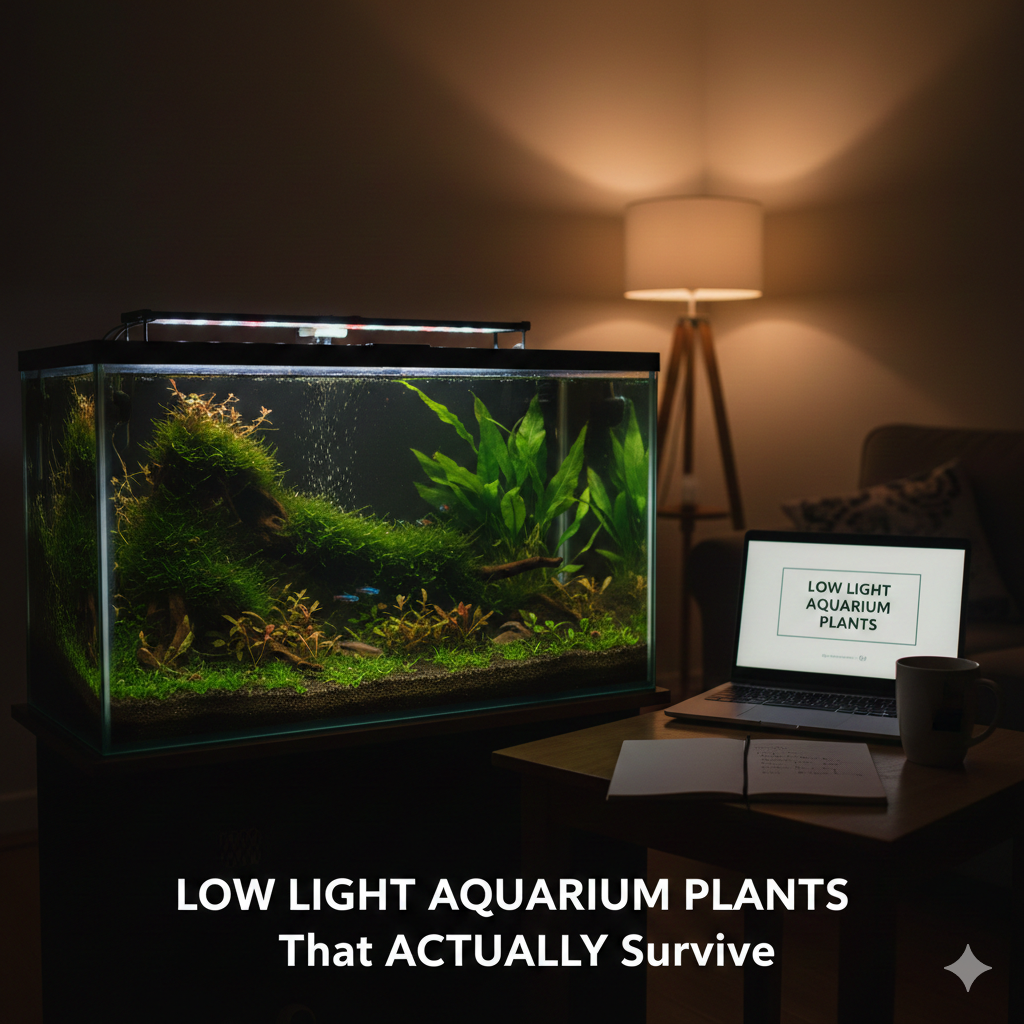
Low light aquariums are where most beginners end up, even if they don’t plan to. Maybe the tank is in a corner of the room. Maybe the light is basic. Maybe algae scared you and you reduced lighting. Or maybe you just don’t want an expensive setup.
The problem starts when people buy plants that look easy but slowly melt away. Leaves turn yellow. Stems rot. The plant survives for a few weeks and then disappears. That’s when beginners decide plants are “too hard”.
They’re not.
The truth is simple. Most aquarium plants sold in shops are not low light plants. They survive temporarily under low light, but they don’t actually live there long term.
This article focuses only on aquarium plants that truly survive and stay healthy in low light tanks. Not plants that “can manage for some time”. Plants that actually live.
What Low Light Really Means (And Why It Matters)
Low light does not mean darkness. It means moderate, gentle lighting that does not push plants to grow fast.
Low light tanks usually have:
• Basic LED lights
• 6 to 8 hours of lighting
• No CO2 injection
• Minimal fertilization
This kind of setup is common in homes. It is also where plants either adapt or fail.
Plants that survive low light do not depend on speed. They grow slowly, store energy, and tolerate imperfections. These are the plants beginners need.
Why Most Plants Fail in Low Light Tanks
Most plant failures are not because of bad care. They fail because expectations are wrong.
Common reasons plants die in low light tanks:
• Too much light reduction too fast
• Wrong plant choice
• Burying plants incorrectly
• Constant moving and replanting
• Overreacting to melt
Low light plants succeed when left alone. Constant fixing kills them faster than low light ever will.
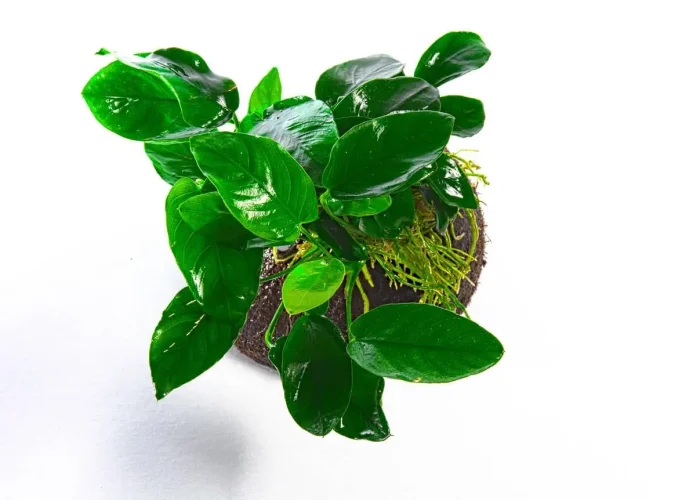
Anubias (The Definition of Survival)
If there is one plant that deserves to be called unkillable, it is anubias.
Anubias does not need strong light. In fact, too much light causes algae on its leaves. It grows slowly, steadily, and quietly.
Important thing many beginners miss: anubias should not be buried in substrate. Its rhizome must stay exposed.
Why anubias survives low light:
• Thick leaves store energy
• Slow growth prevents nutrient stress
• Works without CO2
• Tolerates irregular care
It does not grow fast. But it stays alive for years.
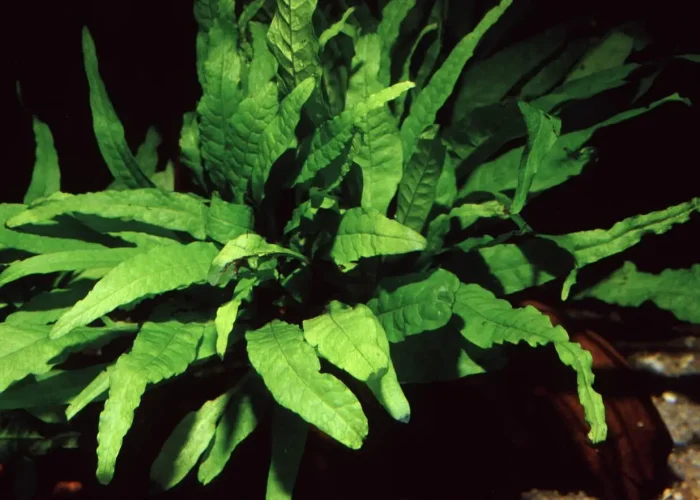
Java Fern (Ugly Phase, Then Stable)
Java fern is famous for confusing beginners. At first, it looks fine. Then leaves turn brown. Spots appear. People panic.
This is normal.
Java fern adapts slowly. Old leaves die. New leaves grow stronger. Once settled, it becomes extremely stable.
Why java fern survives low light:
• Does not rely on substrate
• Grows from a rhizome
• Uses water column nutrients
• Survives inconsistent care
Tie it to wood or rock. Leave it alone. That’s it.
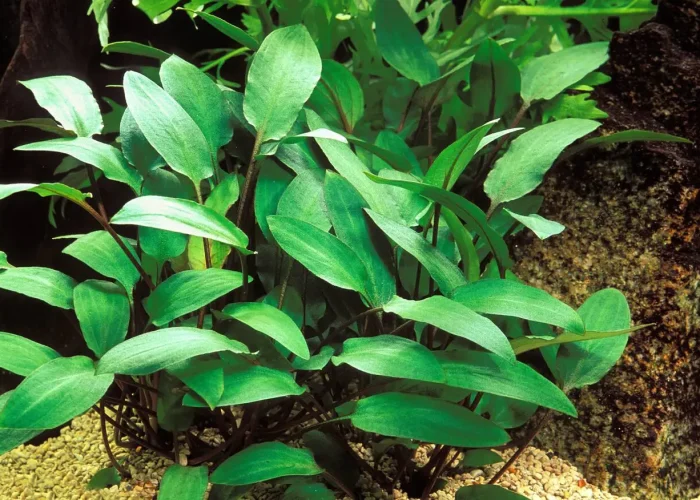
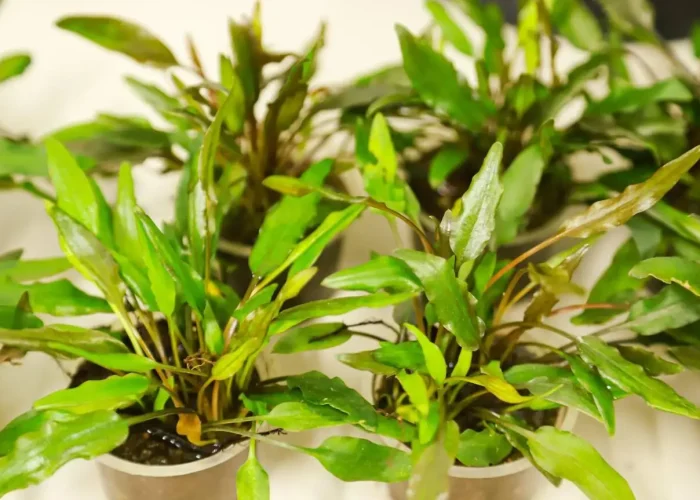
Cryptocoryne (The Plant That Tests Patience)
Cryptocoryne plants are famous for melting. Beginners hate them at first.
But here’s the truth. Crypts don’t die easily. They change.
When introduced to a new tank, they often drop old leaves. Roots remain alive. New growth appears weeks later.
Why crypts survive low light:
• Strong root systems
• Adapt well to stable conditions
• Prefer low to medium light
• Do not need CO2
The mistake beginners make is pulling them out too early.
If you plant crypts and forget them, they reward patience.
Amazon Sword (Low Light, Not Small Tank)
Amazon swords survive low light, but only if given space.
Many beginners put them in tiny tanks. The plant struggles, not because of light, but because of limited nutrients and root space.
Why amazon swords survive low light:
• Large leaves store nutrients
• Heavy root feeding
• Tolerate slower growth
They benefit from root tabs, but even without them, they survive longer than most plants.
Give them room. That’s the key.
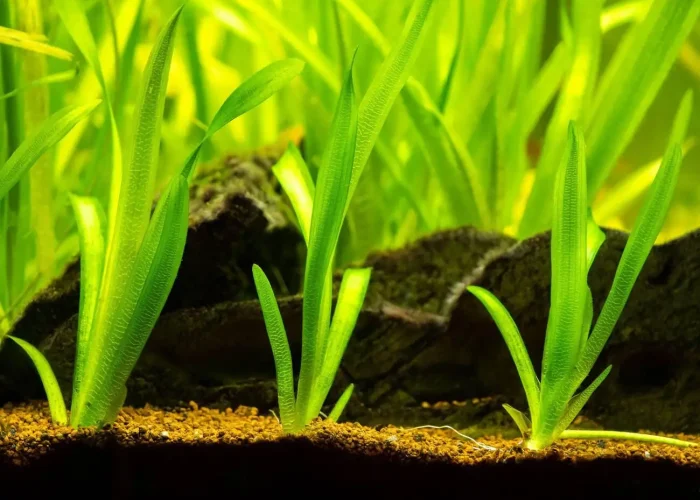
Vallisneria (Quietly Tough)
Vallisneria does not look dramatic at first. But it is one of the toughest background plants for low light tanks.
Leaves may melt initially. This is normal. New leaves grow stronger and longer.
Why vallisneria survives low light:
• Spreads through runners
• Adapts to tap water
• Does not need CO2
• Handles imperfect conditions
Once settled, it fills space naturally.
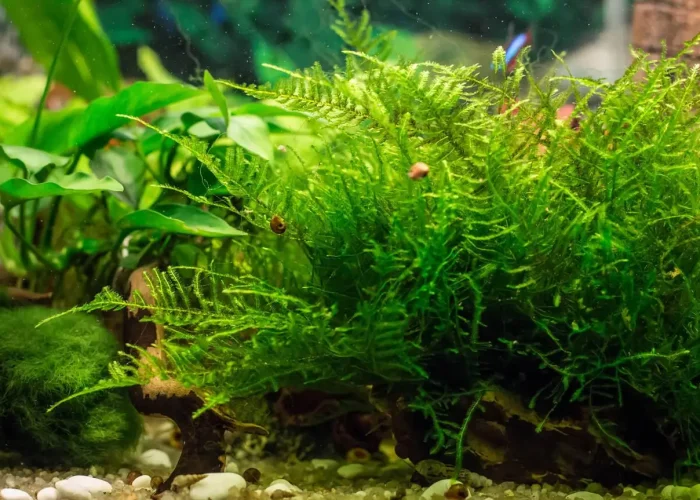
Java Moss (Survives Almost Anything)
Java moss does not look impressive in shops. That’s why beginners ignore it.
Big mistake.
Java moss survives conditions that kill most plants. Low light, no fertilizer, inconsistent care. It just keeps growing.
Why java moss survives low light:
• Minimal nutrient demand
• Grows attached or floating
• Perfect for shrimp tanks
• Adapts easily
It may not look fancy, but it never gives up.
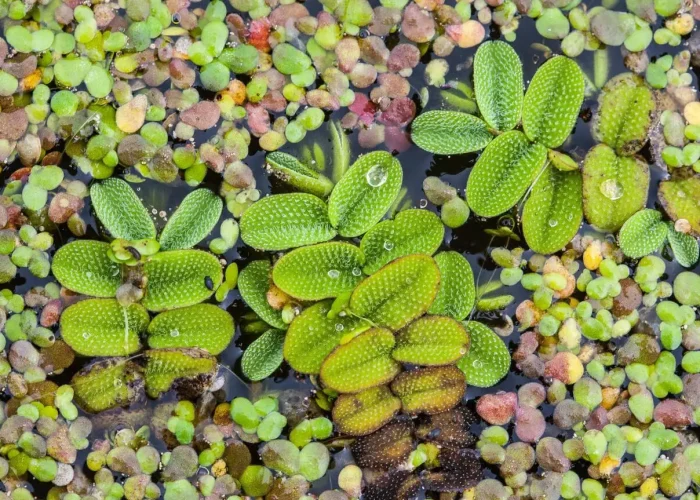
Floating Plants (Low Light Helpers)
Floating plants are underrated in low light tanks.
They sit closer to light and absorb excess nutrients. This helps other plants survive by reducing algae pressure.
Good low light floating plants:
• Frogbit
• Salvinia
• Duckweed (if controlled)
They grow fast even under moderate light and stabilize tanks naturally.
Why Slow Growth Is a Good Sign
Beginners often think slow growth means failure. In low light tanks, it means balance.
Slow growth means:
• Less algae
• Less trimming
• Lower nutrient demand
• More stability
Plants that grow slowly survive longer.
Fast growth without light and CO2 leads to collapse.
Lighting Mistakes That Kill Low Light Plants
The biggest mistake is inconsistency.
Common lighting mistakes:
• Random on and off times
• Sudden reduction from long hours
• Using sunlight instead of aquarium light
Low light plants need consistent timing more than brightness.
Use a timer. Keep 6 to 8 hours. Do not change it daily.
Do Low Light Plants Need Fertilizer
Sometimes. Not always.
Many low light tanks run fine on fish waste alone. Especially if stocked lightly.
Signs plants may need help:
• Pale new leaves
• Extremely slow growth
• Yellowing over time
If needed, start very small. Overfertilizing causes algae faster than underfeeding plants.
Plant Melt Does Not Mean Death
This needs to be said clearly.
Melt is adaptation, not failure.
Leaves grown in air die underwater. New leaves grow adapted to your tank. This process takes weeks.
Pulling plants during melt is the fastest way to actually kill them.
Maintenance for Low Light Plant Survival
Maintenance should be minimal.
Good routine:
• Remove dead leaves
• Small weekly water change
• Avoid disturbing substrate
• Do not move plants often
Low light plants thrive on stability, not attention.
Common Beginner Mistakes
These mistakes kill plants faster than low light:
• Changing things every week
• Expecting fast growth
• Comparing with CO2 tanks
• Buying demanding plants
• Panicking too early
Low light tanks reward patience.
How Long Until Low Light Plants Look Good
Be honest with yourself.
First month looks rough. Second month improves. Third month starts to look natural.
Low light tanks mature slowly. That slow maturity is what keeps them stable long term.
Why These Plants Actually Survive
All plants listed here share one thing. They are not fragile.
They do not demand perfect conditions. They adapt. They forgive mistakes. They survive beginners.
That is what matters.
Final Thoughts
Low light aquariums are not a compromise. They are a smart choice. When planted correctly, they are calmer, more stable, and easier to maintain than high-tech setups.
If you choose plants that actually survive instead of plants that only look good in shops, your aquarium will slowly become a living, balanced system.
Slow growth is not failure.
It is success taking its time.