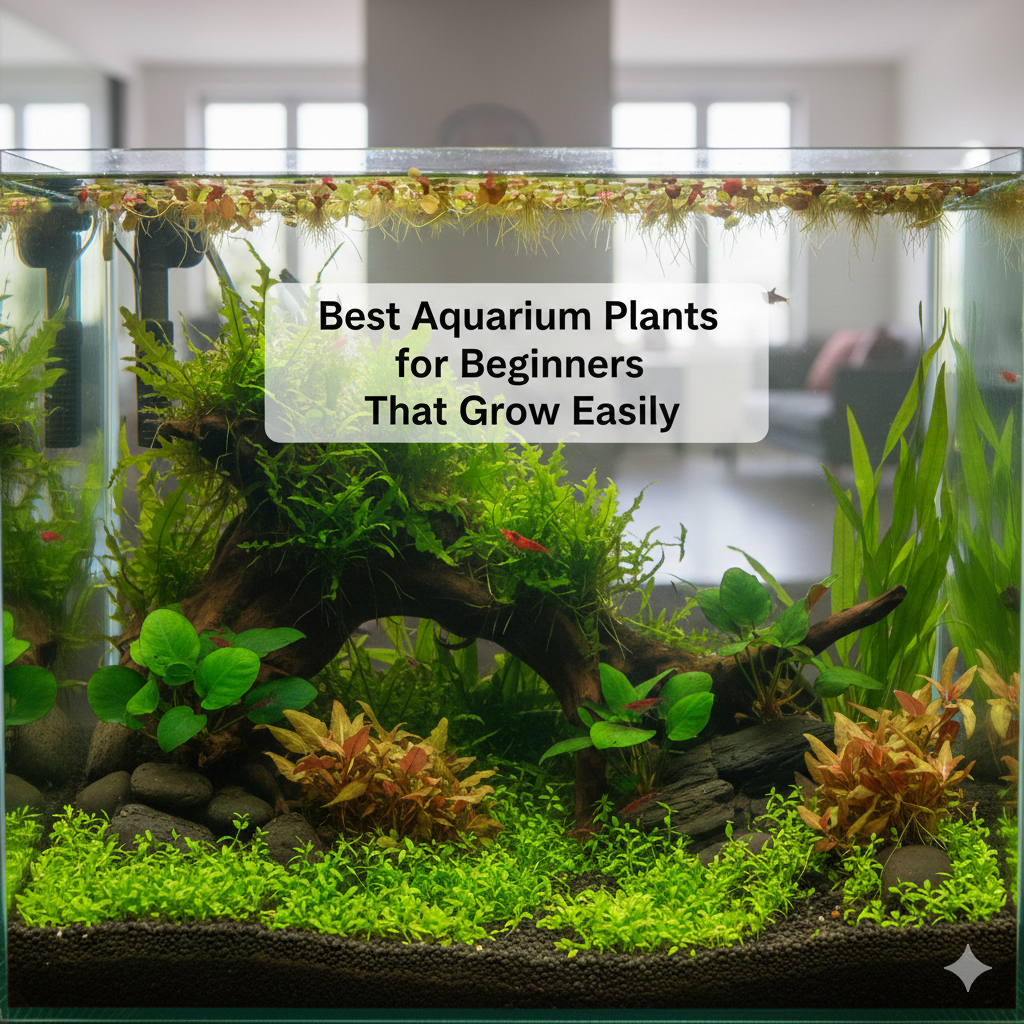
When beginners start an aquarium, plants are often the most confusing part. Fish seem simple. Feed them, change water, done. Plants feel different. Some melt. Some turn yellow. Some just sit there and refuse to grow. That experience makes many beginners believe aquarium plants are difficult.
They are not.
The real problem is that most beginners start with the wrong plants. Many plants sold in shops look beautiful but are not beginner friendly. Once you choose plants that actually match beginner tanks, growing aquarium plants becomes one of the easiest and most satisfying parts of the hobby.
This guide focuses on aquarium plants that grow easily, survive beginner mistakes, and do not need CO2, strong lights, or daily care.
What Makes a Plant Beginner Friendly
Before listing plants, it is important to understand why some plants succeed and others fail.
Beginner-friendly aquarium plants usually have a few things in common. They grow slowly, tolerate normal tap water, and do not depend on CO2 injection. They also recover well if conditions are not perfect.
Plants that grow easily do not demand attention. They adapt.
If a plant needs exact lighting, perfect nutrients, and constant trimming, it is not a beginner plant, no matter how popular it looks online.
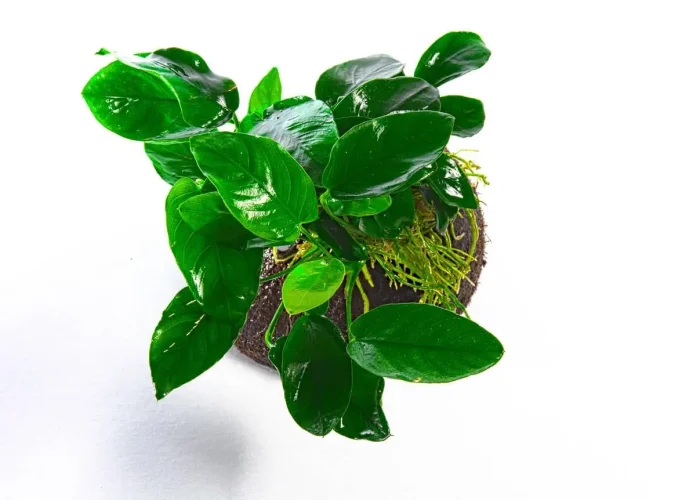
Anubias (One of the Safest Plants to Start With)
Anubias is often the first plant experienced hobbyists recommend to beginners, and for good reason.
It grows slowly and tolerates low light. You do not plant it in substrate. Instead, you attach it to driftwood or rocks. This makes it perfect for beginners who are unsure about substrates.
Anubias survives:
• Low light
• No CO2
• Irregular fertilizing
Its leaves are thick and tough, so most fish do not eat them. Growth is slow, but steady. That slow pace actually keeps algae under control.
If you want a plant that almost never dies, this is it.
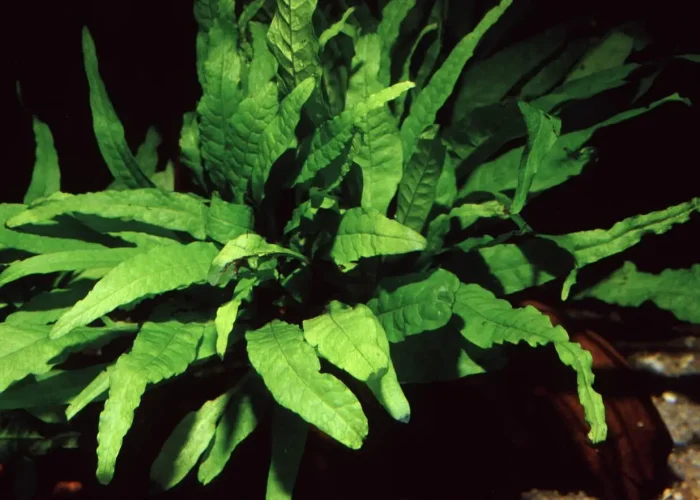
Java Fern (Hardy and Very Forgiving)
Java fern is another classic beginner plant.
Like anubias, it does not need to be planted in substrate. It attaches to wood or rocks and grows from a rhizome. Burying it is a common beginner mistake and causes rot.
Java fern tolerates:
• Low to medium light
• No CO2
• Wide water conditions
Some leaves may turn brown at first. That is normal. New leaves usually grow healthier once the plant adapts.
This plant grows slowly but reliably and works well in almost any freshwater tank.
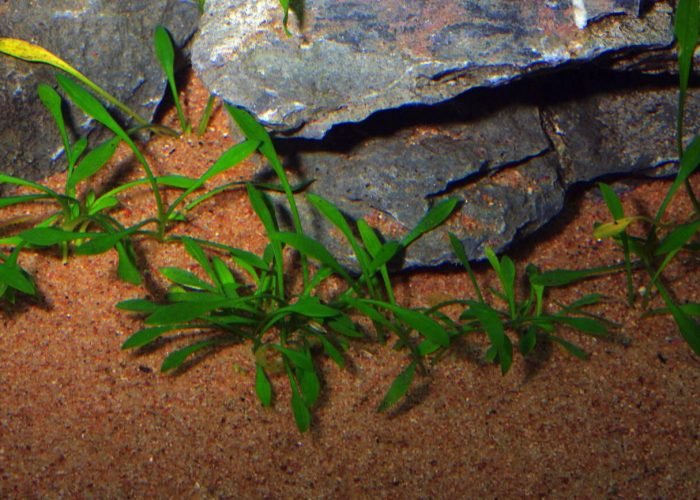
Cryptocoryne (Slow But Very Stable Once Settled)
Cryptocoryne plants confuse many beginners because of something called plant melt.
When you first add crypts, their leaves may melt away. This scares people. But in most cases, the roots stay alive and new leaves grow later.
Once crypts settle, they become extremely stable.
They prefer:
• Low to medium light
• No CO2
• Minimal disturbance
Cryptocoryne plants do best when left alone. Do not move them repeatedly. Once rooted, they reward patience.
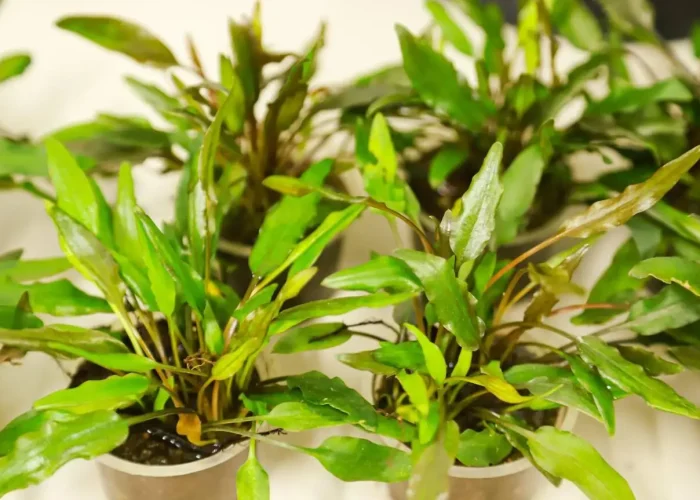
Amazon Sword (Easy but Needs Space)
Amazon sword plants are beginner friendly but misunderstood.
They grow large. Many beginners put them in small tanks and wonder why they struggle.
In a tank with enough space, Amazon swords are very easy to grow. They are heavy root feeders and benefit from root tabs, but they can still survive without them.
They do well in:
• Medium to large tanks
• Moderate lighting
• No CO2
Give them space and time. They reward you with bold, healthy growth.
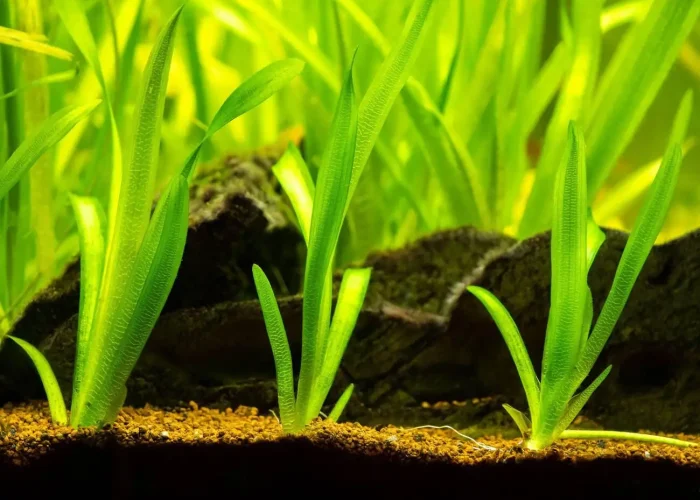
Vallisneria (Fast Growth Without Complexity)
Vallisneria is one of the easiest fast-growing plants for beginners.
It spreads through runners and fills the background naturally. Growth is faster than many beginner plants, but still manageable.
It grows well in:
• Low to medium light
• No CO2
• Normal tap water
Once vallisneria settles, it spreads on its own. Do not panic if initial leaves melt. That is common.
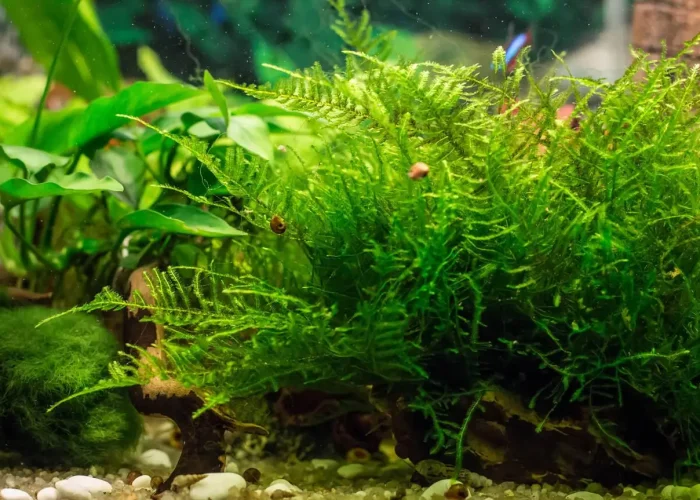
Java Moss (Great for Beginners and Shrimp Tanks)
Java moss looks simple, but it is extremely useful.
It grows in almost any condition and does not care much about lighting or nutrients. It can be attached to wood, rocks, or left free.
Java moss is perfect for:
• Shrimp tanks
• Fry tanks
• Low-maintenance setups
It grows slowly but steadily and survives conditions that kill many other plants.
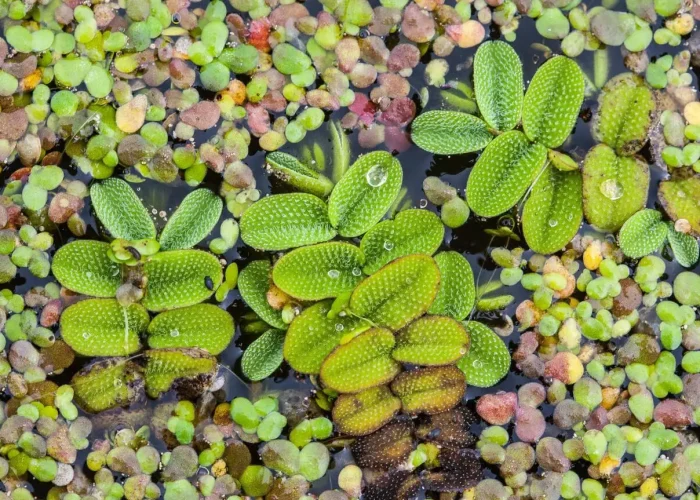
Floating Plants (Underrated Beginner Helpers)
Floating plants are often ignored, but they are excellent for beginners.
They grow fast, absorb excess nutrients, and reduce algae by shading the tank.
Easy floating plants include:
• Duckweed
• Frogbit
• Salvinia
They do not need substrate or CO2. They grow using light and water nutrients alone.
Just keep them under control so they do not block all light.
Why Slow Growth Is a Good Thing for Beginners
Many beginners want fast results. In aquariums, fast growth often causes problems.
Slow-growing plants:
• Are easier to manage
• Need less trimming
• Cause fewer algae issues
• Tolerate mistakes better
Easy plants grow at their own pace. That pace keeps the tank stable.
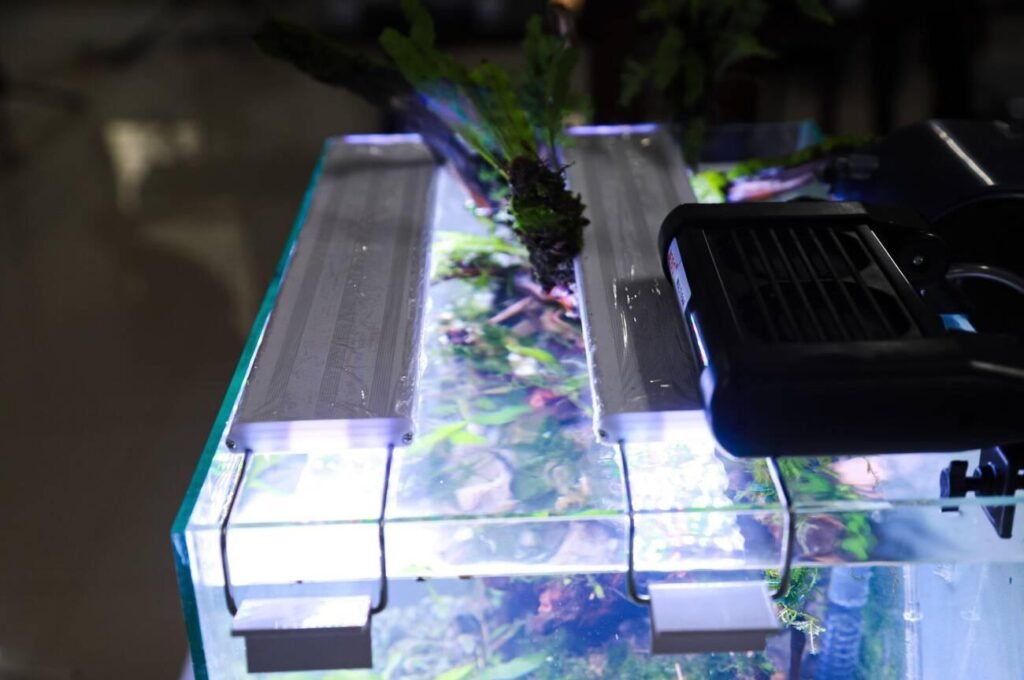
Lighting Mistakes That Kill Beginner Plants
Most beginner plant failures are caused by lighting, not plants.
Too much light causes algae, not growth. Beginner plants prefer moderate light and consistency.
A simple rule works well:
• 6 to 8 hours of light daily
• Use a timer
• Avoid sunlight
Consistency matters more than brightness.
Do Beginner Plants Need Fertilizer
Sometimes yes, often no.
Many beginner tanks run fine using nutrients from fish waste and tap water. Plants grow slower, but they stay healthy.
If plants show signs like yellowing or very slow growth, a small amount of fertilizer can help. Overfertilizing causes algae faster than underfertilizing.
When in doubt, do less.
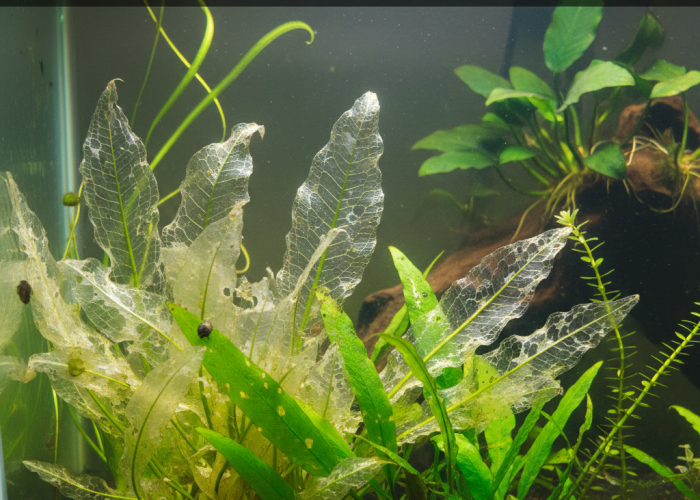
Why Plants Melt in New Tanks
Plant melt is normal.
Many aquarium plants are grown above water and need time to adapt underwater. Old leaves die, new leaves grow.
As long as roots stay healthy, the plant survives.
Pulling plants out too early is a common beginner mistake.
Maintenance for Easy Aquarium Plants
Easy plants need minimal care.
A simple routine:
• Remove dead leaves
• Small weekly water changes
• Avoid disturbing roots
Do not uproot plants often. Stability helps plants settle and grow.
Common Beginner Plant Mistakes
These mistakes cause most failures:
• Too much light
• Overfertilizing
• Moving plants repeatedly
• Expecting fast growth
• Choosing demanding plants
Plants grow on their own schedule, not ours.
How Long Until Beginner Plants Look Good
Plants take time.
The first month often looks messy. By the second month, growth improves. By the third month, the tank starts to look natural.
Patience creates beauty.
Why Easy Plants Make Aquariums Healthier
Beginner plants do more than decorate.
They:
• Absorb waste
• Reduce algae
• Improve fish behavior
• Stabilize water conditions
Plants turn a glass box into a living system.
Final Thoughts
Aquarium plants are not difficult when you choose the right ones. Beginner-friendly plants grow slowly, tolerate mistakes, and adapt to simple setups. You do not need CO2, expensive lights, or constant care.
Start simple. Let plants settle. Avoid rushing.
Easy plants teach patience, and patience creates beautiful aquariums.