
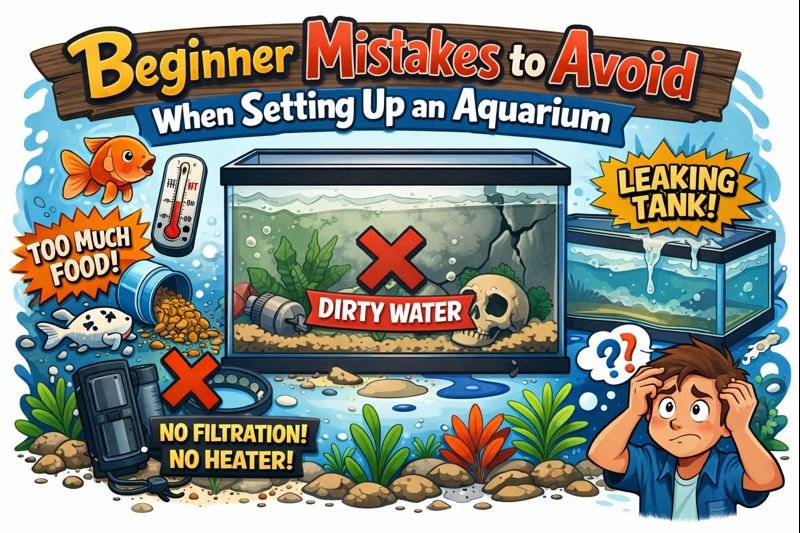
Almost every experienced aquarist started the same way. Excited, confident, and completely unaware of how easy it is to mess things up in the beginning. Fishkeeping looks simple from the outside, but an aquarium is not forgiving when basic mistakes are made early.
The good news is this. Most beginner aquarium failures come from a small set of common mistakes. Once you know them, they are easy to avoid. This article walks through the biggest beginner mistakes when setting up an aquarium and explains why they cause problems, even when everything looks fine at first.
Avoiding these mistakes from day one can save you money, time, and a lot of frustration.
Mistake 1 Rushing to Add Fish
This is the most common and most damaging mistake beginners make.
Many people set up the tank, fill it with water, turn on the filter, and add fish the same day. The water looks clear, the equipment is running, and the shop says it is fine. Then, within days, fish start dying.
What went wrong is simple. The aquarium was not cycled.
A new aquarium has no beneficial bacteria to handle fish waste. Ammonia builds up quickly and poisons the fish, even though the water looks clean.
Patience is not optional in fishkeeping. It is the foundation.
Mistake 2 Not Understanding the Aquarium Cycle
Some beginners hear about cycling but do not truly understand it.
The nitrogen cycle is not a suggestion. It is how aquariums survive. Fish waste turns into ammonia. Ammonia turns into nitrite. Nitrite turns into nitrate. Beneficial bacteria make this possible.
Skipping or rushing this process almost always leads to fish loss.
Clear water does not mean safe water. Only stable water does.
Mistake 3 Choosing the Wrong Tank Size
Many beginners believe smaller tanks are easier. They are not.
Small tanks:
• Change temperature quickly
• Build waste faster
• Lose oxygen faster
A beginner is much safer with a medium-sized tank. Larger volumes of water are more stable and forgiving.
Tiny tanks and bowls leave no room for error.
Mistake 4 Overstocking the Aquarium
More fish does not mean more beauty. It usually means more problems.
Beginners often add too many fish too quickly. The filter cannot handle the waste. Oxygen drops. Stress rises. Disease spreads.
Fish need space, not just water.
Stock slowly and give the tank time to adjust between additions.
Mistake 5 Overfeeding Fish
Fish always act hungry. That does not mean they are.
Overfeeding leads to:
• Poor water quality
• Algae blooms
• Oxygen loss
• Increased disease
Most fish need very little food. Feeding lightly keeps the tank stable and fish healthier.
Uneaten food rots quickly in aquariums.
Mistake 6 Large Water Changes Too Soon
Water changes are important, but beginners often overdo them.
Large water changes in a new tank can:
• Disrupt bacterial growth
• Cause temperature shock
• Change pH suddenly
Small, gentle water changes are safer, especially in the first few weeks.
Stability matters more than cleanliness.
Mistake 7 Cleaning the Filter Too Aggressively
The filter is not just a mechanical device. It is home to beneficial bacteria.
Beginners often wash filter media under tap water or replace it too often. This kills bacteria and resets the tank cycle.
Filters should be cleaned gently, using tank water, and only when necessary.
A dirty filter is often healthier than a sterile one.
Mistake 8 Trusting the Fish Store Blindly
Not all shop advice is bad, but not all of it is good either.
Some stores:
• Want to sell fish quickly
• Downplay cycling
• Recommend incompatible species
Always research fish compatibility and care yourself. Your aquarium is your responsibility, not the shop’s.
Mistake 9 Ignoring Fish Compatibility
Not all fish get along.
Beginners often mix aggressive and peaceful species or keep schooling fish in groups that are too small. This causes stress, hiding, aggression, and illness.
Fish behavior problems are often mistaken for disease.
Compatibility matters as much as water quality.
Mistake 10 Chasing Perfect Water Numbers
Beginners often obsess over pH, hardness, and exact numbers.
Fish tolerate a wide range of conditions as long as they are stable. Constantly adjusting water chemistry causes more harm than slightly imperfect values.
Stability is more important than perfection.
Mistake 11 Poor Tank Placement
Placing the aquarium in the wrong spot causes ongoing problems.
Common placement mistakes include:
• Direct sunlight
• Near doors or windows
• On unstable furniture
Sunlight causes algae. Drafts cause temperature swings. Weak surfaces risk tank damage.
Choose the location carefully before filling the tank.
Mistake 12 Adding Too Many Chemicals
Beginners often add:
• Water clarifiers
• Algae removers
• Stress reducers
• Bacterial boosters
While some products help, using too many chemicals creates instability.
A healthy aquarium relies on balance, not bottles.
Mistake 13 Changing Too Many Things at Once
When problems appear, beginners often change everything at once. New water, new food, new filter settings, new fish.
This makes it impossible to know what caused the problem and usually makes things worse.
Change one thing at a time and observe.
Mistake 14 Not Observing Fish Behavior
Fish tell you a lot if you watch them.
Hiding, gasping, clamped fins, or unusual swimming are early warning signs. Beginners often ignore behavior and only react when fish are already sick.
Observation prevents emergencies.
Mistake 15 Expecting Instant Results
Aquariums do not stabilize overnight.
Beginners expect:
• Clear water immediately
• Fast growth
• No algae
• No losses
Reality is slower. Tanks mature over months, not days.
Patience turns beginners into successful aquarists.
Why Beginners Fail Even With “Good Equipment”
Good equipment cannot fix rushed decisions.
Even expensive tanks fail when:
• Fish are added too early
• Maintenance is inconsistent
• Basic principles are ignored
Knowledge matters more than gear.
How to Set Yourself Up for Success
Avoiding beginner mistakes is easier than fixing them later.
Successful beginners:
• Cycle their tanks fully
• Add fish slowly
• Feed lightly
• Keep routines consistent
• Observe more than they adjust
This approach works in every aquarium, regardless of size or budget.
Final Thoughts
Most aquarium failures are not caused by bad luck. They are caused by avoidable beginner mistakes. Once you understand how aquariums work and respect the process, fishkeeping becomes calm and rewarding instead of stressful.
If you avoid rushing, overfeeding, overcleaning, and overthinking, your aquarium will do most of the work for you.
A healthy aquarium is built slowly, with patience and consistency.