Setting up your first aquarium feels exciting, but also confusing. There is too much information online, and most of it feels either too technical or too simplified. Beginners often rush, buy fish too early, or copy random advice from videos. That is why many first aquariums fail, not because fishkeeping is hard, but because the basics were skipped.
A successful aquarium is built slowly. It is not about decoration or expensive equipment. It is about creating a stable environment where fish can live comfortably for years, not weeks.
This guide walks you through aquarium setup step by step, exactly how a beginner should do it in 2026, using simple logic and real-world experience.
What an Aquarium Really Is (Not Just a Glass Box)
An aquarium is a living system. Inside it, waste is produced, bacteria break it down, oxygen moves through the water, and balance develops over time. Fish live inside this system, not inside the glass.
When beginners think of aquariums as decoration, they fail. When they understand it as an ecosystem, success becomes much easier.
Step 1 Choosing the Right Aquarium Size
One of the biggest beginner mistakes is choosing a tank that is too small.
Small tanks are harder to maintain because water conditions change faster. Temperature, pH, and waste levels swing quickly.
For beginners:
• A 10 to 20 gallon tank is ideal
• Bigger tanks are more forgiving
• Nano tanks require experience
Choose a standard rectangular tank. Fancy shapes look nice but complicate filtration and maintenance.
Step 2 Choosing the Right Location
Where you place the aquarium matters more than most people realize.
Place the tank:
• Away from direct sunlight
• Away from windows and doors
• On a strong, level surface
• Near a power source
Avoid placing aquariums in areas with constant movement or noise. Fish feel stress just like people do.
Once the tank is placed and filled, do not move it.
Step 3 Essential Equipment You Actually Need
Beginners often buy too much. You only need a few essentials.
You need:
• Aquarium tank
• Filter
• Heater (for tropical fish)
• Thermometer
• Light
• Substrate
That’s it.
Air pumps, decorations, fancy gadgets are optional. Focus on stability, not accessories.
Step 4 Setting Up the Substrate and Decorations
Rinse substrate thoroughly before adding it to the tank. Dust and debris cause cloudy water.
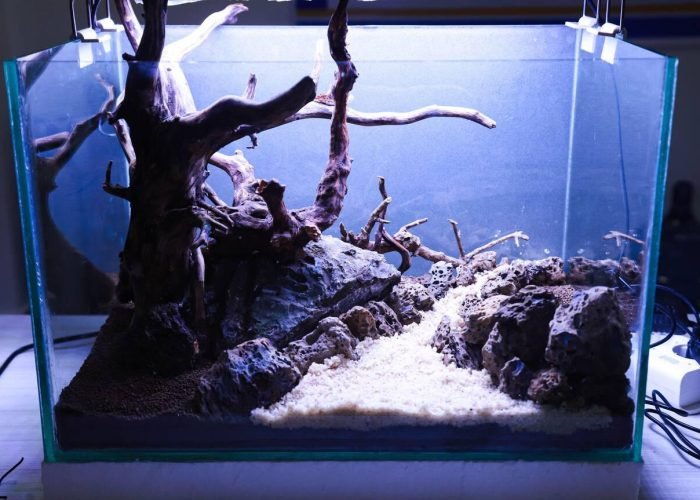
Add substrate gently, then place decorations and driftwood. Keep open swimming space. Fish need room to move.
Do not overcrowd the tank with decorations. Simple layouts work better for beginners.
Step 5 Filling the Aquarium Correctly
Use room-temperature tap water.
Always add water conditioner before or immediately after filling the tank. Tap water contains chlorine or chloramine, which is deadly to fish.
Pour water slowly to avoid disturbing the substrate. A plate or bowl placed on the substrate helps control water flow.
Step 6 Installing Filter and Heater
Install the filter according to instructions, but do not turn it on until the tank is filled.
Place the heater near water flow so heat distributes evenly. Do not turn on a heater outside water. This can damage it instantly.
Once everything is placed, turn on the filter and heater and let the tank run.
Step 7 Understanding the Aquarium Cycle (Most Important Part)
This is where most beginners fail.
Fish produce waste. Waste turns into ammonia. Ammonia is toxic. Beneficial bacteria convert ammonia into nitrite, then into nitrate.
This process is called the nitrogen cycle.
A new tank has no beneficial bacteria. If fish are added immediately, ammonia builds up and kills them.
Your tank must cycle before adding fish.
Step 8 Cycling the Aquarium Properly
There are two safe ways to cycle a tank.
The safest method is fishless cycling. You let the tank run empty while beneficial bacteria grow. This takes time but saves fish lives.
During cycling:
• Test water regularly
• Expect cloudy water initially
• Be patient
Cycling usually takes 3 to 4 weeks. Sometimes longer. Do not rush.
Clear water does not mean safe water.
Step 9 When Is the Tank Ready for Fish
The tank is ready when:
• Ammonia is zero
• Nitrite is zero
• Nitrate is present
• Temperature is stable
Only then should fish be added.
Add fish slowly. Never stock the tank fully at once.
Step 10 Choosing Beginner-Friendly Fish
Not all fish are beginner friendly.
Good beginner fish include:
• Guppies
• Platies
• Tetras
• Danios
• Corydoras
Avoid aggressive or sensitive species at first.
Research fish compatibility before buying. Do not rely only on shop advice.
Step 11 Adding Fish Safely
Never dump fish directly into the tank.
Float the bag to match temperature. Slowly mix tank water into the bag. This helps fish adjust to new water conditions.
Stress during introduction is a common cause of early fish death.
Step 12 First Month Maintenance
The first month is critical.
During this time:
• Do small water changes
• Feed lightly
• Observe fish behavior
• Avoid adding new fish
Do not clean the filter aggressively. Beneficial bacteria live there.
Let the tank stabilize.
Common Beginner Mistakes to Avoid
Most aquarium problems come from these mistakes:
• Adding fish too early
• Overstocking
• Overfeeding
• Large water changes
• Chasing perfect water numbers
Aquariums succeed with consistency, not constant adjustment.
How Long Does a Beginner Aquarium Take to Stabilize
A tank feels stable after about 2 months. It becomes truly stable after 4 to 6 months.
Fishkeeping rewards patience. The longer a tank runs, the easier it becomes.
What Changes in 2026 Aquarium Keeping
In 2026, the basics remain the same. Technology improves, but biology does not change.
What works today worked 20 years ago and will work 20 years from now:
• Stable water
• Proper cycling
• Moderate stocking
• Patience
Do not chase trends. Follow fundamentals.
Final Thoughts
Setting up an aquarium is not difficult, but it requires respect for the process. Most beginner failures happen because steps are skipped, not because fishkeeping is hard.
If you go step by step, allow time for balance, and avoid rushing, your aquarium will become a calm, healthy system that lasts for years.
A successful aquarium is not built in a day. It is built by doing the right things consistently.