
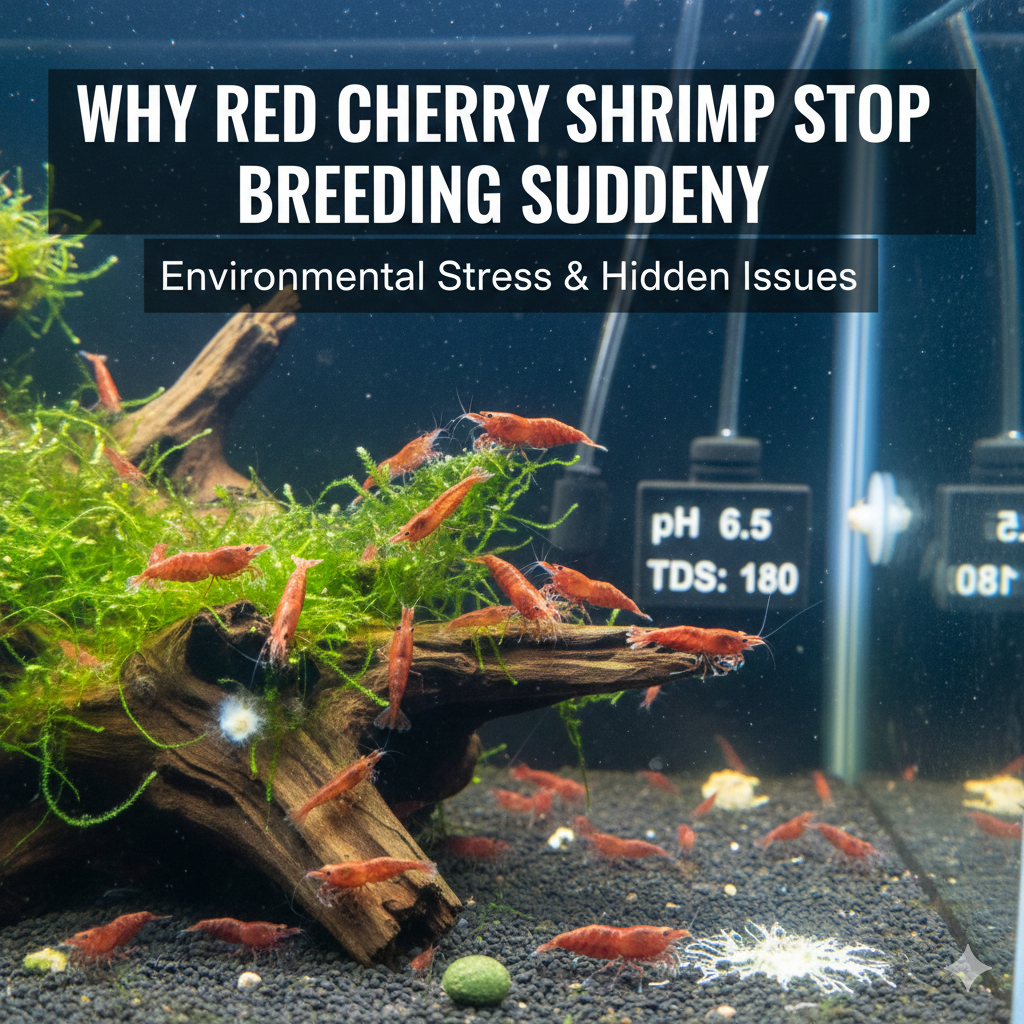
One of the most exciting moments in shrimp keeping is seeing your first berried female. Tiny eggs under her belly, then weeks later, baby shrimp appearing everywhere. For many beginners, this phase feels magical. And then, without warning, it stops. No more berried females. No babies. The shrimp are still alive, still eating, but breeding has suddenly paused.
This situation is very common, and it almost always has a reason. Shrimp do not stop breeding randomly. When breeding stops, it is the shrimp reacting to a change in their environment.
The tricky part is that the change is often subtle, not obvious.
This article explains why red cherry shrimp stop breeding suddenly, what signs to look for, and how to gently bring breeding back without stressing the tank.
First, Understand How Shrimp Breeding Works
Red cherry shrimp breed continuously when conditions are right. There is no strict breeding season in aquariums. Instead, breeding depends on comfort, stability, and available resources.
A female shrimp molts, releases pheromones, mates, and then carries eggs under her abdomen. If conditions remain stable, this cycle repeats regularly.
When breeding stops, something in that cycle is being interrupted.
The Most Common Reason: Water Changes Triggered Stress
Shrimp breeding is extremely sensitive to sudden changes.
Even if shrimp survive a water change, they may stop breeding afterward. Large or frequent water changes can disrupt hormonal signals that control molting and egg development.
Common mistakes include:
• Changing too much water at once
• Using water with different temperature
• Sudden pH or mineral changes
Shrimp may remain alive and active, but reproduction pauses as a survival response.
Temperature Changes Slow Breeding
Temperature has a strong influence on shrimp metabolism.
If temperature drops slightly, shrimp often stop breeding. This happens commonly during seasonal changes or when room temperature fluctuates.
Shrimp can survive cooler water, but they do not breed actively in it. Sudden temperature drops after water changes are especially disruptive.
Breeding usually resumes once temperature stabilizes again.
Lack of Molting Stops the Breeding Cycle
Breeding begins with molting. If shrimp are not molting regularly, breeding cannot happen.
Shrimp stop molting when:
• Water parameters fluctuate
• Minerals are imbalanced
• Stress is present
No molt means no mating opportunity.
If you haven’t seen molts in a while, breeding slowdown is expected.
GH and Mineral Imbalance
Shrimp need minerals to molt and form eggs.
If GH is too low, shrimp struggle to build new shells. If GH changes suddenly, molting becomes risky. In both cases, shrimp pause breeding to avoid failure.
Many beginners focus only on pH and forget about GH entirely. This often leads to healthy-looking shrimp that simply stop reproducing.
Food Quality and Quantity Issues
Shrimp can survive on very little food, but breeding requires extra nutrition.
If shrimp are underfed or lacking protein and minerals, they prioritize survival over reproduction.
On the other hand, overfeeding causes water quality issues, which also stop breeding.
Breeding tanks need a balance:
• Enough biofilm
• Occasional protein-rich food
• No leftover food rotting in the tank
Shrimp that are always grazing but never supplemented may stop breeding after a while.
Overcrowding Slows or Stops Breeding
As shrimp populations grow, competition increases.
In crowded tanks:
• Stress levels rise
• Food becomes limited
• Molting becomes riskier
Shrimp may slow down reproduction naturally to control population size.
This is common in small tanks with growing colonies.
Lack of Hiding Places for Baby Shrimp
Shrimp may stop breeding if babies have poor survival chances.
If the tank lacks plants, moss, or biofilm-rich surfaces, baby shrimp struggle to survive. Over time, adult shrimp may reduce breeding activity as conditions feel unsafe.
Dense plants, moss, and surfaces covered in biofilm encourage continuous breeding.
Presence of Fish or Predators
Even peaceful fish can affect shrimp breeding.
Shrimp sense predation risk. If fish chase adults or eat baby shrimp, shrimp may reduce breeding activity.
This happens even when fish do not directly attack adult shrimp.
Shrimp-only tanks almost always breed more consistently.
Copper or Chemical Exposure
Even trace amounts of copper can stop shrimp breeding without killing them immediately.
Copper affects:
• Molting hormones
• Egg development
• Shell formation
Shrimp may appear healthy but fail to produce eggs.
Copper can enter tanks through fertilizers, medications, or tap water.
Tank Maturity Matters
New tanks often see early breeding, then a sudden stop.
This happens because:
• Early biofilm disappears
• Bacterial balance shifts
• Tank chemistry stabilizes
Once the tank matures fully, breeding usually resumes naturally.
This pause is normal in young setups.
Why Shrimp Stop Breeding Suddenly but Don’t Die
This confuses many people.
Shrimp stop breeding long before conditions become deadly. It is a protective response. Breeding uses energy and increases risk. When shrimp feel unsafe or stressed, reproduction is the first thing they pause.
This is actually a good sign. It means the shrimp are trying to survive, not failing suddenly.
What Not to Do When Breeding Stops
This is important.
Do not:
• Change everything at once
• Chase perfect numbers
• Add breeding stimulants
• Do large water changes
• Panic and overfeed
Overcorrecting almost always delays breeding further.
How to Encourage Breeding Again (Safely)
The goal is to restore stability, not force breeding.
Stabilize Water Changes
• Reduce water change size
• Match temperature closely
• Keep routine consistent
Maintain Gentle Warmth
• Stable temperature
• Avoid daily fluctuations
Improve Diet Slightly
• Add protein once or twice a week
• Do not overfeed
• Let biofilm grow
Add Hiding and Grazing Areas
• Moss
• Plants
• Driftwood
• Biofilm surfaces
Be Patient
Shrimp breeding resumes when shrimp feel safe again. This can take weeks, not days.
How Long Does It Take for Breeding to Resume
In most cases:
• 2 to 4 weeks after stability returns
• Molts resume first
• Then mating
• Then berried females appear
Patience is the real requirement.
When to Worry
You should investigate deeper if:
• Shrimp stop breeding for months
• Molting also stops completely
• Shrimp become lethargic
• Deaths start occurring
Breeding pauses alone are usually not an emergency.
Final Thoughts
Red cherry shrimp stop breeding suddenly because something changed, not because they are difficult to keep. Breeding is a privilege shrimp grant only when conditions feel safe and stable.
If you slow down, observe carefully, and restore consistency, breeding almost always returns on its own. Shrimp reward patience more than intervention.
When breeding restarts, it’s usually stronger than before.