
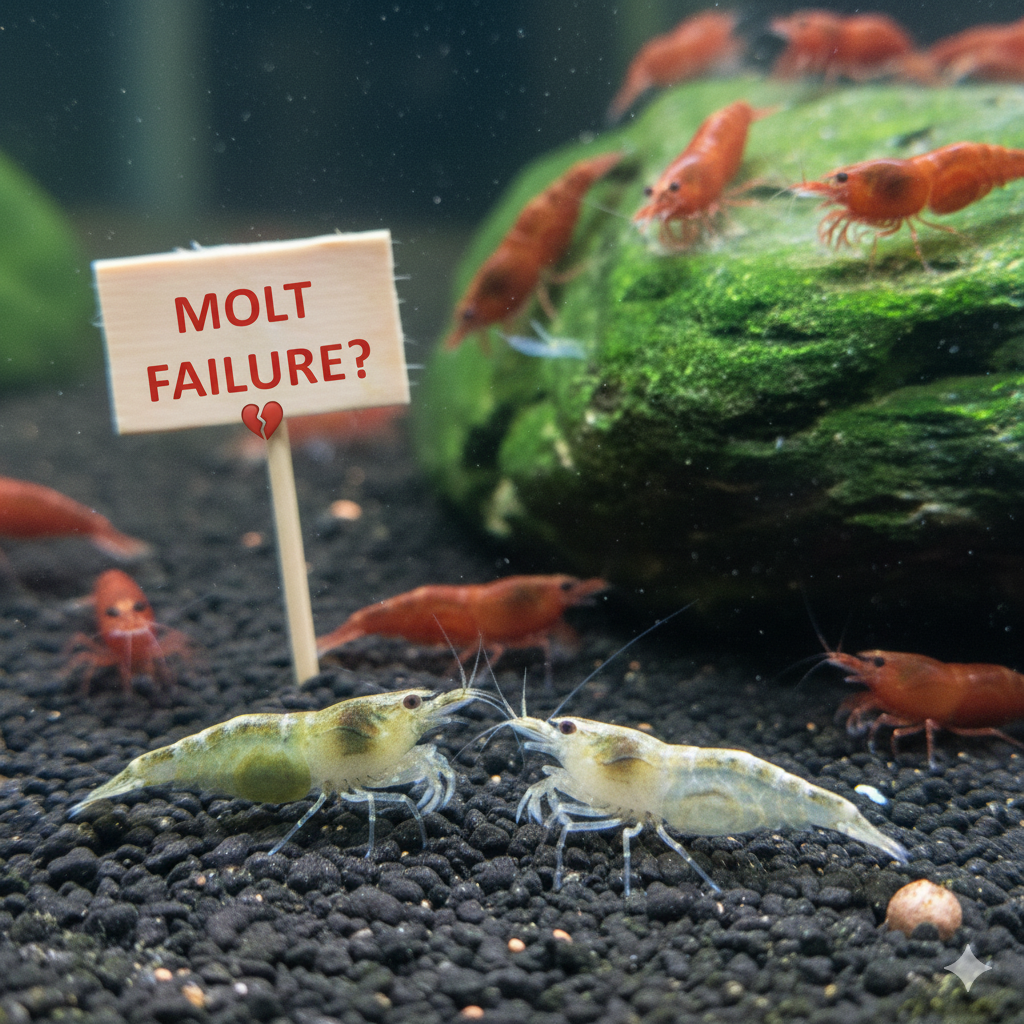
Seeing a shrimp molt usually feels like a good sign. Molting means growth. It means the shrimp was alive, active, and developing. So when a shrimp molts and then dies shortly after, it feels confusing and frustrating, especially for beginners. Many people assume molting itself killed the shrimp. In reality, molting is rarely the real problem. It is only the moment when an underlying issue finally shows up.
Shrimp that die after molting were already under stress before the molt happened. The molting process simply pushed them past their limit.
This article explains why shrimp die after molting, what actually goes wrong inside the tank, and how to prevent it from happening again.
First, Understand What Molting Really Is
Shrimp have a hard outer shell called an exoskeleton. As they grow, this shell does not stretch. Instead, the shrimp must shed it and form a new one. This process is called molting.
Molting is normal and necessary. Healthy shrimp molt regularly throughout their life. A successful molt means:
• The old shell is fully shed
• The shrimp hides briefly
• The new shell hardens within hours
When conditions are right, molting is smooth and uneventful.
When conditions are wrong, molting becomes dangerous.
Why Shrimp Are Most Vulnerable During Molting
During and after molting, shrimp are extremely fragile. Their new shell is soft. Their internal balance is under stress. They need the right minerals and stable water conditions to survive this stage.
If anything is off, even slightly, the shrimp may not recover.
This is why many shrimp deaths happen right after a molt, not randomly.
The Most Common Reason: Sudden Water Parameter Changes
This is the number one cause.
Shrimp rely on stable water chemistry to regulate molting hormones and shell formation. Sudden changes confuse their internal systems.
Common changes that cause post-molt death include:
• Large water changes
• Temperature differences
• pH swings
• GH or KH changes
Many shrimp die after a water change because the change triggered a molt before the shrimp was ready.
GH Problems and Failed Shell Formation
GH controls calcium and magnesium levels in the water. Shrimp need these minerals to build a strong new shell.
If GH is too low:
• The new shell stays weak
• Shrimp cannot harden properly
• Internal damage occurs
If GH changes suddenly:
• Molting hormones misfire
• Shrimp may get stuck
• Shrimp may die hours after molting
This is one of the most misunderstood causes. Beginners often focus on pH and ignore GH completely.
KH and pH Instability
KH helps buffer pH. When KH is very low or unstable, pH can shift quickly.
Shrimp tolerate a wide pH range, but they do not tolerate rapid changes. A sudden pH drop during or after molting can shock the shrimp’s nervous system.
This is especially common in:
• Blackwater tanks
• RO water setups
• Heavily planted tanks
Stable pH matters more than the exact number.
Temperature Shock During or After Molting
Temperature plays a big role in molting cycles.
If temperature:
• Drops suddenly
• Rises quickly
• Fluctuates daily
Molting becomes risky.
Many shrimp die after molting because fresh water added during a water change was cooler than tank water. Even a small difference can be fatal at this stage.
Copper and Heavy Metal Exposure
Copper is deadly to shrimp, especially during molting.
Even trace amounts can:
• Damage internal organs
• Interfere with shell formation
• Cause sudden death after molt
Copper often enters tanks through:
• Fish medications
• Plant fertilizers
• Tap water
• Unknown decorations
Shrimp may seem fine until they molt, then die shortly after.
Oxygen Levels Drop During Molting Stress
Molting is physically demanding. Shrimp need good oxygen levels to recover.
Poor surface movement, clogged filters, or high temperatures reduce oxygen availability. Shrimp may survive normal days but fail during molting stress.
This often causes shrimp to die quietly without obvious symptoms.
Why Shrimp Get Stuck During Molting
Sometimes shrimp are found halfway out of their old shell. This is called a failed molt.
Common causes include:
• Mineral imbalance
• Sudden GH change
• Copper exposure
• Weak shrimp from stress
A stuck molt is almost always fatal.
This is not bad luck. It is a warning sign of water chemistry issues.
Overfeeding and Water Quality Issues
Overfeeding does not kill shrimp directly, but it causes water instability.
Extra food leads to:
• Bacterial growth
• Oxygen consumption
• Organic waste buildup
Shrimp may tolerate this most of the time. During molting, the added stress becomes too much.
Clean but stable water is safer than perfectly clean but unstable water.
Why Only One or Two Shrimp Die After Molting
This confuses many people.
Shrimp do not molt at the same time. Weaker shrimp molt first or fail first. Stronger shrimp survive longer.
When shrimp die one by one after molting, it usually means:
• The tank is borderline stable
• Conditions are not ideal
• Stress is cumulative
Ignoring early losses often leads to more deaths later.
What to Do When a Shrimp Dies After Molting
Do not panic and do not overcorrect.
First steps:
• Remove the dead shrimp
• Test ammonia and nitrite
• Observe remaining shrimp
Avoid large water changes immediately. Sudden fixes often make things worse.
How to Prevent Shrimp Death After Molting
Prevention is about consistency, not perfection.
Keep Water Changes Small
• 10 to 15 percent is ideal
• Match temperature closely
• Add water slowly
Maintain Stable GH and KH
• Avoid sudden changes
• Keep mineral levels consistent
• Do not chase numbers
Avoid Copper Completely
• Never use fish meds in shrimp tanks
• Use shrimp-safe fertilizers only
• Condition tap water properly
Feed Lightly
• Shrimp need very little food
• Biofilm is their main diet
• Less feeding means more stability
Ensure Good Oxygen Exchange
• Gentle surface movement
• Clean filter media
• Avoid stagnant water
Can Shrimp Recover After Molting Losses
Yes, if the underlying issue is corrected gently.
If shrimp survive the next few molting cycles without loss, the tank is stabilizing. Many successful shrimp keepers lost shrimp early and learned from it.
Shrimp keeping is less forgiving than fish keeping, but it is not impossible.
Why Molting Deaths Are a Learning Point
Molting deaths are not random. They are signals.
Shrimp show you exactly when the tank is unstable. If you listen and adjust slowly, the problem usually disappears.
Ignoring molting issues leads to long-term losses.
Final Thoughts
If a shrimp molted and then died, molting was not the enemy. Instability was.
Shrimp need calm, predictable conditions. They do not need perfect numbers, fancy equipment, or constant adjustments. They need stability over time.
Once you understand this, molting stops being scary and becomes what it should be. A normal sign of healthy growth.