
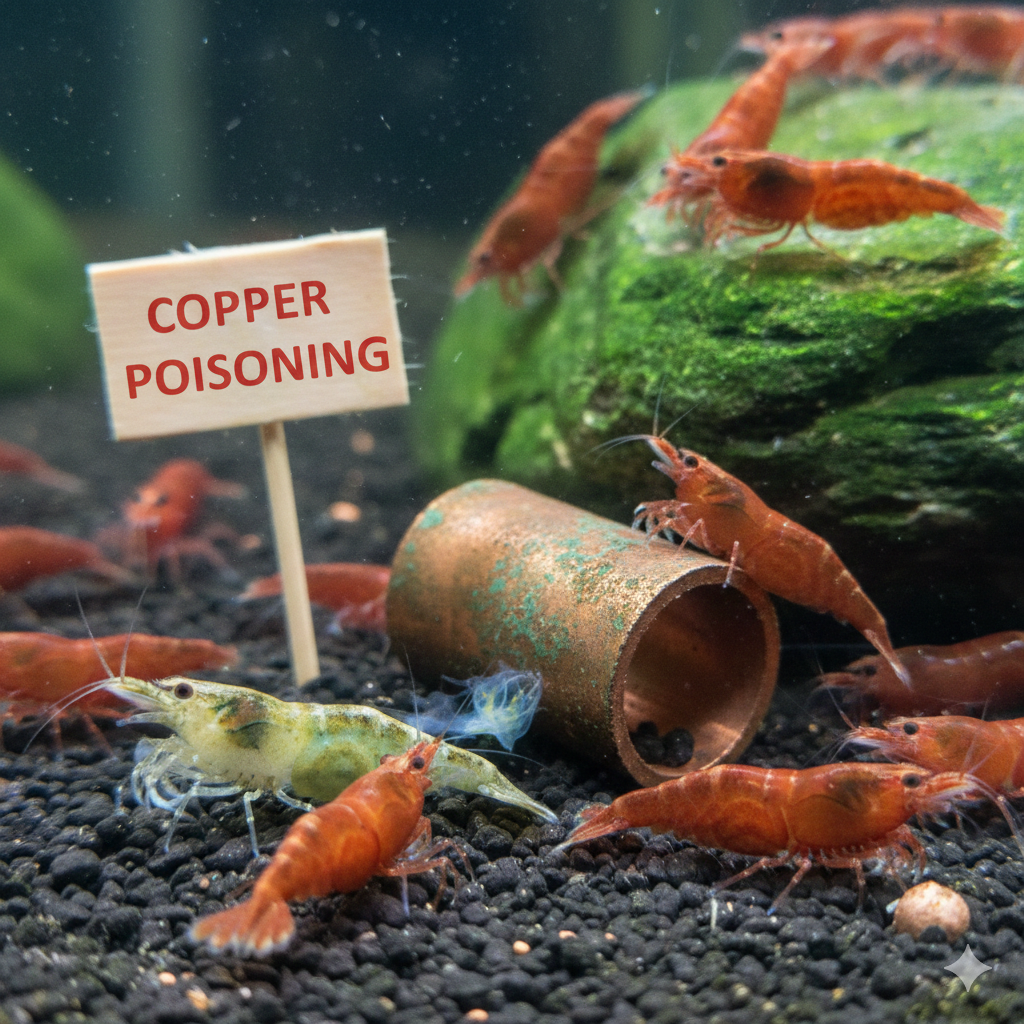
Copper poisoning is one of the most silent and misunderstood killers in shrimp tanks. Many beginners lose shrimp without ever realizing copper was the reason. Fish look fine. Water looks clean. Filters are running. And yet, shrimp start dying one by one, often after a water change or after adding something new to the tank.
The problem with copper is simple. Shrimp cannot tolerate it, even in very small amounts. What is safe for fish can be deadly for shrimp. And copper often enters aquariums without the keeper knowing it.
This article explains what copper poisoning is, how it affects shrimp, the symptoms to watch for, and most importantly, how to prevent it completely.
Why Copper Is Dangerous for Shrimp
Copper is a heavy metal. In aquariums, it is commonly used to treat fish diseases and parasites. Fish can tolerate small amounts of copper for short periods. Shrimp cannot.
Shrimp absorb everything directly from the water through their bodies. Copper damages their nervous system, gills, and internal organs. Even low levels that do not register on basic test kits can still harm shrimp.
Once copper enters a shrimp tank, it does not disappear quickly. It binds to surfaces, substrate, and decorations, making it even more dangerous long term.
Common Sources of Copper in Shrimp Tanks
Many shrimp keepers are surprised to learn how easily copper can enter an aquarium.
Fish Medications
This is the most common source.
Many fish medications contain copper or copper sulfate. They are often labeled as safe for fish but say nothing about shrimp. Adding these medications to a tank with shrimp almost always leads to losses.
Even after treatment ends, copper can remain in the tank.
Tap Water
Some tap water contains trace amounts of copper, especially in areas with copper plumbing. Old pipes increase this risk.
Fish may tolerate these levels. Shrimp often cannot.
This is why some shrimp die after water changes even when conditioner is used correctly.
Plant Fertilizers
Many liquid fertilizers contain copper as a micronutrient. Plants need very small amounts of copper, but shrimp are extremely sensitive to it.
Fertilizers labeled “plant safe” are not always shrimp safe.
Overdosing fertilizer is especially dangerous.
Decorations and Equipment
Low-quality decorations, rocks, or metal components can leach copper into the water over time. This is rare but possible, especially with unknown sources.
Always use aquarium-safe materials.
Food Contamination
Some low-quality foods contain trace metals. This is less common but can contribute to long-term exposure.
Symptoms of Copper Poisoning in Shrimp
Copper poisoning does not always kill shrimp instantly. Symptoms may appear slowly, which makes diagnosis difficult.
Early Symptoms
In the early stages, shrimp may:
• Stop grazing
• Become less active
• Hide more than usual
• Appear restless or confused
At this stage, shrimp may still recover if copper exposure stops.
Advanced Symptoms
As copper exposure continues, symptoms worsen:
• Shrimp lying on their side
• Uncoordinated movement
• Twitching or spasms
• Sudden death without warning
Deaths often happen shortly after molting, because copper interferes with shell formation.
Why Shrimp Die One by One
Copper poisoning rarely kills all shrimp at once. Instead, shrimp die gradually over days or weeks. This leads beginners to suspect disease, age, or random causes.
In reality, copper accumulates slowly and affects weaker shrimp first.
Why Fish Often Survive While Shrimp Die
This is one of the most confusing aspects.
Fish have stronger internal regulation systems and thicker tissue barriers. Shrimp do not. Copper that barely affects fish can be lethal to shrimp.
This is why a tank can look “fine” while shrimp disappear.
Copper and Molting Problems
Molting issues are strongly linked to copper exposure.
Copper interferes with:
• Calcium absorption
• Shell formation
• Hormonal molting signals
Shrimp may get stuck halfway out of their old shell or die shortly after molting.
These deaths are often mistaken for mineral imbalance, but copper is frequently the real cause.
How to Confirm Copper Poisoning
Copper is difficult to detect.
Basic test kits may not detect low but harmful levels. If shrimp die after:
• Adding medication
• Using fertilizer
• Water changes
• Adding new decorations
Copper should be suspected immediately.
Shrimp deaths combined with fish survival is a strong warning sign.
What to Do If You Suspect Copper Poisoning
Time matters.
Stop the Source Immediately
Remove anything recently added:
• Medications
• Fertilizers
• New decorations
Do not add more chemicals to “fix” the problem.
Perform Gentle Water Changes
Do not do a massive water change.
Instead:
• Do small water changes daily
• Use properly conditioned water
• Match temperature carefully
This helps dilute copper without shocking shrimp further.
Use Activated Carbon
Activated carbon can help remove copper from the water. Place it in the filter temporarily.
Carbon does not remove copper bound to surfaces, but it reduces free copper in the water column.
Increase Oxygen Slightly
Copper damages gills. Better oxygen levels help shrimp cope with stress.
Gentle surface movement is enough.
Can a Tank Be Saved After Copper Exposure
Yes, but it depends on severity.
If copper exposure was brief, shrimp losses may stop once the source is removed and water changes begin.
If copper was present for a long time, it may remain bound in substrate and decorations. In severe cases, the safest option is to restart the tank for shrimp use.
How to Prevent Copper Poisoning Completely
Prevention is much easier than treatment.
Never Use Fish Medications in Shrimp Tanks
If fish need treatment, move them to a hospital tank. Never treat a shrimp tank directly unless the medication explicitly states it is shrimp-safe.
Check Fertilizer Labels Carefully
Only use fertilizers labeled shrimp-safe. Even then, dose lightly.
Plants grow slower without fertilizer. Shrimp die faster with copper.
Test Your Tap Water Occasionally
If your area has copper plumbing, consider:
• Letting tap water run before collecting
• Using RO water
• Mixing RO and tap
Consistency matters more than purity.
Avoid Unknown Decorations
Use aquarium-safe rocks, wood, and decorations from trusted sources.
Never use metal objects in shrimp tanks.
Read Labels Every Time
Never assume something is shrimp-safe because it is fish-safe.
This one habit prevents most shrimp losses.
Why Beginners Lose Shrimp to Copper So Often
Copper poisoning is common because it is invisible. Beginners focus on ammonia and nitrite but overlook heavy metals.
Shrimp keeping teaches a different lesson than fish keeping. Stability and caution matter more than action.
Final Thoughts
Copper poisoning is one of the most preventable causes of shrimp death. Once you understand how easily copper enters a tank and how sensitive shrimp are to it, avoiding it becomes second nature.
Shrimp do not need complicated care. They need protection from hidden dangers. When copper is kept out of the tank, red cherry shrimp are resilient, active, and rewarding to keep.
Most long-term shrimp keepers learned this lesson the hard way. You don’t have to.