
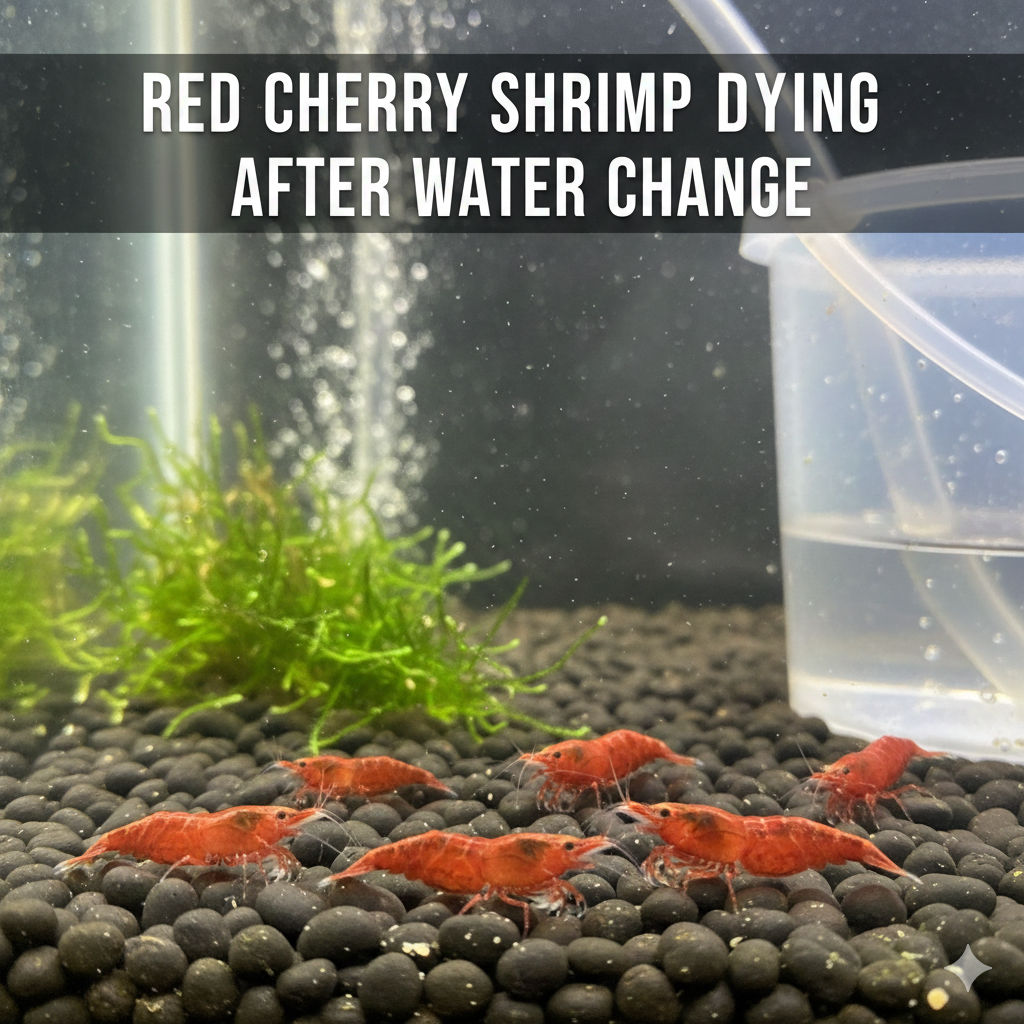
Few things are more frustrating than seeing red cherry shrimp die right after a water change. Before the change, everything looks fine. Shrimp are grazing, active, and behaving normally. Then, within hours or a day, you notice shrimp lying on their side, moving slowly, or suddenly disappearing. For beginners, this can feel confusing and discouraging.
The truth is, water changes are the most common moment when shrimp problems show up. Not because water changes are bad, but because shrimp are extremely sensitive to sudden changes. Fish can often handle quick shifts. Shrimp usually cannot.
This guide explains why red cherry shrimp die after water changes, what exactly goes wrong, and how to prevent it from happening again.
Why Shrimp React So Strongly to Water Changes
Red cherry shrimp are small invertebrates with delicate internal balance. They rely on stable water chemistry to survive. When you change water, you are not just removing dirty water. You are changing temperature, minerals, pH, hardness, and sometimes even oxygen levels.
Even if the new water is clean, it may not match what the shrimp were used to. Shrimp do not like surprises.
Fish can swim away from discomfort. Shrimp cannot. They absorb changes directly through their bodies.
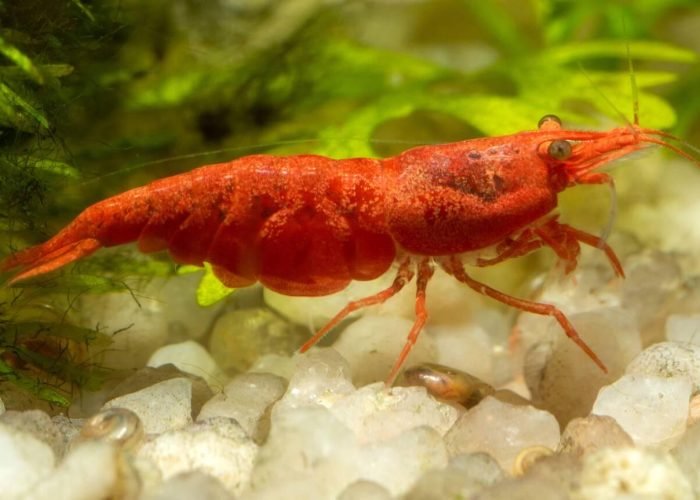
The Biggest Cause: Sudden Change in Water Parameters
This is the number one reason shrimp die after water changes.
Even small differences can matter, especially in nano tanks.
Common parameter shifts include:
• pH change
• GH or KH change
• Temperature difference
• TDS change
Tap water may look similar every day, but it often changes depending on season, treatment chemicals, or water source.
If shrimp die within a few hours after a water change, this is usually the cause.
Temperature Shock Is More Serious Than People Think
Shrimp are extremely sensitive to temperature changes. A difference of even 2 to 3 degrees can cause stress. Larger differences can be fatal.
Many people add water that feels “room temperature,” but room temperature is not always tank temperature. Tanks with lights and filters often run warmer.
Cold water shocks shrimp fast. Hot water stresses them slowly.
Always try to match the new water temperature closely to the tank water.
pH Swings After Water Change
Shrimp can live in a range of pH levels, but they do not tolerate fast changes.
Tap water often has a different pH than aquarium water. When you add fresh water, the pH can jump or drop suddenly. Shrimp feel this immediately.
In soft water tanks or blackwater-style setups, this effect is even stronger.
Shrimp may appear fine at first, then weaken and die hours later.
GH and KH Shock During Water Changes
This is one of the most overlooked causes.
GH and KH control mineral content and buffering capacity. Shrimp use minerals to build their exoskeleton. Sudden changes affect molting and internal balance.
If your tap water is much harder or softer than tank water, shrimp experience mineral shock.
This often leads to:
• Failed molts
• Shrimp stuck halfway out of their shell
• Shrimp dying shortly after molting
Many people blame molting itself, but the real cause is water chemistry change.
Chlorine and Chloramine Exposure
Another common mistake is under-dosing water conditioner or forgetting it entirely.
Even small amounts of chlorine or chloramine damage shrimp gills and internal tissues. Shrimp are more sensitive than fish, so fish may survive while shrimp die.
If shrimp die quickly after a water change and fish seem fine, always suspect chlorine or chloramine.
Some cities increase chloramine levels suddenly without notice.
Large Water Changes Are Dangerous for Shrimp
Shrimp do not handle large water changes well.
Changing 40 to 50 percent of the water at once can completely reset the chemistry. For shrimp, this feels like being dropped into a new environment.
Shrimp tanks work best with smaller water changes. Stability matters more than freshness.
If your shrimp died after a large water change, this is likely the reason.
TDS Shock in Shrimp Tanks
TDS stands for total dissolved solids. It represents everything dissolved in the water, including minerals.
Shrimp are extremely sensitive to sudden TDS changes. Even if pH looks fine, TDS shifts can kill shrimp.
This happens often when:
• Using RO water without proper remineralization
• Mixing tap and RO inconsistently
• Adding too much mineral supplement
TDS shock causes slow, unexplained shrimp deaths after water changes.
Disturbing the Substrate During Water Change
Shrimp tanks often build up beneficial biofilm and bacteria in the substrate. Aggressive gravel vacuuming can release trapped waste or disturb bacteria colonies.
This can cause:
• Ammonia spikes
• Sudden water chemistry changes
• Stress reactions
Shrimp tanks do not need deep gravel cleaning. Gentle surface cleaning is enough.
Shrimp Dying Days After the Water Change
Sometimes shrimp don’t die immediately. Instead, they die slowly over the next few days.
This usually points to:
• Failed molting caused by mineral imbalance
• Stress weakening immune systems
• Subtle pH or hardness shifts
Shrimp may hide more, eat less, or stop grazing before dying.
This delayed reaction makes the water change connection harder to notice.
How to Do Safe Water Changes for Red Cherry Shrimp
This is the most important section.
Safe shrimp water changes follow one rule above all else. Keep everything as similar as possible.
Use Small Water Changes
For shrimp tanks:
• 10 to 15 percent is ideal
• 20 percent maximum
• More frequent is better than larger changes
Small changes reduce shock and keep shrimp comfortable.
mattis, pulvinar dapibus leo.
Match Temperature Carefully
Let new water sit in the room for a while or use a thermometer. Match the temperature as closely as possible before adding it.
Never pour cold water directly into the tank.
Always Use Water Conditioner
Use a conditioner that neutralizes both chlorine and chloramine. Dose properly. Slight overdosing is safer than under-dosing for shrimp.
Add Water Slowly
Pour water slowly or drip it in. This reduces sudden changes and gives shrimp time to adjust.
Many shrimp keepers use a drip method for water changes, not just acclimation.
Keep Water Chemistry Consistent
If you use RO water, always remineralize it the same way every time. If you use tap water, test it occasionally so you understand its behavior.
Consistency is more important than hitting perfect numbers.
What to Do If Shrimp Are Already Dying
If shrimp are dying after a water change, stop doing more changes immediately.
Sudden repeated changes often make things worse.
Instead:
• Increase oxygen slightly
• Remove dead shrimp quickly
• Observe behavior closely
• Test ammonia and nitrite
If water parameters are stable, give the tank time to recover.
Can Shrimp Recover After a Bad Water Change
Yes, if the damage is not severe.
Shrimp that survive the first 24 to 48 hours usually recover if conditions stabilize. Molting problems may continue for a while, but losses often stop once balance returns.
Patience is key.
Why Fish Survive but Shrimp Die
This confuses many beginners.
Fish have stronger internal regulation and can tolerate sudden changes better. Shrimp absorb everything directly from the water. What feels minor to fish can be deadly to shrimp.
This is why shrimp tanks require gentler handling.
Final Thoughts
Red cherry shrimp dying after water changes is almost always caused by sudden changes, not dirty water. Shrimp care is less about doing more and more about doing things slowly and consistently.
Once you adjust your water change routine to match shrimp needs, deaths usually stop completely. Many shrimp keepers lose shrimp early, then go on to maintain thriving colonies once they understand stability.