
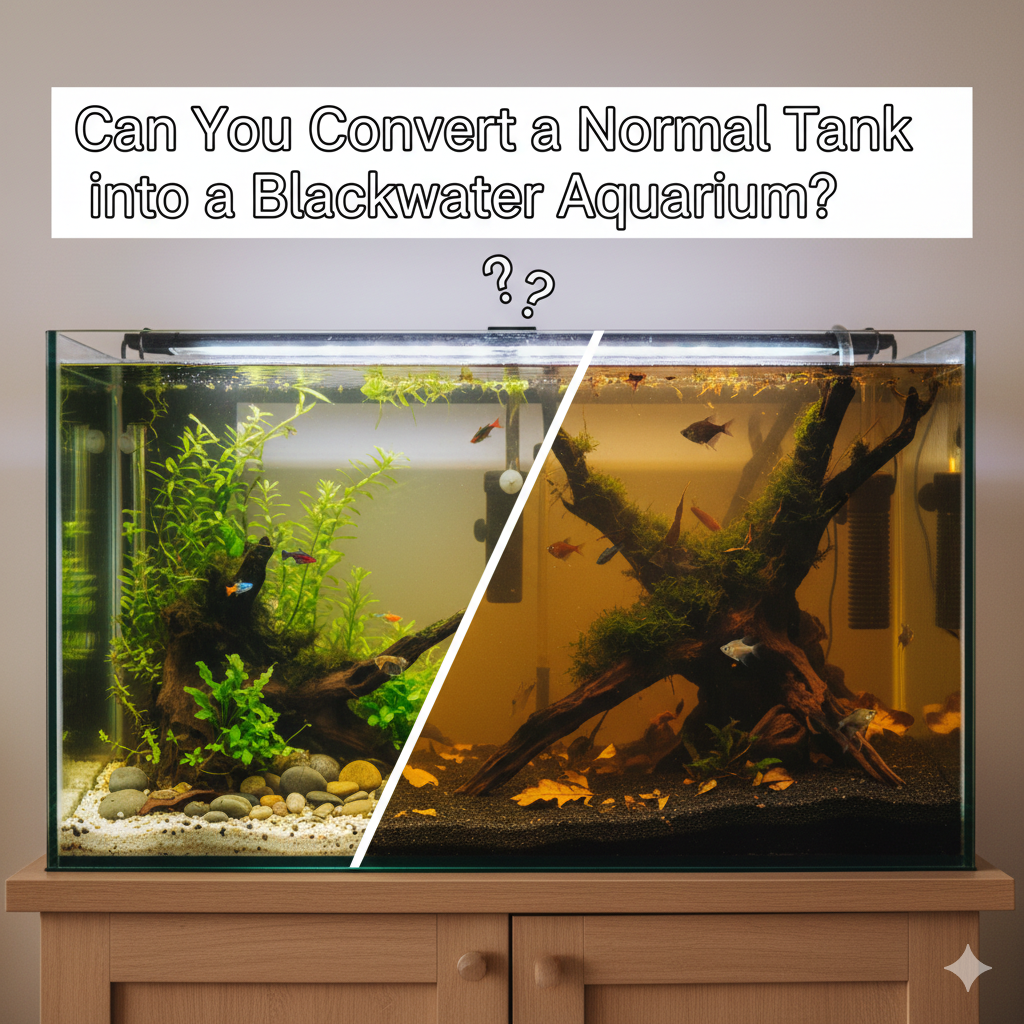
A lot of people assume that blackwater aquariums must be started from scratch. New tank, new setup, new everything. If you already have a normal freshwater tank running, the idea of tearing it down just to try blackwater can feel risky and unnecessary. The good news is simple. Yes, you absolutely can convert a normal aquarium into a blackwater aquarium, and you can do it safely if you go slow and understand what needs to change.
In fact, many successful blackwater tanks started as regular clear-water setups. The conversion is more about adjusting conditions than replacing equipment.
Let’s walk through how this works in real life, what you should change, what you should keep, and what mistakes to avoid.
First, What Does a Normal Tank Usually Look Like
Most normal freshwater tanks have clear water, brighter lighting, fewer botanicals, and often a mix of gravel, decorations, and plants. The water is usually neutral to slightly alkaline, depending on tap water. Fish are often community species that tolerate a wide range of conditions.
This kind of tank is not wrong. It’s just different from blackwater.
A blackwater aquarium focuses on softer water, tannins, shaded lighting, driftwood, leaf litter, and fish that prefer calm, acidic environments. Converting a tank means slowly shifting toward those conditions without shocking the fish.
The Biggest Rule: Go Slow
The most important thing to remember is this. You should never convert a tank overnight.
Fish handle gradual changes very well. Sudden changes cause stress, illness, and sometimes death. Blackwater conversion works best when done in stages over days or weeks.
If you remember nothing else, remember this. Slow changes always win.
Step One: Check If Your Current Fish Are Suitable
Before changing anything, look at the fish you already have.
Fish that usually do well in blackwater include:
• Tetras
• Rasboras
• Angelfish
• Discus
• Bettas
• Gouramis
• Corydoras
• Apistogramma
Fish that usually do not do well in blackwater include:
• Guppies and mollies
• African cichlids
• Goldfish
• Rift lake species
If your tank is full of fish that prefer hard, alkaline water, converting to blackwater is not a good idea unless you plan to rehome them. If your fish already come from soft-water environments, you’re in a great position to convert.
Step Two: Adjust Your Lighting
One of the easiest changes is lighting.
Blackwater tanks do not need strong light. In fact, bright light often ruins the natural feel and increases algae. You don’t need to buy a new light right away. Simply reducing intensity or shortening the lighting duration helps a lot.
Try:
• Reducing light hours to 6 or 7 per day
• Using warmer light tones if available
• Adding floating plants to soften the light
This change alone often makes fish calmer.
Step Three: Introduce Driftwood Slowly
Driftwood is the backbone of a blackwater aquarium. It releases tannins, provides shelter, and breaks up open space.
If your tank already has driftwood, you are halfway there. If not, add one piece at a time. New driftwood releases tannins faster, so starting with a single piece is safer.
Rinse or boil the wood before adding it. Even then, expect the water to slowly darken over a few days.
Do not add multiple large pieces at once. That’s how tanks turn too dark too fast.
Step Four: Add Leaf Litter Carefully
Leaf litter is what really gives blackwater tanks their natural look. Indian almond leaves, guava leaves, or similar dried leaves work well.
Start small. One or two leaves is enough for most medium tanks. Let them sink and break down naturally. They release tannins slowly and also support beneficial microorganisms.
If you add too many leaves at once, the water may darken faster than you want and pH may drop quickly.
Less is more in the beginning.
Step Five: Watch Your Water Parameters
As tannins build up, the pH may slowly drop. This is normal in blackwater tanks. What matters is how fast it drops.
Test your water every few days during conversion. Look for:
• Ammonia and nitrite staying at zero
• pH changing gradually, not suddenly
• Fish behavior staying normal
Do not chase exact pH numbers. Stability is more important than hitting a target.
Step Six: Change Water the Right Way
Water changes are still important during conversion. Skipping them completely is a mistake.
Use smaller water changes, around 15 to 20 percent. This prevents sudden shifts while still keeping waste under control. As you add new water, the tank may lighten slightly. That’s fine. Tannins will return naturally.
Never do a massive water change while converting to blackwater.
Step Seven: Decide What to Do With Plants
Many normal tanks have fast-growing stem plants that prefer brighter light and cleaner water. Some of these plants may struggle in blackwater conditions.
Plants that usually adapt well include:
• Anubias
• Java fern
• Cryptocoryne
• Vallisneria
• Floating plants
If you have delicate stem plants, you may notice slower growth or leaf drop. This doesn’t mean the tank is failing. It just means the environment changed.
You can choose to keep only hardy plants that match the blackwater style.
Step Eight: Adjust Filtration and Flow
Strong flow is not ideal for blackwater tanks. Many blackwater fish come from slow-moving waters.
If your filter flow is strong, try:
• Redirecting the output
• Using a spray bar
• Adding sponge material to soften flow
You still need good biological filtration and surface movement, but the tank should feel calm, not turbulent.
Common Mistakes During Conversion
Many problems come from rushing or overcorrecting.
Avoid these mistakes:
• Adding too much driftwood at once
• Using bottled blackwater extracts heavily
• Removing tannins because water looks dirty
• Doing large water changes suddenly
• Expecting instant results
Blackwater tanks reward patience.
How Long Does Conversion Take
Visually, you may see changes within a few days. Full stabilization usually takes two to four weeks.
During this time, fish behavior is the best indicator. Calm swimming, good appetite, and natural colors mean things are going well.
Once the tank settles, maintenance becomes easier, not harder.
Is It Better to Convert or Start Fresh
Both options work. Converting a normal tank is great if:
• You already have suitable fish
• The tank is stable
• You want to experiment slowly
Starting fresh is easier if:
• You want full control from day one
• You plan to change fish species
• You want a specific layout
Neither option is wrong. Conversion just requires more patience.
Final Thoughts
Yes, you can convert a normal aquarium into a blackwater aquarium, and you don’t need to tear everything down to do it. The process is gentle, gradual, and very forgiving when done correctly.
Blackwater conversion is less about adding things and more about letting natural processes happen. Once the tank settles, fish often behave better, stress drops, and the aquarium feels calmer and more natural.