
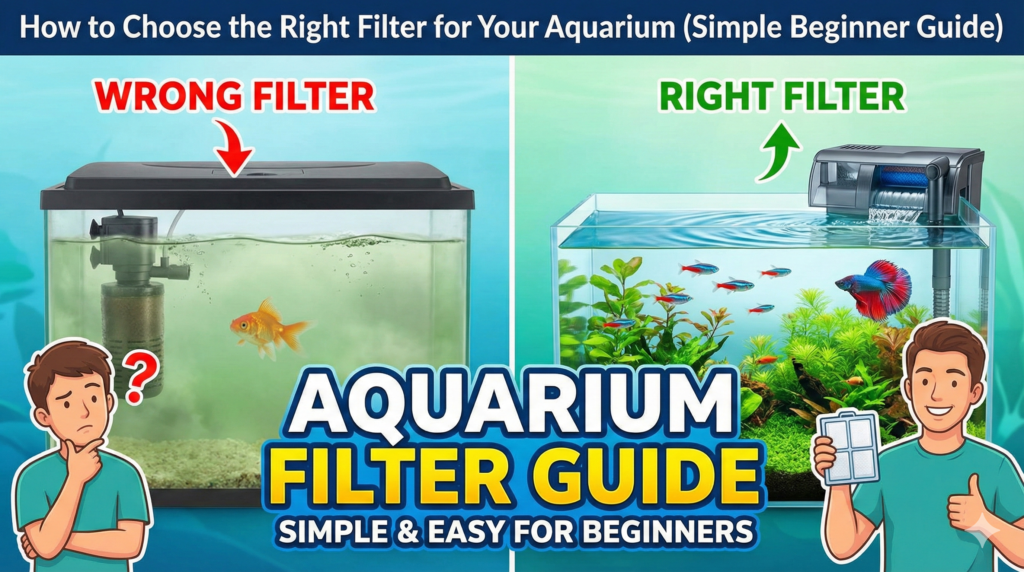
Choosing the right filter is one of the most important decisions for any aquarium owner. A filter is basically the “heart” of your tank. It keeps the water clean, removes toxic waste, and gives your fish a safe place to live. Without a proper filter, even healthy fish can fall sick, water turns dirty fast, and the tank becomes stressful for both you and the animals.
But with so many types of filters in the market—sponge filters, hang-on-back filters, internal filters, canister filters—it can get confusing for beginners. The good news is that picking the right filter is not difficult when you know what matters. This guide explains everything in a simple way so you can choose confidently.
1. Why a Filter Is Important
Fish release waste every day, and food leftovers also break down into harmful chemicals. These chemicals—ammonia and nitrite—are very dangerous for fish. A filter removes these toxins and keeps the water safe.
A good filter does three things:
✔ Mechanical filtration
Removes dirt, uneaten food, and floating particles.
✔ Biological filtration
Holds beneficial bacteria that break down ammonia and nitrite.
✔ Chemical filtration (optional)
Helps remove odor, discoloration, or chemicals.
When choosing a filter, make sure it can do at least mechanical and biological filtration.
2. Know Your Tank Size
First comes the most important step: matching the filter to your aquarium size.
Small tanks (10–40 liters):
Sponge filter
Small internal filter
Hang-on-back mini filter
Medium tanks: 40–80 liters
Larger HOB filter
Internal power filter
Small canister filter
Large tanks 100+ liters:
Canister filter
Large HOB filter-if very low budget
The filter box usually says “Suitable for ___ liters.”
Always use a filter somewhat stronger than needed.
Example: If you have a 40-liter tank, purchase a filter rated for 60 liters.
This helps keep water clean even when your fish grow and produce more waste.
3. Determine How Many Fish You Have
A tank with many fish needs a stronger filter because more fish = more waste.
Light stock (few fish):
Normal filter is enough.
Medium stock:
Choose a filter one size larger.
Heavy stock (goldfish, cichlids, large schools):
Use a powerful filter or two filters together.
If you add more fish later, upgrading the filter keeps the tank safe.
4. Understand the Filter Types
Here are the common aquarium filters explained in a simple form:
1) Sponge Filters
Best for: Small tanks, shrimp, fry (baby fish), and betta tanks
Pros:
Very inexpensive
Safe for small fish
Great biological filtration
Cons:
Not strong enough for big tanks
Poor water flow
2) Hang-On-Back (HOB) Filters
Best for: starter aquariums, 20–100 litres
Advantages:
Easy to use
Good water circulation
Provides mechanical + biological + chemical filtration
Cons:
May give a strong current for betta or small fishes
3) Internal Power Filters
Best for: medium tanks
Pros:
Good mechanical filtration
Easy to install
Cons:
Occupies space inside tank
Needs frequent cleaning
4) Canister Filters
Best for: large aquariums (100 liters+)
Pros:
Very powerful
Best water quality
Quiet
Cons:
Costly
Requires time for cleaning
Which one should you choose?
Small tank → Sponge or Mini HOB
Medium tank → HOB or Internal Filter
Large tank → Canister filter
Goldfish tank → Strong HOB + Sponge filter backup
Betta tank → Sponge or gentle HOB
Planted tank → HOB or Canister
5. Check the Flow Rate
A filter should clean the tank water 3–5 times per hour.
This is called the flow rate written as L/H—literes per hour.
Example:
Tank: 60 liters
Ideal filter: 180–300 L/H
Higher flow means cleaner water, but too much flow can stress small fish like bettas, guppies, or tetras.
Most filters have adjustable flow-this is a great feature for beginners.
6. Seek Low-Maintenance
Beginner filters should be easy to clean.
Choose filters with:
Easy-to-remove sponge
Simple media compartments
No complicated pipes
Easy to rinse accessibility
If a filter is hard to clean, people skip maintenance, and the tank becomes dirty. So simple is better.
7. Use Better Filter Media
Most filters are installed with extremely minimal media. You can upgrade your filter by adding:
✔ Sponge
For mechanical + biological filtration
✔ Ceramic rings/ Bio balls
For holding beneficial bacteria
✔ Active charcoal (optional)
For odour or yellow coloured water
This makes your filter work like a premium one even if the filter itself is cheap.
8. Noise Level
Choose a low-noise filter if your tank is in a bedroom or study room.
Sponge filters = almost silent
HOB filters = gentle sound of water
Poor internal filters = noisy
Canister filters = quiet but pricey
Just select based on your room environment.
Final Tips
for Choosing a Filter Here is a quick summary to help you decide which one would be best: Match filter to tank size Slightly more powerful than recommended Choose the appropriate one depending on your fish. Check the flow rate (3–5 times tank volume) Make sure it’s easy to clean Add good filtering media Low noise in bedrooms Don’t buy ultra-cheap filters-they fail fast A good filter keeps your water clean, prevents fish diseases, and makes aquarium care easy for beginners. With the right choice, your tank will stay healthy and clear all year long.