
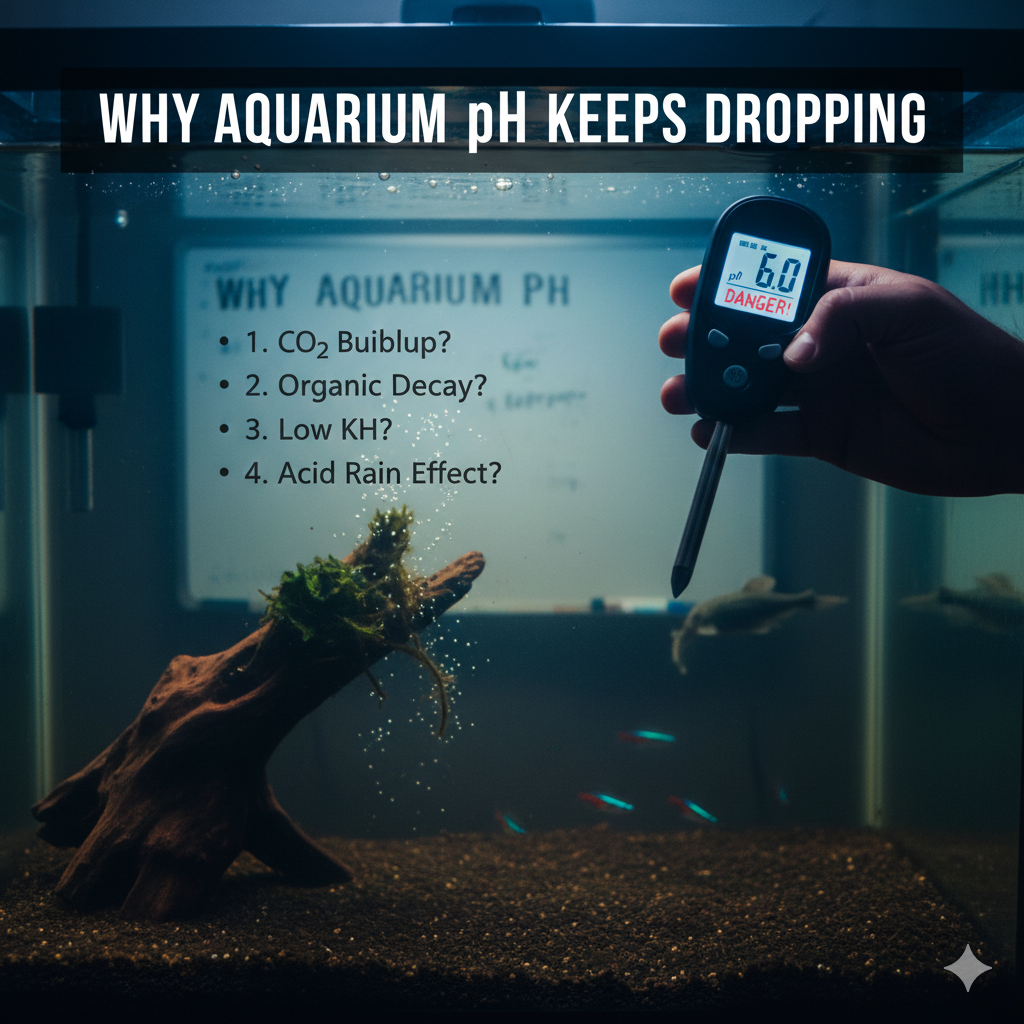
When your aquarium pH keeps dropping, it can get frustrating fast. One day everything looks normal, and the next day the pH is lower again. Fish start acting stressed, plants slow down, and you begin wondering if something in the water is “breaking.” The truth is, pH doesn’t fall randomly. It always has a cause usually something slowly happening inside the tank.
Here’s a clean, beginner-friendly breakdown of why your aquarium pH keeps dropping and what you can do to keep things steady.
Your Water Has Low KH (Weak Buffering)
KH is basically the tank’s ability to hold the pH steady. If your KH is low, even small changes drop the pH fast. It’s like having no shock absorbers — everything shakes the system.
Signs of low KH include:
• pH dropping every few days
• Fish acting stressed during water changes
• pH being different every test
Adding a little crushed coral, aragonite, or a KH booster helps stabilize everything. You don’t need a lot — slow changes are better.
Overstocked Tank = More Waste = Lower pH
Too many fish produce more waste than the bacteria can handle. When waste breaks down, it releases acids that slowly push the pH down. Even if your water looks clean, the chemical balance might be tipping.
If you notice pH dropping faster after adding new fish, this could be the reason.
Small, regular water changes help keep things balanced.
Old Tank Syndrome (When You Don’t Change Water Enough)
When water sits too long without fresh minerals coming in, it becomes acidic. This is super common in tanks that go weeks without maintenance. Even if the tank looks okay, the pH quietly slides downward.
Once pH drops too low, fish become stressed and everything becomes unstable.
Doing gentle, repeated water changes not one big one is the safest fix.
Too Much Organic Waste Breaking Down
Dead leaves, leftover food, dirty filters, mulmy substrate all of this decomposes into acids. Acids lower pH. You may not see the waste, but it’s there under decorations or inside the gravel.
If the tank smells earthy or musty, there’s probably hidden waste causing the pH drop.
Cleaning the substrate lightly and trimming dying plants makes a big difference.
CO₂ Buildup in Tanks Without Surface Movement
Low surface movement means CO₂ doesn’t escape well. When CO₂ builds up, it forms carbonic acid, which brings the pH down.
A small adjustment to the filter output or an air stone helps keep CO₂ and oxygen balanced.
Add Your HeadiDriftwood Can Lower pH Slowlyng Text Here
Most driftwood releases tannins. Tannins are not harmful, but they can slowly push the pH down over time. If your tank has fresh wood, or a lot of wood, this might be the reason the pH keeps trending lower.
It’s not a bad thing unless you’re keeping fish that prefer hard, alkaline water.
Your Tap Water pH Changes After Sitting
Tap water often reads one pH when it first comes out, then changes after sitting for a few hours. When water rests, gases escape and the real pH reveals itself.
So if you’re testing fresh tap water and comparing it to tank water, you might think the tank pH “dropped” when it really didn’t.
Let tap water sit in a cup for a day before testing if you want accurate numbers.
How to Stop pH From Dropping
Here’s what actually works for most tanks:
• Add crushed coral in the filter or substrate
• Do small weekly water changes
• Clean hidden waste spots
• Improve surface movement
• Avoid overfeeding
• Adjust driftwood if lowering pH too much
Stable pH doesn’t mean a high pH. It means a steady pH that’s what fish really want.
Final Thoughts
A dropping pH isn’t random. It always connects to buffering, waste, or how your water behaves. Once you stabilize your KH and keep the tank clean and steady, the pH stops bouncing around. Your fish will stay calmer, your plants grow better, and the whole tank becomes easier to manage.
Pingback: Red eared sliders illegal in india?