Why Guppies Are Dying One by One (Causes & Fixes)
Guppies are supposed to be easy fish. Colourful, active, always breeding… that’s what every beginner hears. So when they start dying one by one, it feels confusing and honestly a bit frustrating. The truth is that guppies are tougher than people think, but modern guppies from stores are often weak because of bad breeding, stress during transport, and poor tank conditions.
Don’t worry though. If you understand the real reasons behind slow guppy deaths, you can fix it. Most issues come from just a few simple mistakes that almost every beginner makes.
Let’s break it down in a natural way.
New Tank, No Bacteria: The Silent Killer
The number one reason guppies die one by one is that the tank isn’t fully cycled. If your tank is new, it probably doesn’t have enough beneficial bacteria to handle fish waste. Ammonia builds up, nitrite builds up, and the guppies go from active to weak in just a few days.
Early signs include:
• Gasping near the surface
• Clamped fins
• Fish becoming slow
• Red or irritated gills
A simple fix is letting the tank cycle properly and doing small daily water changes until your water is stable again.
Pet Store Stress: Weak Guppies from the Start
Sadly, many store-bought guppies are not as strong as wild ones. They’re mass-bred, kept in overcrowded tanks, and exposed to a lot of stress and disease. By the time you bring them home, they look healthy but are already weak inside.
If your new guppies died within the first week, this might be the reason.
Using a quarantine tank helps a lot, but even without it, keeping stable water conditions gives them a better chance.
Sudden Temperature Changes
Guppies love warm, steady water around 24 to 27°C. But many beginners keep them in room temperature, which goes up and down throughout the day. Cold nights hit them hard. That slow stress builds up until they start dying one by one.
A simple heater fixes this completely.
If your guppies curl up, shake, or stay near the bottom, temperature is likely the culprit.
Hard Water or Soft Water Shocks
Guppies prefer slightly hard, mineral-rich water. If the water is too soft or the pH swings, they get stressed easily. Some people do huge water changes with completely different water parameters, and the guppies can’t handle the sudden shift.
Small, consistent water changes are safer than big ones.
Overfeeding: More Harm Than Good
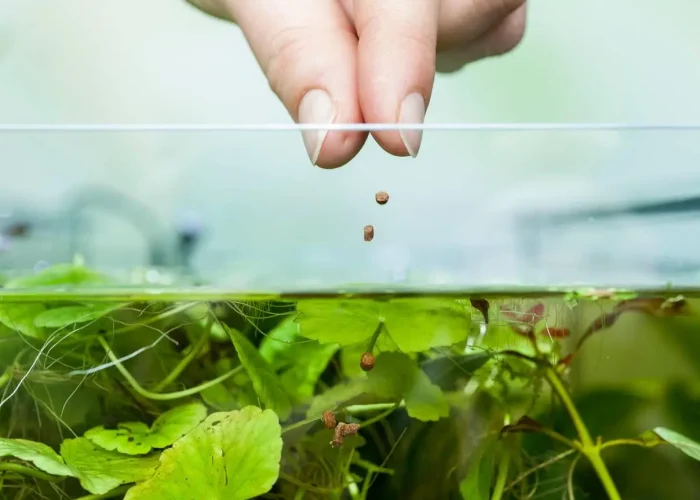
Guppies look cute when they beg, and they always act hungry. But overfeeding is deadly in small tanks. Extra food rots, ammonia rises, and guppies start dying one at a time.
If your tank smells weird or the water looks cloudy, this might be the issue.
Feed tiny amounts that they finish in under a minute.
Hidden Diseases and Parasites
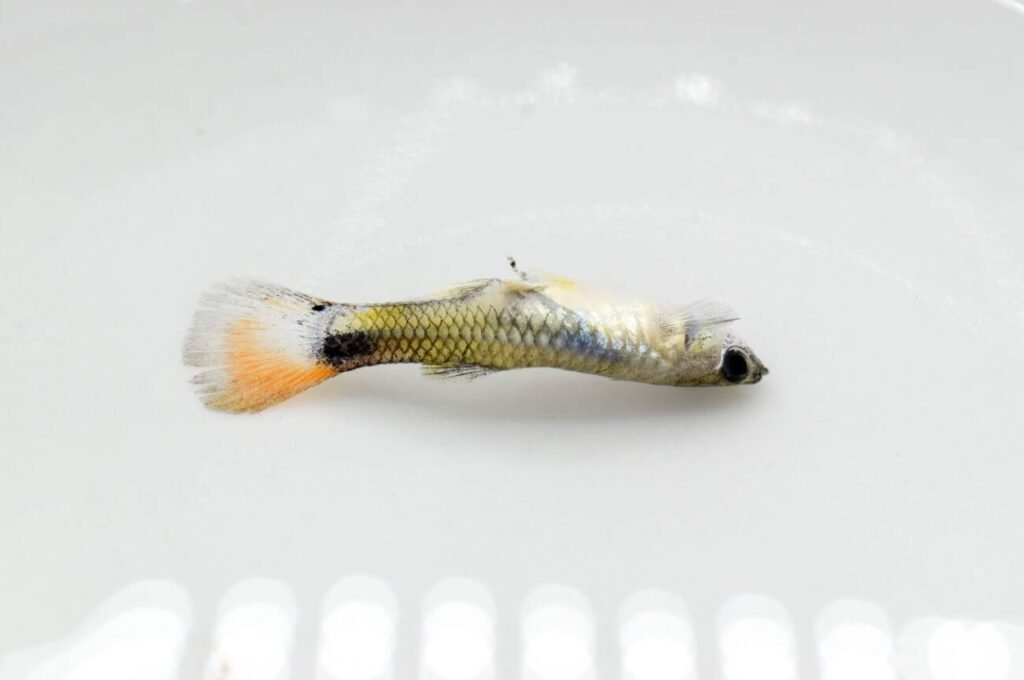
Guppies often carry internal parasites, fin rot, or bacterial infections from breeding farms or stores. These problems don’t always show immediately. They start slowly: one fish dies, then the next, and so on.
Signs include:
• Skinny body even when eating
• Stringy white poop
• Torn fins
• Sitting alone or shaking
Isolated treatment or salt baths can help, but preventing stress is the bigger fix.
Aggression From Other Fish
Some tank mates nip at guppies or bully them quietly. Even a single aggressive fish can kill guppies slowly. Stress makes them hide, not eat, and eventually die.
Watch your tank closely. If someone is chasing guppies constantly, remove the bully.
Poor Oxygen Levels
Guppies breathe a lot and prefer good surface agitation. Tanks with still water, no air pump, or clogged filters often have low oxygen levels. The fish gasp near the surface and then start dying.
A simple air stone or cleaning the filter helps instantly.
Final Thoughts
When guppies die one by one, it’s almost always from stress — either from the environment or from the condition they were in before you bought them. The good thing is guppies bounce back quickly once the tank is stable.
Focus on steady water, a heater, light feeding, and a cycled filter. Once conditions are right, guppies become the lively, colourful fish everyone talks about.