
What Is Aquarium Cycling? (Beginner’s Guide to Tank Cycling)
What Is Aquarium Cycling? (Beginner’s Guide to Tank Cycling) If you’re new to aquariums, this phrase probably sounds confusing, technical, or even a little intimidating. People throw it around like everyone already understands it. Cycle your tank. Wait for the cycle. Your tank isn’t cycled yet. And beginners are often left wondering what they’re actually supposed to do.
The truth is, tank cycling is not complicated. It’s just poorly explained most of the time.
Once you understand what’s really happening, tank cycling stops feeling like a rule and starts making sense as a natural process your aquarium goes through.
Tank Cycling Is Not About Water, It’s About Bacteria
This is the part most guides skip.
Tank cycling is not about waiting for water to “settle” or letting dust clear. It’s about growing beneficial bacteria inside your tank and filter. These bacteria are invisible, but they are the reason fish survive in aquariums.
Fish produce waste. That waste turns into ammonia. Ammonia is toxic. Very toxic.
In nature, this waste is diluted and broken down constantly. In a glass box, it builds up unless something processes it.
That something is bacteria.
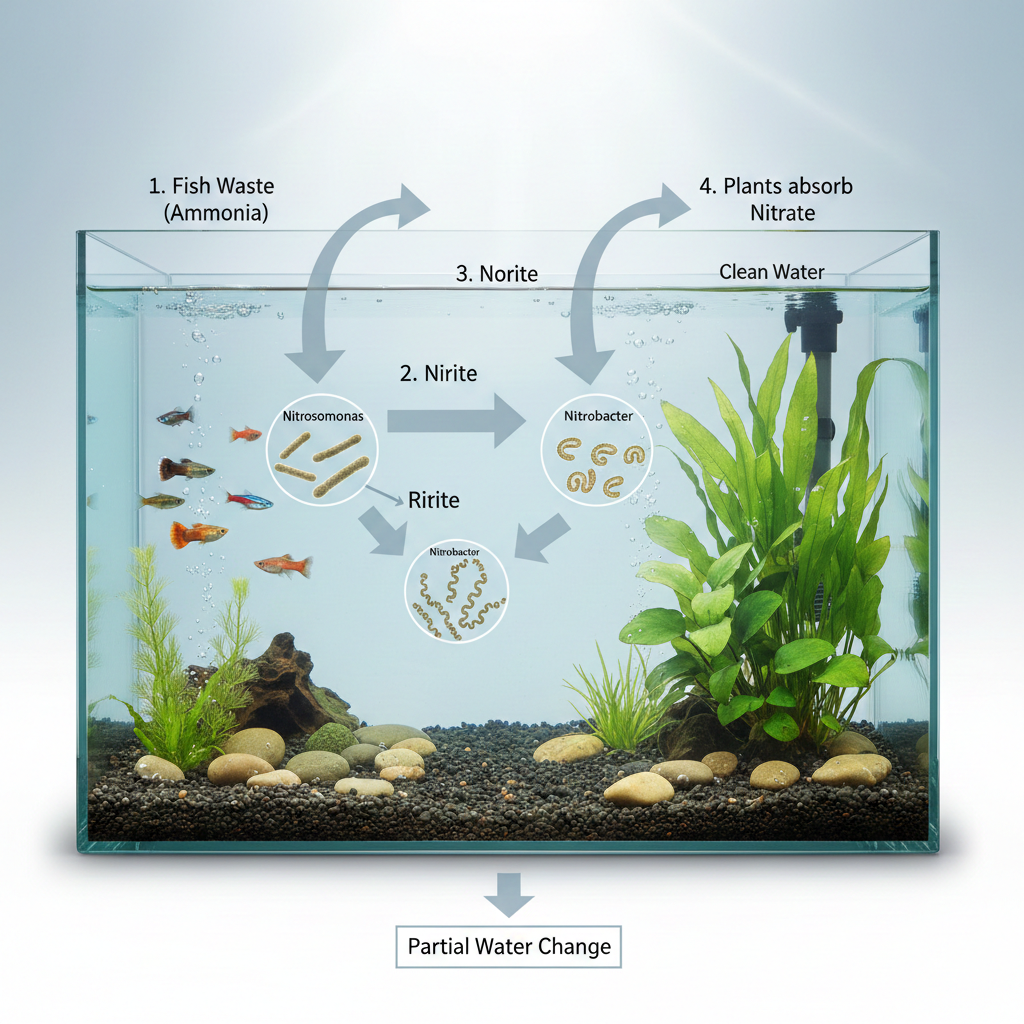
The Simple Version of the Nitrogen Cycle
Here’s the cycle without textbook language.
Fish poop creates ammonia.
Ammonia is deadly.
One type of bacteria eats ammonia and turns it into nitrite.
Nitrite is also deadly.
Another type of bacteria eats nitrite and turns it into nitrate.
Nitrate is much safer and can be removed with water changes.
That’s it. That’s tank cycling.
When people say a tank is “cycled,” they mean these bacteria are established and doing their job.
Why New Tanks Are Dangerous for Fish
A brand new aquarium has clean water, clean glass, and zero bacteria.
That sounds good, but it’s actually the most dangerous stage for fish.
When fish are added to an uncycled tank:
Ammonia builds up fast
Fish get stressed
Gills get damaged
Fish may die suddenly or slowly
This is why beginners often say things like “the water looked clean but my fish died.”
Clear water does not mean safe water.
Tank Cycling Takes Time, Not Effort
This part frustrates people.
You cannot force a cycle to complete instantly. You can help it, but you can’t rush it without consequences.
Bacteria need time to:
Attach to surfaces
Multiply
Stabilize
Filters, substrate, decorations, and even plant roots become homes for these bacteria.
That’s why cycling usually takes a few weeks, not days.
What Actually Gets Cycled in an Aquarium
Many people think the water is being cycled. It’s not.
The bacteria live on:
Filter media
Substrate
Decorations
Glass surfaces
Very little lives freely in the water itself.
This is also why cleaning everything aggressively can crash a cycle. You’re removing the bacteria, not dirt.
Fishless Cycling vs Fish Cycling
You may hear both terms.
Fish cycling means adding fish first and letting bacteria grow while fish are exposed to toxins. This is stressful and risky for fish.
Fishless cycling means setting up the tank and letting bacteria establish before adding fish. This is safer and more humane.
Fishless cycling is strongly recommended, especially for beginners.
How Long Does Tank Cycling Usually Take
Most tanks cycle in:
3 to 6 weeks naturally
This depends on:
Tank size
Temperature
Filter type
Whether plants are present
Using bottled bacteria can help speed things up, but it does not remove the need for patience.
Signs Your Tank Is Cycling
Cycling is invisible, but there are signs.
You may notice:
Cloudy water early on
Algae appearing and disappearing
Changes in smell
Test kits showing ammonia, then nitrite, then nitrate
These changes are normal. They don’t mean something is wrong.
They mean the tank is finding balance.
Why Plants Help With Tank Cycling
Live plants are not just decoration.
They:
Absorb ammonia directly
Reduce stress on bacteria
Stabilize water faster
Planted tanks often cycle more gently than bare tanks.
This is why many beginners succeed faster with plants, even if they don’t realize why.
Common Tank Cycling Myths
One common myth is that cycling means waiting until water is clear.
Another myth is that cycling finishes when ammonia disappears once.
Another is that water changes stop the cycle.
None of these are fully true.
Cycling means stability over time, not a single test result.
Why Rushing the Cycle Causes Long-Term Problems
Some fish survive uncycled tanks. That doesn’t mean they are fine.
Fish exposed to ammonia early often:
Grow weaker
Become disease-prone
Die months later for “no reason”
The damage is slow and delayed.
A calm start leads to a calm tank later.
How to Know When Your Tank Is Ready for Fish
A tank is ready when:
Ammonia stays at zero
Nitrite stays at zero
Nitrate is present
Water parameters are stable
This stability should last several days, not just a few hours.
When in doubt, waiting another week is never harmful.
Why Cycling Is a One-Time Stress but a Long-Term Benefit
Cycling feels annoying only once.
After that:
Fish are healthier
Maintenance is easier
Water stays stable
Problems happen less often
Most successful aquariums feel boring after cycling. And that’s a good thing.
What Happens If You Accidentally Disrupt the Cycle
Heavy cleaning, replacing all filter media, or washing everything in tap water can reduce bacteria.
This can cause:
Mini ammonia spikes
Fish stress
The solution is not panic. It’s gentle maintenance and time.
Bacteria usually recover if you don’t keep interfering.
Why Tank Cycling Is the Foundation of Everything
Feeding, filtration, plants, fish choice. None of it matters if the tank isn’t cycled.
Tank cycling is not an optional step. It’s the foundation of aquarium life.
Once you understand it, most beginner problems suddenly make sense.
Final Thoughts
Tank cycling sounds complicated because people explain it badly.
In reality, it’s just about letting nature set up a cleanup crew inside your tank before fish arrive. That’s all.
If you respect the cycle, your aquarium becomes easier, calmer, and more enjoyable. If you rush it, problems follow you for months.
A cycled tank doesn’t guarantee success.
But an uncycled tank almost guarantees trouble.