
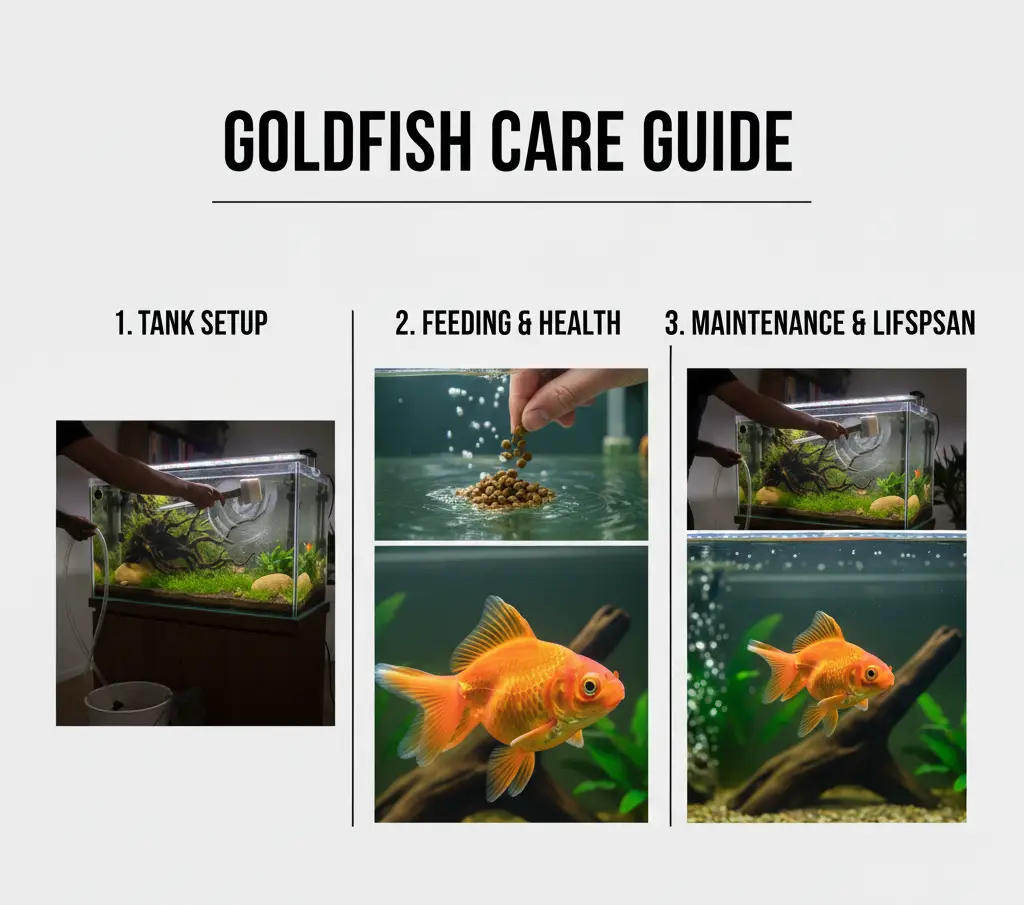
Goldfish Care Guide: Tank Size, Feeding and Common Mistakes
Goldfish care guide is something many people don’t think they need until problems start showing up. Goldfish are often sold as easy, low-maintenance pets. Just a bowl, some food, and you’re done. That idea has probably harmed more goldfish than any disease ever could.
The truth is simple. Goldfish are hardy, but they are not simple. They grow large, produce a lot of waste, and live much longer than most people expect. When cared for properly, goldfish are active, curious, and surprisingly interactive fish. When cared for poorly, they struggle quietly until it’s too late.
This guide explains goldfish care honestly. No myths, no shortcuts, just what actually works.
Understanding Goldfish Before You Buy
Goldfish are freshwater fish that have been domesticated for centuries. Because they’re common and cheap, people often underestimate them. But goldfish are not beginner mistakes waiting to happen. They are intelligent fish that can live 10 to 20 years, sometimes even longer.
Most problems with goldfish don’t come from bad intentions. They come from misinformation.
If you understand what goldfish actually need, they become one of the most rewarding fish to keep.
Goldfish Tank Size (The Biggest Mistake People Make)
The bowl myth needs to end.
Goldfish do not belong in bowls. Bowls restrict swimming, trap waste, and cause stunted growth. A goldfish may survive in a bowl for some time, but survival is not the same as health.
Minimum Tank Size
For single-tail goldfish:
At least 75 to 100 liters for the first fish
For fancy goldfish:
At least 60 to 75 liters per fish
More space is always better. Goldfish grow fast when given proper space and food.
Small tanks cause:
Poor growth
Deformed bodies
Constant water quality problems
If you want healthy goldfish, start with the right tank size.
Why Goldfish Need So Much Space
Goldfish produce a lot of waste. Much more than most tropical fish.
More water volume means:
Waste is diluted
Water stays stable longer
Fish experience less stress
Goldfish kept in small tanks often suffer from chronic stress, even if they seem active.
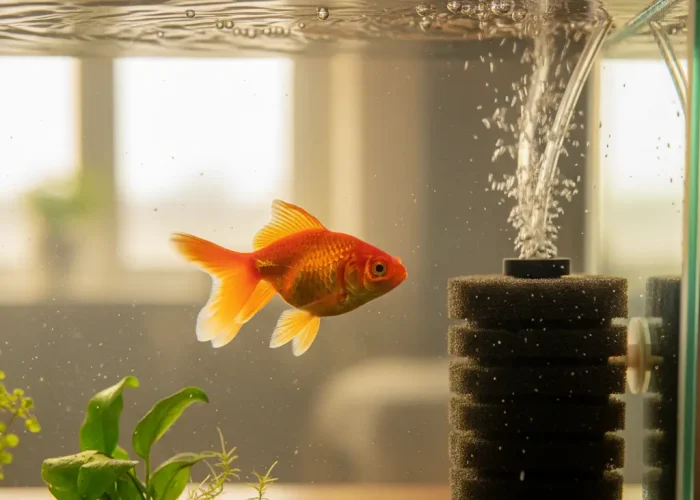
Filtration for Goldfish Tanks
Goldfish need strong filtration, not because they are dirty fish, but because of how much they eat and excrete.
A good filter should:
Be rated for more than the tank size
Provide strong biological filtration
Create gentle but steady water movement
Weak filters lead to cloudy water and ammonia spikes.
Filtration reduces maintenance, but it does not replace water changes.
Water Temperature and Heating
Goldfish are cold-water fish, but that doesn’t mean freezing water.
They prefer:
Stable temperatures
Slightly cooler than tropical fish
Heaters are usually not required unless your room temperature fluctuates heavily. Sudden temperature changes stress goldfish more than cooler water itself.
Stability matters more than exact numbers.
Substrate and Decoration Choices
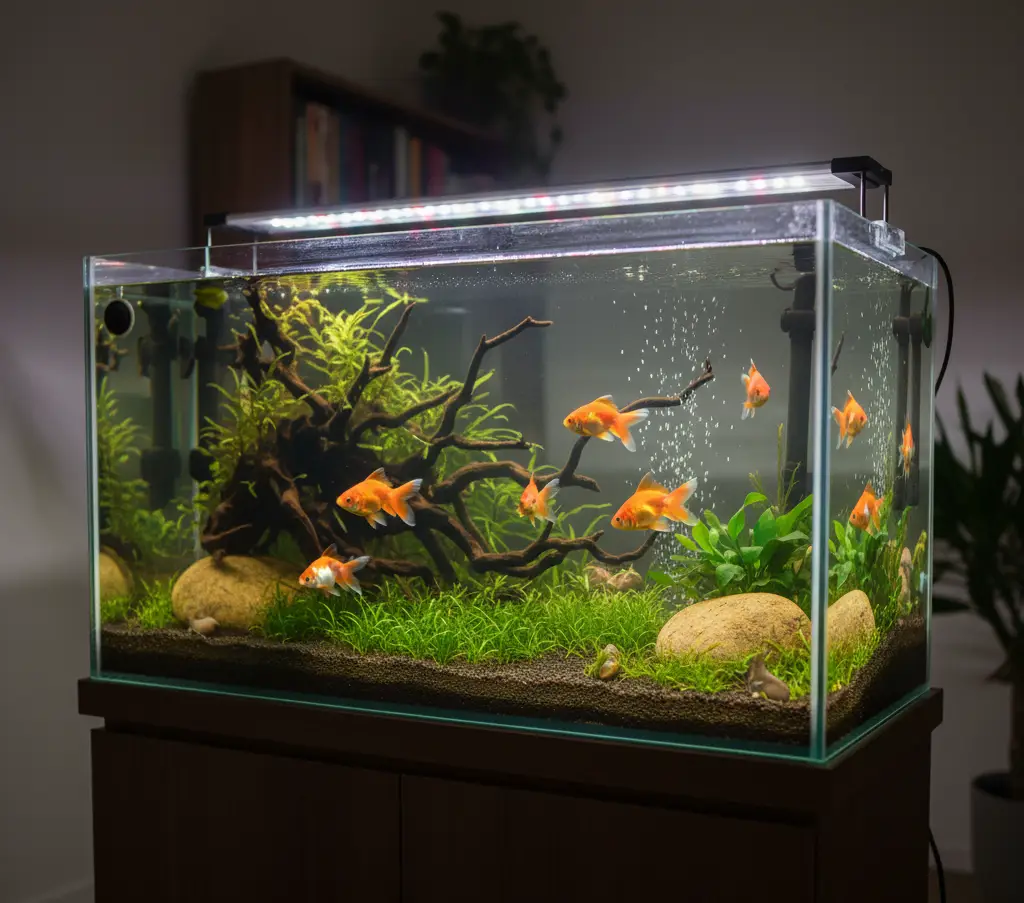
Goldfish are curious and constantly forage.
Good substrate choices:
Smooth gravel
Sand
Avoid sharp stones. Goldfish often pick up substrate in their mouths and spit it out.
Decorations should be:
Smooth
Stable
Easy to clean
Crowded tanks restrict movement and trap waste.
Goldfish Feeding Guide (More Than Just Flakes)
Feeding is where many goldfish problems start.
Goldfish are always hungry. That does not mean they always need food.
What Goldfish Should Eat
A balanced diet includes:
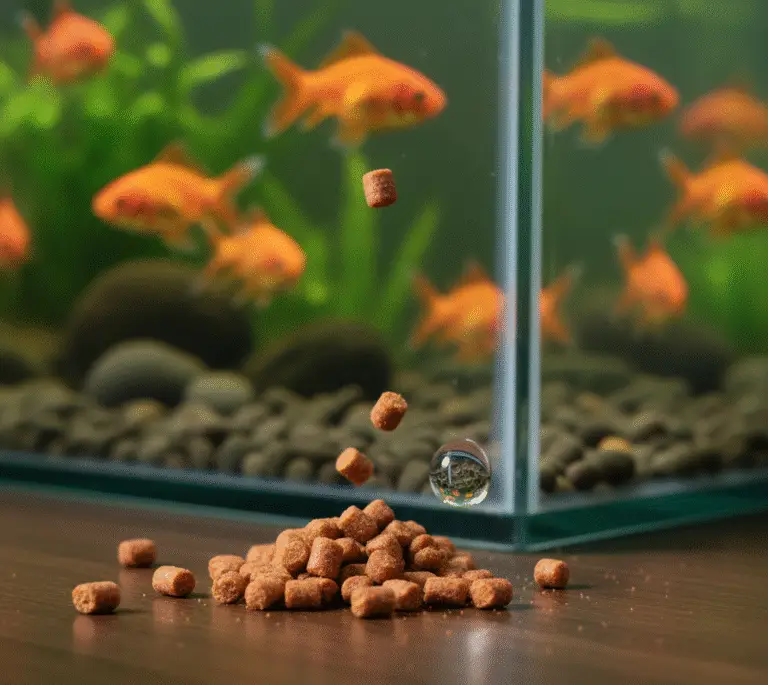
Quality goldfish pellets
Vegetables like peas or spinach
Occasional treats
Pellets are better than flakes because they sink slowly and reduce air gulping.
How Often to Feed Goldfish
Overfeeding is extremely common.
A safe feeding routine:
Small portions
Once or twice a day
Only what they finish quickly
Uneaten food rots and poisons the water.
Why Overfeeding Is Dangerous
Overfeeding leads to:
Swim bladder issues
Poor water quality
Increased disease risk
Goldfish do better with slightly less food than too much.
Common Goldfish Health Issues
Most goldfish health problems are linked to water quality.
Swim Bladder Problems
Often caused by:
Overfeeding
Poor diet
Dirty water
Fish may float sideways or struggle to swim.
Fin Damage and Infections
Caused by:
Ammonia burns
Rough decorations
Poor filtration
Healthy fins should look clean and open, not frayed.
Stunted Growth
Stunting is permanent.
It happens when:
Tank is too small
Water quality is poor
Fish are chronically stressed
Stunted goldfish often have shortened lifespans.
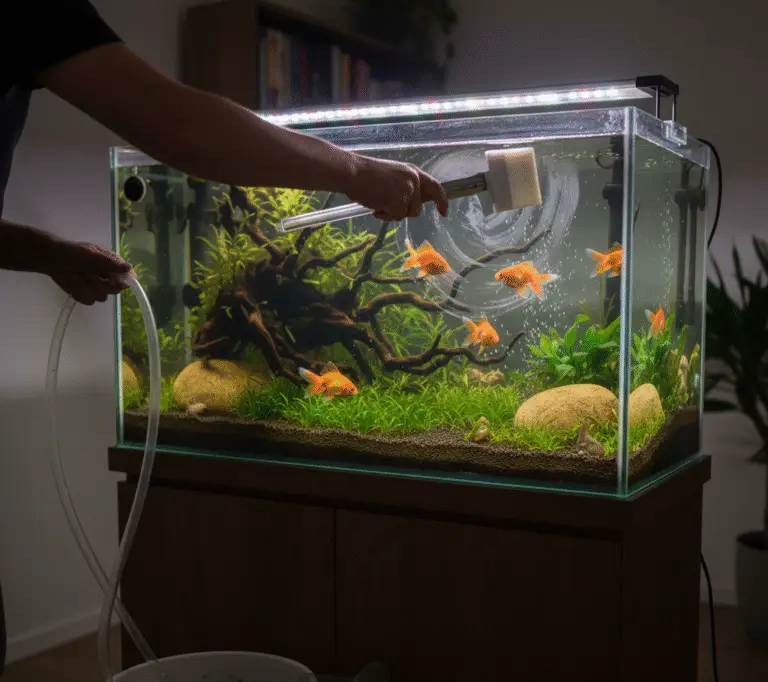
Water Changes for Goldfish Tanks
Goldfish tanks require regular water changes.
A good routine:
20 to 30 percent weekly
Match temperature closely
Use water conditioner
Skipping water changes leads to slow poisoning, not immediate death, which makes the problem harder to notice.
Why Goldfish Are Not “Low Maintenance” Fish
Goldfish are hardy, not easy.
They need:
Space
Strong filtration
Regular maintenance
Long-term commitment
They are forgiving of mistakes, but they still feel the effects.
Goldfish Behavior and Personality
Healthy goldfish are interactive.
Normal behavior includes:
Actively swimming
Responding to movement
Exploring the tank
A goldfish that hides constantly or gasps at the surface is telling you something is wrong.
Common Goldfish Care Mistakes
These mistakes appear again and again:
Keeping goldfish in bowls
Overstocking
Overfeeding
Weak filtration
Rare water changes
Most of these are avoidable with basic knowledge.
How Long Do Goldfish Live
With proper care:
10 to 15 years is common
Some live over 20 years
Short lifespans are usually caused by poor care, not genetics.
Is a Goldfish Right for You
Before choosing goldfish, ask yourself:
Can I provide a large tank
Can I maintain water quality
Am I ready for long-term care
If yes, goldfish can be incredibly rewarding pets.
Final Thoughts
Goldfish deserve better than bowls and myths. When cared for properly, they are active, curious, and long-lived fish that bring real personality into a room.
This goldfish care guide is not meant to scare you away. It’s meant to help you do it right. Goldfish are not difficult, but they do require respect for their needs.
Healthy goldfish are not an accident.
They are the result of informed care.